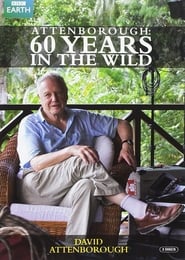
Attenborough 60 Years in the Wild
Shkarko Titrat English
Informacioni i lëshimit
Etiketat
Download English Subtitle Files for Mobile (3)
Pamje paraprake e titrave në English
200 rreshtat e parë.
In a lifetime of natural history filmmaking,
I have seen many odd animals
but few odder than these proboscis monkeys in Borneo.
I first saw them some 50 years ago.
1956 ATTENBOROUGH: Late one evening we had a great stroke of luck,
for a troop of the extraordinary long-nosed proboscis monkey
had come down to the riverbank to feed.
When I started filming such creatures,
it was quite easy to show viewers
animals that hitherto had only been seen in the wild by intrepid explorers.
As the years passed, one way and another
we got better and better shots
and in the process, I had some memorable encounters.
Boo!
This is a very intelligent animal.
And top of the menu right now is...
salmon.
I think that was pretty clear.
I've been lucky enough to live through
what well might be considered the golden age
of natural history filmmaking.
Almost every year, it seemed, we found some new way
of revealing new things about the natural world.
In the 1950s,
much of the wildlife of the planet was still unfilmed, even unknown.
And in the following 60 years,
a succession of technical innovations enabled us to reveal more and more
of the natural world in increasing detail.
This is the first natural history film I ever saw,
back in 1934, when I was eight.
And I thought it was wonderful.
Ladies and gentlemen,
let me put you out of your misery at once.
You are not going to see me for long.
Although I'm inviting you to come on this trip with me,
you will only see me occasionally.
The man in the pith helmet is Cherry Kearton,
one of the first people
to try and capture the lives of wild animals on film.
There are 5 million penguins on this island,
which are called the jackass penguin.
I am always polite to animals.
And as I intend to stay with the penguins for several months,
I am naturally adopting my most friendly manner.
Kearton travelled round the world filming wild animals
that of course had never been filmed before.
His approach was hardly scientific
but nonetheless, he was very entertaining.
His sister, a typical flapper,
not content with being one of the fair sex,
wants to join the air sex,
but resigns herself to just a flip here,
a flap there and a flap in between.
For all its obvious flaws,
Kearton's films captured my childish imagination
and made me dream of travelling to far-off places to film wild animals.
And this is one of the very cameras that Cherry Kearton used.
It's enclosed in a wooden box,
it was driven by hand
and it used 35-millimetre film, this distance across.
Within a few years, it was superseded
by improved models like this one, which had a metal box
and it worked by clockwork and it had a variety of lenses.
But it still used hefty 35-millimetre film.
Happily, however, there were smaller versions available.
A camera like this.
This used 16-millimetre film, which was only half the size,
and it was powered by clockwork.
But unfortunately the BBC thought cameras like this were unprofessional.
And there was a huge row
as to whether or not I could be allowed to take it.
But in the end I did, and it was with this that I set off
to ramble around the jungles of the world
looking for unfilmed animals.
My first natural history series, Zoo Quest,
recorded the progress of animal-collecting expeditions
arranged for the London Zoo,
and brought to the screen places and animals
that had never before been seen on television,
or in the cinema, come to that.
One targeted the largest lizard in the world,
which lived on the small Indonesian island of komodo.
Few people had heard of it
and in Indonesia, no one seemed very sure where the island was.
Eventually, we set off with a fisherman who said that he did
but after a couple of days at sea, I had my doubts.
I said to the captain,
"You have been to Komodo before, haven't you?"
And he said, "Belum," and I didn't know what belum meant,
so I had to go down into the hold and find my Indonesian dictionary.
I looked up belum and it said "not yet".
So it was clear that he didn't know the way.
After a week at sea,
and having survived encounters with coral reefs and whirlpools,
we arrived at what I thought must be komodo.
And I remember wading ashore across the coral lagoon
and finding a tiny little village and saying,
"Excuse me but um is this Komodo?"
And they said, "Yeah, this is Komodo." That was okay.
The locals recommended that we should use a dead goat as bait.
Once in the bush, we began to build a trap
using materials gathered from nearby, as I recorded in my journal.
This was the dragon trap, with a little bait in there
and when the dragon, if he went in the front end,
trod on there, that pulled it down, which then pulled the ring down,
which released that rod, which then pulled down,
because there was a lump of rock on the bottom,
so clunk, down it would go.
1956 ATTENBOROUGH: And now, all we had to do was to wait.
There was a rustle in the bush and there was the dragon.
Our first sight of this magnificent monster.
To my surprise, we were looking out at the trap
and I heard a noise behind me and I turned round
and there was the dragon,
that was taken at that particular moment,
looking at me straight in the eye, from only about a couple of yards away.
And I looked at it and it looked at me and I thought,
"Well, at least I might take your photograph."
So that was the photograph I took of him.
And then eventually he rather wearily
heaved himself up and strolled round us
and went down into the dry riverbed where we'd made the trap.
1956 ATTENBOROUGH: And down came the door.
Hastily, we piled boulders on the door so that he couldn't lift it up.
We'd got him.
Those early films seem pretty ordinary these days,
but they were nonetheless popular because whatever we showed
was new to most of our viewers.
So, in the 1950s,
we were taking cameras like this all over the world.
And then, an Austrian biologist and filmmaker
decided to try and take it underwater.
His name was Hans Hass.
And he developed his own special housing to do that.
Hans and his wife Lotte
were the first to bring the wonders of life under the sea to television.
And their programmes were all the more sensational
because few people at that time had scuba-dived.
Take care, down there are sharks. We are right on the reef's edge.
In the '50s,
sharks, of course, had a terrible reputation.
I mean, they were the killers of the sea.
Anybody in water alongside a shark was clearly courting certain death.
And yet, here were Hans and Lotte swimming alongside them.
The nation was astounded.
The sequence certainly had shock value,
but perhaps it was also the first step in changing our perceptions of sharks.
And like all television, it was still shown in black and white.
So, during the Zoo Quest series,
I had to describe an animal's colour in words.
1961 ATTENBOROUGH: This one was among the most brilliantly coloured
of all chameleons in the world.
His eyeballs are bright rust red
and his body and legs striped and blotched with a vivid green.
But television was changing fast.
In the 1960s, the BBC was given a second television network,
operating on a higher technical standard, with the specific job
of introducing colour television.
And in 1965, I was put in charge of it,
with an office here in the Television Centre in London.
To demonstrate that colour on television could be both accurate and not garish,
I commissioned a series about the history of art.
It was called Civilisation.
I am standing in the Sistine Chapel
and above my head is one of the greatest works of man,
Michelangelo's ceiling.
It was presented by kenneth Clark
and became a great success.
So we followed it with other series on a similar scale,
about science, economics and the history of America.
But I knew well that the most dazzlingly colourful series
would be one about wildlife.
After eight years in administration,
I decided that I wanted to go back to making programmes.
And I put up a suggestion
that we should make 13 one-hour programmes,
in colour, tracing the whole history of life on Earth.
Thanks to the development of jet air travel,
we were able to film in 30 countries around the globe,
and as I traced the history of life on the planet,
I could appear to move from one continent to another
in the space of a single sequence.
The South American rainforest,
the richest and most varied assemblage of life in the world.
These lime stones here in Morocco...
Macaques live in many parts of Japan.
Life on Earth was shown in a hundred different countries
and seen by perhaps as many as 500 million people.
Natural history television was now a global phenomenon
revealing our wonderful world, in colour, to all.
During the series, we made full use of both colour and scuba gear
to help show the underwater world as never before.
I even tried to follow Hans Haas's lead, exploring the underwater world.
One of the problems with underwater films, of course,
was that you can't talk underwater.
Most of the time, if you've got a breathing apparatus on your back,
you've got something in your mouth,
but Alastair, one of my producer colleagues,
was very keen that we should try and introduce the presenter
talking to camera underwater.
Attenborough 60 Years in the Wild subtitles in other languages
More English subtitles for Attenborough 60 Years in the Wild
- Attenborough 60 Years in the Wild 2012 720p Blu-ray DTS 2 0 x264-DON · 38 downloads · 2013-03-17
- Attenborough 60 Years in the Wild 2012 720p Blu-ray DTS 2 0 x264-DON · 15 downloads · 2013-03-17
- Attenborough's Life Stories-All 3 Episodes · 33 downloads · 2013-03-07
- Attenborough's Life Stories-All3Episodes · 22 downloads · 2013-03-07
- Attenborough's Life Stories-All 3 Episodes · 18 downloads · 2013-03-07
- Attenborough: 60 Years in the Wild all episode · 15 downloads · 2012-12-05
- Attenborough 60 Years in The Wild S01E02 Understanding the Natural World 720p HDTV x264-FTP · 27 downloads · 2012-11-24
- Attenborough 60 Years in The Wild S01E01 Life on Camera 720p HDTV x264-FTP · 23 downloads · 2012-11-24
Komentet
No comments yet. Be the first to leave one.