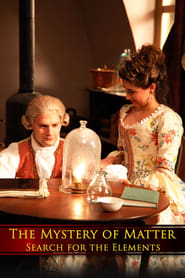
The Mystery of Matter: Search for the Elements
Pakua Manukuu ya English
Maelezo ya toleo
Lebo
Download English Subtitle Files for Mobile (3)
Hakikisho la manukuu ya English
Mistari 200 ya kwanza.
Help everyone explore new worlds and ideas.
Support your PBS station
One night in 1669, a German alchemist named Hennig Brandt
was searching, as he did every night, for a way to make gold.
For some time, Brandt had focused his research on urine.
He was certain the "golden stream" held the key.
Tonight, his patience would at last be rewarded.
He had boiled the urine down to a concentrated paste.
Now he subjected it to intense heat.
Was this the legendary elixir that would turn lead into gold?
Alas, it was not.
Brandt had stumbled on the element phosphorus.
This is how the discovery of elements began:
with people trying to turn the substances of nature
into something useful or valuable.
But people are naturally curious,
so as they worked with these materials,
they began to wonder, "What is this stuff?
What is the world made of?"
Thousands of years ago, the Greeks proposed that the world
is actually made of just four elements in combination:
air, water, earth and fire.
Today, we know that matter
actually comes in more than a hundred distinct varieties,
neatly arranged in the periodic table of the elements.
But for most of history, matter was a profound mystery,
a 2,000-year detective story in which people across the world
were trying to identify the elements
and figure out how to use them.
It's an amazing story, filled with unforgettable characters.
In this series, you'll meet seven extraordinary scientists
whose findings drove the search for the elements.
So join me as we retrace the steps
of these chemical detectives
as they struggle to solve the mystery of matter.
*
One of the first big clues in solving the mystery of matter
came from the discovery
of the most immaterial stuff you can imagine: air.
Of course, people have always known about air.
They could feel the wind on their faces
and see its powerful effects in storms.
What they didn't know
was that there's more than one kind of air.
That changed in 1754,
when a young Scottish medical student named Joseph Black
set out to find a cure for kidney stones.
He poured acid on this chalky substance...
...and trapped the air that came out.
To his surprise, this "air" didn't behave like air at all.
It was heavier than ordinary air and promptly put out a flame.
Black's discovery of fixed air--
what we now call carbon dioxide--
was a turning point in the history of science.
People had long known about liquids and solids.
Now suddenly, they realized
there was a third state of matter-- gases--
of which air is just one example.
Over the next 20 years,
the exploration of this new dimension
would transform our understanding of matter.
After Black's discovery,
British scientists quickly identified two more new gases:
hydrogen and nitrogen.
And then in the early 1770s,
that astonishing investigator Joseph Priestley
discovers all sorts of new airs.
Priestley was a minister by trade,
but also an amateur scientist--
what was then called a natural philosopher.
He was a great dabbler in things
and was constantly getting obsessed with new fields.
Fields like the new science of gases.
Priestley's style of science is very interesting.
He's a kind of inspired forager.
He's basically messing around with different things
to see what will happen.
One of the things Priestley did was to pour acid on everything.
He collected those bubbles, tested them thoroughly
and discovered all sorts of amazing properties.
By "messing around" in this way,
Priestley discovered nine new gases--
more than anyone else in the world.
He was very much open to chance discoveries.
He would stumble across things
and he would follow his instincts.
And he was always looking
for these kind of fortuitous accidents.
One such accident happened in 1767,
when Priestley was assigned a new congregation.
They put him in a house
that happens to be right next to a brewery.
And this turns out to be an incredible stroke of good luck.
Priestley, being the constant investigator that he was,
would kind of pop over
and see what was going on at this brewery.
Just above the vats of beer,
he discovered a haze of carbon dioxide
bubbling up from the fermenting brew.
And he decided he wanted to do some experiments
with their beer.
Well, fortunately, they said yes.
Priestley found that if he simply poured water
from one glass to another over the surface,
the water would absorb the gas rising from the beer.
The result was refreshingly bubbly.
By 1772, he had invented a better method:
generating carbon dioxide
and injecting it directly into water.
PRIESTLEY (dramatized): In the space of two or three minutes,
I can make a glass
of exceedingly pleasant sparkling water.
You can't tell the difference between this
and natural mineral water.
Priestley had invented carbonation.
Remember that the next time you enjoy a soft drink.
But with this act, he also set in motion
a series of improbable events
that would soon overturn our understanding of matter.
It began when a British doctor
suggested Priestley's "windy water"
might be effective as a treatment for scurvy,
a disease that plagued sailors on long sea voyages.
Scurvy was a huge problem for the military during that period,
and so the idea that there was this potential solution
that also happened to be a tasty beverage was appealing.
In 1772, Priestley addressed
Britain's leading scientific organization, the Royal Society,
and published a pamphlet
describing his method for making soda water.
He urged the British navy to test the potential cure.
Quick to pick up on this development
was a defrocked Portuguese monk named João Jacinto de Magellan.
A distant relative of the great Portuguese navigator,
he was now serving as a French industrial spy.
Magellan is in the employ of the French government
and is there basically scouting out the Royal Society
for interesting items
that he might be able to bring back to his bosses.
Sensing a potential military secret,
Magellan alerted his handler back in France:
Commerce Minister Jean Charles Trudaine de Montigny.
Trudaine was interested in science,
was a member of the French Royal Academy of Sciences,
and immediately saw the possible value of this.
Trudaine, in turn, called on one of France's
brightest young chemists, Antoine Laurent Lavoisier.
"I know your precision when it comes to physics and chemistry,
"and I'm giving you a chance to be of service to your country.
"Please repeat these experiments and add your own observations.
The value of these discoveries depends on our moving quickly."
I hope you will not be long in getting this little work done.
Trudaine probably intended this politely phrased letter
as an order rather than a request.
Lavoisier really couldn't ignore it.
Though soda water would turn out to be useless against scurvy,
this pointed suggestion by a government official,
acting on a tip from a Portuguese spy,
would set Lavoisier on the path toward his greatest discoveries.
Born into a well-to-do Parisian family,
Lavoisier had received a fine education
and taken a degree in law.
Now 28, he had joined a consortium
that collected taxes for King Louis XV.
As a result, Lavoisier became a very wealthy man.
But his true passion was chemistry.
Lavoisier spent three hours in his private laboratory
before work every day and returned there after dinner,
often accompanied by his young wife.
Marie-Anne Paulze was the daughter
of one of Lavoisier's business partners.
She was just 13 when they were married,
but bright, outgoing and mature beyond her years.
Marie-Anne was virtually his collaborator.
She knew English, learned chemistry,
assisted Lavoisier in the laboratory.
She was an extraordinary person.
Had she lived in our own time, she probably would have become
an outstanding scientist in her own right.
One of Marie-Anne's most important roles
was to create the diagrams and illustrations
that accompanied her husband's published work.
Marie Lavoisier's drawings give us the eyes
to look directly into Lavoisier's laboratory.
We can see the people.
We can see the devices.
We can see the arrangement of those devices.
We can understand what Lavoisier did
so much better because of what Marie drew.
Spurred on by Trudaine,
Lavoisier eagerly studied fresh translations
of Black, Priestley and the other British chemists
who had pioneered the study of "airs."
LAVOISIER (dramatized): The work of these previous experimenters
merely hints at what's happening
when air is taken up or released by different substances.
I shall review all their work,
repeat all their experiments, taking new precautions,
in order to develop a coherent theory.
This subject, I believe, is destined to bring about
The Mystery of Matter: Search for the Elements subtitles in other languages
More English subtitles for The Mystery of Matter: Search for the Elements
- The Mystery Of Matter Search For The Elements S01 WEBRip x264-ION10 · 29 downloads · 2020-02-26
Maoni
No comments yet. Be the first to leave one.