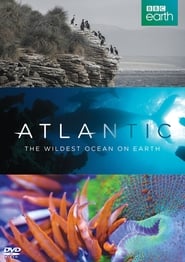
Atlantic: The Wildest Ocean on Earth
English வசனம் பதிவிறக்கம்
வெளியீட்டு விவரம்
குறிச்சொற்கள்
English வசனங்களின் மாதிரிக்காட்சி
முதல் 200 வரிகள்.
There's an ocean where giants gather to feast.
Where people battle the planet's roughest seas.
It stretches nearly 10,000 miles from Arctic to Antarctic...
..from tropical shallows...
..to mysterious depths.
It's an ocean of extremes...
..engine room for storms 1,000 miles across...
..yet also a sanctuary for the vulnerable.
People and animals brave this unpredictable ocean...
..risking it all for rich rewards.
This is the Atlantic,
the wildest ocean on Earth.
It's January in the far north of the Atlantic,
off the coast of Arctic Norway.
The air temperature is ten degrees below freezing.
The land is lifeless, locked in ice.
But, beneath the surface of the ocean, the water is stirring.
Billions of herring have arrived from the open ocean to spawn.
And their presence attracts giants.
Humpback whales.
Massive fin whales.
Hundreds of orcas.
Animals travel hundreds, even thousands of miles,
for this once a year event,
a feast that will last for just a few weeks.
This extraordinary gathering is only possible because of
one of the planet's most powerful forces,
a force whose origin lies half a world away
from these Norwegian waters...
..the Gulf Stream...
..an underwater current of warm water 50 miles wide
that cuts through the ocean for thousands of miles.
The Gulf Stream shapes all life in the North Atlantic,
from the Arctic to the Caribbean.
The Gulf Stream is driven by winds and it begins here,
where the open ocean meets the reefs of the Caribbean Sea.
Sheltering here are animals that will soon travel
to the Arctic, on the same journey as the great current.
WHALE SONG
Every winter, these reefs, north of the Dominican Republic,
are filled with the song of humpback whales.
WHALE SONG
WHALE SONG CONTINUES
This female humpback came here this time last year to mate.
11 months later, she's returned because these waters are warm
and calm, sheltered by the surrounding reefs.
The perfect place to have her baby.
This calf was born just a few days ago,
weighing in at a healthy one tonne.
For now, while his mother rests,
the calf explores his new world.
But he's so young that he tires easily.
He'll need to be a much stronger swimmer
before he can leave this sanctuary.
His mother lifts him to the surface to breathe.
There's very little food here for the mother to eat,
so she won't be able to produce milk for much longer.
Soon they will have to leave.
There are many dangers ahead -
orca attack, collisions with ships.
His mother's back is lined with scars from a boat propeller.
But the young calf faces an even more immediate threat
from a very dangerous animal.
Male humpbacks come here every year, looking for a chance to mate.
They compete amongst themselves for access to the females.
Their rivalry can be very dangerous.
Some females in these waters are looking for a mate,
but not this mother, with her vulnerable young calf.
If she doesn't shake off the testosterone charged males,
the calf could be crushed to death in a scrum of 30-tonne bodies.
The males chase her down, jostling to get into position
to try and mate with her.
The calf struggles to keep up.
The mother guides her calf up for a breath
and uses her body as a block to protect him from the males.
The males become more aggressive as they battle for access.
Five metre long fins, edged with sharp barnacles,
are swung like clubs.
Their bodies can be weapons too.
A breach can severely wound a rival,
or crush a calf caught up in the fight.
The calf is exhausted.
But finally his mother, who's bigger and stronger than the males,
gets her message across.
The males move on.
The calf is now six weeks old.
His mother has done well to keep him safe this far
but her energy supplies are dwindling.
She needs to leave the breeding grounds and head north.
Fortunately, her baby's diet of around 200 litres of milk a day,
coupled with lots of play time, have built his strength.
Now he, too, is strong enough to breach.
He's ready to face the open ocean.
His mother leads him away from the nursery.
They're headed to the fertile waters of Norway's distant shores.
It's a journey they must embark on.
The great Gulf Stream will help carry them on their way.
The Gulf Stream is driven by winds which blow across the ocean,
pushing water before them.
From the Caribbean and the Gulf of Mexico, the winds blow north,
driving the current towards the United States.
Off the Florida coast,
the Gulf Stream grows in strength as it's squeezed against the land.
Just offshore from the beaches of Miami flows a current
100 times greater than all the world's rivers combined.
And it's a busy highway, packed with giants.
Thousands of three-metre long bluefin tuna
hitch a ride every spring,
travelling north from the Gulf of Mexico
to their summer hunting grounds.
Swordfish, marlin and their cousins sailfish also jump on board.
The sailfishes' thousand-mile summer migration
takes about a month.
But unlike the whales, they find something to eat along the way.
This floating mat of sargassum seaweed
is a perfect place to find food.
Sargassum gives its name to a nearby sea, the Sargasso -
a huge region at the heart of the Atlantic...
..where sailors fear to travel
because of stories of ships trapped forever in huge mats of the weed.
In reality, these floating islands provide food and shelter
for hundreds of small fish...
..and that makes them a rich hunting ground.
Sailfish can sprint at up to 60mph,
able to chase down the fastest prey.
How they catch their prey has only recently been discovered.
The sailfish uses its long bill to flick a fish out from the shore...
..throwing it off balance before striking.
The Gulf Stream and the winds that blow it
aren't just relied upon by wildlife.
CREW SHOUT
People have used the Gulf Stream winds for hundreds of years.
We're going home!
When Christopher Columbus set foot on the New World in 1492,
he opened up a world of opportunities.
For hundreds of years,
treasures and natural riches were shipped back and forth
across the Atlantic,
driving the colonisation of America
and changing the course of human history.
And none of that could have happened without the Gulf Stream winds...
From the Caribbean, the winds push the current north
and then east towards Europe
with such consistency that sailors could rely on them
to cross thousands of miles of ocean.
Even today, sailors use this ancient trading route.
CREW SHOUT
The crew of this Dutch ship use the winds to ship rum,
chocolate and coffee beans from the Caribbean back to Amsterdam.
The Tres Hombres has no engine.
She's entirely reliant on winds and currents,
so the crew have to respond to every change in the breeze.
Everybody ready?
Standby on the breakers.
Standby on the main.
The crew work in shifts,
12 hours out of every 24.
It's hard work,
but it has its rewards...
You feel very connected to nature
because you constantly feel the waves on the ship...
You feel the wind when you're on deck.
It's the dolphins visiting you.
You feel exactly what your ancestors felt.
The same waves, the same winds.
So it's beautiful.
CREW SHOUT
But as in ancient times,
harnessing the Atlantic's natural power
means putting your life on the line.
WAVES CRASH
Over the centuries,
more than 600 ships have been wrecked
along just one short stretch of America's Atlantic coast,
where the Gulf Stream flows perilously close to land.
The treacherous sand banks off the barrier islands of North Carolina
are known as the graveyard of the Atlantic.
But there may have been some survivors from the wrecks here...
No-one's certain how they got here,
but many believe that their ancestors made it to shore
from shipwrecked galleons of Spanish conquistadors.
HORSE NEIGHS
For the last 500 years,
horses descended from Spanish stock
have lived completely wild on these islands.
Today, the fertile grasses of the salt marshes
support over 100 horses...
..once domesticated, now completely wild.
They live in small groups of mares and foals,
over which stallions battle for access.
But these horses face a critical challenge.
The water that surrounds them is too salty to drink.
To quench their thirst, they must first dig.
HORSES LAP UP WATER
NEIGHING
These horses are survivors.
They'll even swim between islands in search of fresh grazing.
Marooned for centuries on this Atlantic outpost,
these Spanish horses are a living reminder
of the role the Gulf Stream's played in human history.
Atlantic: The Wildest Ocean on Earth subtitles in other languages
More English subtitles for Atlantic: The Wildest Ocean on Earth
- BBC Atlantic The Wildest Ocean on Earth 3of3 From Heaven to Hell 720p HDTV x264 AAC MVGroup org · 17 downloads · 2025-10-28
- BBC Atlantic The Wildest Ocean on Earth 2of3 Mountains of the Deep 720p HDTV x264 AAC MVGroup org · 20 downloads · 2025-10-28
- BBC Atlantic The Wildest Ocean on Earth 3of3 From Heaven to Hell 720p HDTV x264 AAC MVGroup org eng · 47 downloads · 2020-03-14
- BBC Atlantic The Wildest Ocean on Earth 2of3 Mountains of the Deep 720p HDTV x264 AAC MVGroup org eng · 40 downloads · 2020-03-14
- BBC Atlantic The Wildest Ocean on Earth 1of3 Life Stream 720p HDTV x264 AAC MVGroup org eng · 44 downloads · 2020-03-14
கருத்துகள்
No comments yet. Be the first to leave one.