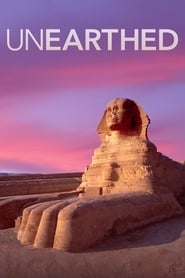
Unearthed
English வசனம் பதிவிறக்கம்
வெளியீட்டு விவரம்
குறிச்சொற்கள்
English வசனங்களின் மாதிரிக்காட்சி
முதல் 200 வரிகள்.
A mighty, hilltop wonder over 2,000 years old.
The sheer scale of these temples
is almost unimaginable.
How did the ancient greeks
construct these extraordinary buildings?
It's really fascinating.
It's a huge puzzle.
What long-lost rituals were they used for?
And how have they survived,
while other ancient buildings have crumbled away?
The only way to solve these mysteries
is to blow this temple complex apart.
Exploring its structure, stone by stone,
will help us unearth the astonishing engineering secrets
hidden inside this ancient wonder.
captions paid for by discovery communications
perched high on a massive rock, overlooking the city of Athens,
stands a landmark of western civilization:
The acropolis.
Here, 2,400 years ago, the greeks built
an extraordinary complex of temples,
where they could worship their gods.
Now, as restorers dismantle and rebuild it,
the acropolis is revealing its hidden secrets.
New clues are emerging from the restoration
The world-famous Parthenon...
And the imposing entrance gateway known as the propylaea.
The Parthenon was the greatest temple of its age...
A wonder of the ancient world.
From 22,000 tons of precious marble,
Greek stonemasons assembled
a building of exquisite perfection.
Its 13,000 individual stones fitted together so precisely,
the joints were watertight.
Its 58 towering columns could withstand earthquakes.
It's an extraordinary structure.
But how exactly did the ancient greeks construct it?
The secret to the Parthenon's perfection begins
with its special building material:
Marble.
Its largest blocks are massive, weighing in at 10 tons each.
But no marble existed in Athens, so how did the ancient greeks
find and transport these enormous pieces of marble
to this dizzying hilltop site?
The answer lies at pentelikon, over 10 miles from the city.
Historian Edith hall has come here
to piece together this ancient mystery.
This is the very birthplace of the Parthenon:
These great rockfaces, where they cut down the marble
and took it all the way to Athens to build the acropolis.
And, everywhere you look, there's just glittering,
white marble, just stones of every size.
I mean, look at this one. Just pick it up off the floor.
You can actually see how incredibly gleaming white it is
and the sparkly bits that, well, you can see,
once it's polished off and smoothed down and chiseled,
it would actually gleam in the sunshine.
It's actually incandescent.
Although Edith is surrounded by marble
at the ancient quarry,
most of it is in small pieces.
In ancient times, craftsmen would've struggled
to find the enormous blocks needed to build the Parthenon.
Today, workers at this modern quarry on mount pentelikon
face the same challenge.
The blocks from here are considered special.
They are from the same seam of marble
as the ancient quarry and are used
For the acropolis restoration.
It's exactly the same marble the ancients used
to make the constructions in the Parthenon.
Even with modern machinery,
extracting large blocks is difficult.
The rock is full of natural fissures,
tiny cracks that cause the marble to break.
Diamond-coated wire saws slice through the stone with ease.
But, once sotiris extracts the blocks,
they often break up into smaller pieces.
For the ancient greeks,
who only had hand tools,
it would've taken years to extract all the large,
10-ton stones needed to build the Parthenon.
And, once they had found their stones,
they faced an even greater challenge...
How did they transport these enormously heavy,
precious blocks over 10 miles,
then raise them to the work site at the top of the hill?
At the ancient quarry, Edith thinks she has found a clue.
Where I'm standing now is actually the road
that was made to transport all those slabs from the quarry,
all the way downhill, to Athens, and to the acropolis itself.
It's downhill all the way.
It's quite a steep gradient, but it's regular and smooth
and the road's as straight as they could possibly make it
so that the journey was as short as possible
because it was an incredibly hard labor for all of them.
Workers used mules to pull the stones on carts,
down from the mountain, to the city of Athens.
But then came the biggest challenge:
Raising the marble up to the acropolis.
The rock rises nearly 230 feet above the city.
There was no way the greeks could pull the massive blocks
directly up this precipice.
So how did they haul them to the top?
Hiding unnoticed by the thousands of tourists
who pass this way lies the answer.
They built a very smooth stone ramp
with quite a slow gradient.
It's only about 10°.
Today, there are only a few stones left here.
But it's clear, from their angle,
that they are part of a massive ramp
that once extended from the bottom of the hill to the top.
So how did the greeks use this ramp?
Archaeologists suspect they created the perfect system.
At the bottom of the ramp,
builders positioned a cart with huge wheels
to support the colossal weight of the marble blocks.
At the top of the ramp,
they anchored a massive wooden pulley.
A heavy rope ran around it
and down to the cart at the bottom.
They connected the rope to a second cart, at the top,
then filled this with rubble from the site,
to turn it into a counterweight.
As the rubble cart rolled downhill,
it pulled the marble blocks up the ramp:
An ingenious cable car, running right up to the acropolis.
It took a huge effort to transport
22,000 tons of stone to the top of this hill.
So why did they choose the most difficult place
in the whole city to build these sacred temples,
and what was their purpose?
The ancient greeks could've built
these sacred temples anywhere in the city.
Why here?
And what did they use them for?
Acropolis means the high place or the summit of the city.
It's where they used to put their treasures.
It was originally their seat of government
and it was certainly the place
where they were going to worship the gods.
On the acropolis,
the athenians felt closer to their gods in the sky.
Although they worshiped many gods,
the main temples on this site were dedicated to just one:
Athena.
Athena is one of the oldest Greek gods.
She's the goddess of cities, of civilization,
and she's very, very often found worshiped
where there's a high, rocky citadel,
where people tended to form big, urban communities.
That's why the city is called Athens.
It's the city of Athena.
Athena was known as the virgin goddess and so,
the people named this building from the Greek word for virgin:
The Parthenon.
Historical accounts reveal this was once a shining temple.
Inside, a nearly 40-foot tall statue of the goddess Athena.
In her hand, a human-sized figure of Nike,
the goddess of victory.
Around her rises an exquisite building created
so the people of Athens could properly worship
the goddess they believed would protect their city
and make it impregnable.
Recently, archaeologists here have made an amazing discovery.
The remains of a strange structure
lie hidden beneath the Parthenon.
Could it be that the building we see today is not the original?
Out of sight, beneath the floor of the marble Parthenon,
lies tens of thousands of mysterious limestone blocks.
The blocks plunge 22 layers deep on one side.
They form a massive, wedge-shaped foundation
that hugs the slope of the acropolis hill.
Investigations reveal that some of these blocks
are over 100 years older
than the Parthenon that sits on top of them,
a sign that another building stood here
long before the monument we see today.
So what was this mysterious structure,
and what happened to it?
Archaeologist elisavet sioumpara
is working to unravel the mystery.
She and her team are tackling a huge,
3-dimensional Jigsaw puzzle.
Thousands of stones lie scattered
within the walls of the acropolis.
Not all of these stones are marble.
Some are limestone, fragments of ancient buildings
that existed before the Parthenon.
Elisavet is hunting for pieces
of these ancient stones that join together.
It's a monumental task.
We have already documentated around 23,000 blocks.
It's a puzzle with an extraordinary prize.
If they can join enough pieces,
they can figure out what the original buildings looked like.
After years of work,
the team has made a major discovery.
From the small fragments that the archaeologists
More English subtitles for Unearthed
- unearthed 2016 s02e11 internal 720p HDTV x264-DHD · 10 downloads · 2017-08-09
- unearthed 2016 s02e10 internal 720p HDTV x264-DHD · 13 downloads · 2017-08-03
- unearthed 2016 s02e09 internal 720p HDTV x264-DHD · 10 downloads · 2017-07-26
- unearthed 2016 s02e06 internal 480p hdtv x264 rmteam · 20 downloads · 2017-07-22
- unearthed 2016 s02e08 internal 720p HDTV x264-DHD · 14 downloads · 2017-07-21
- unearthed 2016 s02e07 internal 480p hdtv x264 rmteam · 24 downloads · 2017-07-13
- unearthed 2016 s02e05 internal 720p HDTV x264-DHD · 24 downloads · 2017-06-21
- unearthed 2016 s02e04 internal 720p HDTV x264-DHD · 23 downloads · 2017-06-14
கருத்துகள்
No comments yet. Be the first to leave one.