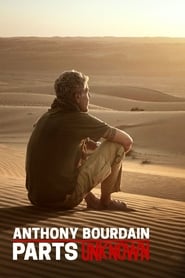
Anthony Bourdain: Parts Unknown
English வசனம் பதிவிறக்கம்
வெளியீட்டு விவரம்
குறிச்சொற்கள்
English வசனங்களின் மாதிரிக்காட்சி
முதல் 195 வரிகள்.
It's morning in the Arabian desert,
the place explorer Bertram Thomas called
"the abode of death."
But it's a beautiful place.
The kind of place I look for more and more these days.
Stark, empty, clean sand
that stretches out seemingly forever.
Oman defies expectations.
It shouldn't... according to
the cruel logic of the world... exist.
But it does, and it's incredible.
The sultanate of Oman is an absolute monarchy,
a predominantly Islamic state
and a vital strategic choke point
in the world's oil supply.
It is surrounded by some of the trickiest
and most contentious powers in the region.
And yet, here it is, relatively small,
tolerant, welcoming to outsiders,
peaceful, and stunningly beautiful.
But Oman is facing uncertainty with succession issues
and declining oil reserves.
The question of what's next is a big,
if often unspoken one.
So, pre-1970, this was a very different,
very different place to live.
Very different country.
Quite simply, there was nothing.
We had only three schools all over Oman.
And only for boys.
We had only two hospitals.
- For the whole country. - Yes, for the whole country.
And nine miles of paved road in Muscat.
And what happened outside of Muscat was really of no concern
to leadership. Absolutely, yes.
Sheikh Zayed bin Sulaiman al-Ghafri
is a businessman and the son of a tribal leader.
He's the kind of guy who will likely be prominent
in the future of the country.
The current Sultan replaced his father
and took the country, really, from the 19th century
into the 20th century very, very quickly.
Absolutely. His Majesty took over
and he changed the whole scene.
This is not a democracy.
But everybody, everybody, it seems,
has genuine affection and respect for the Sultan.
Sultan Qaboos bin Said al Said is the much-admired
and enigmatic absolute ruler and monarch.
He's presided over everything Omani for the last 47 years.
In that time, he's raised a nation... literally...
From a dusty, primitive backwater
to a modern, functioning, largely secular society.
His vision was to deliver the surfaces first.
Electricity, water, heath care, education.
It was like a one man show.
And usually, one man shows are not a good thing.
- That's right. - I mean, historically,
seldom does that work out.
But, you know, you look around and see how
the county's doing now, it's pretty impressive.
It's a tremendous job that His Majesty has done.
People just felt like he's the man
that they were waiting for to enlight their life.
And to open doors for them.
Oman, it should be understood,
sits at the top of the Indian Ocean rim.
The empire once stretched from Pakistan to East Africa,
with important trade routes that reached
from southern Africa all the way to the China Straits,
Indonesia and deep into East Asia.
Modern Oman is a fraction of that size now.
But its DNA, its culture, cuisine... and to some extent...
Attitude toward the outside world
is a reflection of that history.
Muttrah is a port town in the capital of Muscat.
For centuries, a central hub of commerce and trade.
One of the first things I noticed about the city
is it's very low slung. Yeah.
It seems like a calculated, aesthetic decision.
If you're someone who wants to build your house,
you first submit your plans to municipality.
And if you're going above a certain height,
it's generally frowned upon.
'Cause the idea is to keep
a sort of traditional Omani vernacular.
Aisha Stoby is a curator and PhD student
focused on Middle Eastern art history.
She is, like many young people here,
patriotic to the point of being nerdy, as she puts it.
We have such an old history.
And I think Muttrah is a really great example of that, you know?
This is something that functions in our daily life.
It functions very similarly to, say, how it would've functioned
if you were coming into Muttrah and going into the Souq,
say, 200 years ago.
And now we're coming to the Corniche, which is...
Oh, I just love that word. I love any city with a Corniche.
It's such a beautiful word.
The food of Oman is a mix of flavors
and ingredients and tastes from Arabia
and from all over Oman's former empire.
Bait Al Luban is an old boarding house
turned restaurant, where you can
try dishes like pakora and kachori...
Which both came back from India...
Chapati, from East Africa,
and shuwa, Oman's classic special event dish.
They do one version or another of this all over the world.
But shuwa is special.
They slather a goat with a spicy paste
consisting of cumin, coriander, red pepper,
cinnamon, cardamom, and nutmeg.
Then wrap the meat in palm or banana leaves,
dig a hole,
throw in some meat,
cover it up,
and leave underground for a day or two
over hot coals.
Oman has changed in a way that's unique
to anywhere I've been.
I mean, I haven't seen any place
that has sort of maintained
the architecture and the character
that this country has.
And that's a really unusual thing.
That's Omani... The only country, I think
of the Gulf region that kept their tradition.
And if you travel outside Muscat,
you see the flavor of the old life still there.
Hassan Meer is one of Oman's preeminent fine artists,
who works in painting and photography.
Muzna Almusafer is a filmmaker, artist, and provocateur,
representing the increasingly vocal point of view
of young Omani women in the Middle Eastern art scene.
I think in Arabia, we have a tradition of storytelling
and saying things without saying them directly.
They took this from poetry.
They have a certain language with a lot of tact,
with a lot of... Subtext.
- Yeah. - There's an unusual mix here.
Very graceful, very proud mix of cultures and languages.
I mean, the mix was existent from the beginning.
There is a beauty in being different
and understanding the other.
Such a difficult time to make that argument.
The whole world seems to be going
in exactly the opposite direction.
I mean, my country, the last thing anyone
seems to wanna do is highlight the other.
I think people discuss, like, fears of multiculturalism.
But within Oman, because of our seafaring history,
it's a traditional reality.
It's our background. It's who we are.
You know about the Vietnam War.
What you might not know is that while that conflict raged on,
Oman, along with an elite force of British special operators
and military advisors, was engaged in a war
in the country's southern Dhofar region
that was in every way far more vital
to American security interests
and of far more importance
to global strategic and economic concerns.
Where we operated were the frankincense trees.
The frankincense that the Wise men brought to Christ.
All the sudden, they came through mountains
where we were fighting.
And you're sitting behind a machine gun
on a track, which had been used for 3,00 years.
One felt like an intruder in history.
And if the trees were cut,
you could smell the frankincense.
The smell of explosives.
The smell of blood.
The smell of the food. Cardamom, the smell of the tea.
I loved it.
This was a civil war.
Civil wars, typically, are the worst wars of all.
I mean, you know that well enough in your country.
But most people have not heard of it.
No, they haven't. But you'd have heard about it
if we'd lost it, I can tell you. Right.
The war began as a local rebellion
by the Dhofari people against the autocratic
and outdated rule of then Sultan, Said bin Taimur,
who had kept his nation isolated and stunted
out of his concern for his hold on power.
What started as a local uprising
quickly became a serious, full-blown,
communist-backed insurgency,
as Soviet and Chinese influence poured in through Yemen.
Ian Gardner remembers the conflict well.
He fought in it, alongside Omani infantry
as a British Royal Marine.
And later wrote about the experience
Anthony Bourdain: Parts Unknown subtitles in other languages
More English subtitles for Anthony Bourdain: Parts Unknown
- Anthony Bourdain goes to Iran 1080p H 264 (moviesbyrizzo documentaries upl) · 67 downloads · 2020-12-27
- Anthony Bourdain Parts Unknown S06E02 Marseille 1080p NF WEB-DL DDP2 0 x264-NTb · 140 downloads · 2020-05-07
- Anthony Bourdain Parts Unknown S06E01 Cuba 1080p NF WEB-DL DDP2 0 x264-NTb · 137 downloads · 2020-05-06
- anthony bourdain parts unknown s12e07 lower east side 720p AMZN WEBRip DDP2 0 x264-AJP69 · 99 downloads · 2018-11-13
- anthony bourdain parts unknown s12e06 behind the scenes 720p AMZN WEBRip DDP2 0 x264-AJP69 · 79 downloads · 2018-10-29
- anthony bourdain parts unknown s12e05 far west texas 720p AMZN WEB-DL DD+2 0 H 264-AJP69 · 90 downloads · 2018-10-22
- anthony bourdain parts unknown s12e04 bourdains impact 720p AMZN WEBRip DDP2 0 x264-AJP69 · 80 downloads · 2018-10-15
- anthony bourdain parts unknown s12e02 asturias spain 720p AMZN WEBRip DD+2 0 H 264-AJP69 · 76 downloads · 2018-10-09
கருத்துகள்
No comments yet. Be the first to leave one.