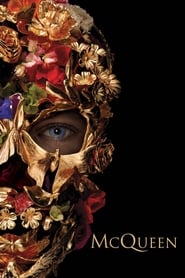
McQueen
English வசனம் பதிவிறக்கம்
வெளியீட்டு விவரம்
குறிச்சொற்கள்
English வசனங்களின் மாதிரிக்காட்சி
முதல் 200 வரிகள்.
Sminky-Pinky.
Minks.
You mean like a... JIV-II
A "V"? All right.
Lots of people say, "I discovered Alexander McQueen."
But you don't discover talent. Talent's there.
You open doors for talent. You push it through or you help it along.
No one discovered Alexander McQueen. Alexander McQueen discovered himself.
Lee had this very strange CV.
I wasn't very good at school.
I was always drawing clothes in every lesson,
in science, in biology and...
But I used to enjoy art most.
When he left school he wasn't sure what he wanted to do.
He was out of work. Looking for work, I should say.
Because my husband's very strict on the children going out to work.
We was watching a television programme one evening
and they was saying that they couldn't get apprentices
to work in Savile Row.
So I just said to him, "Why don't you go and try?
"Just knock on the door. They can only either say yes or no."
And that's exactly what he done.
Anderson & Sheppard started in 1906.
We like to do things slightly different to other people.
We have a house style.
That's what we're going to teach the apprentices to make.
I was taught by a master tailor from County Cork in Ireland.
He was the best tailor we had on the premises.
You start off padding collars, putting in pockets,
but you're expected to make a full jacket
ready for fitting by the end of the first year.
As soon as you put it on,
it should fit like a glove and you know it's made for you.
I knew I couldn't survive in a place like that for the rest of my life,
cluttered in a small workshop, sitting on the bench, padding lapels.
But I did have a passion and I was good at it.
I was good at tailoring a jacket. I was quick at learning trousers.
I wanted to learn everything. "Give me everything."
It was the beginning of the '90s
when I had a bespoke tailoring shop in Mount Street
and he just walked in one day.
He looked like a skinhead,
but he just told me he can cut a frock coat
much better than the 50-year-old tailor I had.
So I was very curious and I just told him,
"OK, show me what you can do."
I never really made clothes in a traditional way.
I was experimenting myself
in how to create structure and volumes.
I'd begun to just take in material, any material.
And, by putting them all together, somehow you can start to create
this three-dimensional form.
He wanted to understand
why I'm doing it this way or that way.
When Lee was 17, he said, "I'll make you a couple of skirts. ”
And I've got to say, they fitted like a glove.
They were so fitted to my body
I couldn't even move my legs, hardly,
but I used to get compliments on this skirt.
I did use to wonder,
"I hope he finds the right thing for himself in life."
He was a sweet boy from the East End,
looking to make money.
We needed technical help,
machinists, pattern cutters.
We needed people who had hands-on experience
in making clothes.
He gave me no attitude, was never late,
always knew what he was doing, always delivered.
He listened continually to Sinéad O'Connor, which was quite odd.
No one else liked Sinéad O'Connor at the time
but he really liked her for some reason.
I always remember him with his Walkman on, listening to Sinéad O'Connor.
Three, two, one, ignition.
Lift-off.
Red or Dead was this very young streetwear company.
When I said to him that the Space Baby collection
was based on the anniversary of the men landing on the moon,
he was like, "What?"
He didn't know that you could take a subject
that had no relation to clothing
and actually get inspiration from that to design clothing.
So, he didn't understand
this idea of visual research
or historic references or sexual references.
We copy you on the ground. The Eagle has landed.
He must have asked me questions,
"What can I do next? How can I push myself forward?"
And at the time
all the designers in Italy were opening diffusion lines.
He went to Italy with no language,
no place to stay, no money, no qualifications.
I thought, "Within a week he'll be back with his tail between his legs."
A week later, maybe 10 days,
I get a call from Lee from Italy.
He'd landed a job as an assistant for Romeo Gigli.
To say I was shocked was an understatement.
I said to him, "OK, I'm looking for a new jacket.
"I have in my mind this shape
"but my tailors, they cannot reach that shape.
"Maybe you can help me to do it."
And we start to do that jacket
and within the first fitting
I say, "No, it's wrong. That is not what I'm looking for."
So with the tailor, with Lee, they did one more.
We did the second fitting and again I take out the lining,
look inside the jacket and it was wrong.
Third fitting I say, "No, it's incorrect."
And I take out the lining and inside the jacket
Lee wrote with a black pen,
"Fuck you, Romeo."
That was a time when I was looking for new shapes,
for shapes, for shapes...
And he was looking so deeply and hard.
He was really deeply looking to understand everything.
He was leaving my studio
because he wanted to study more and more and more.
You can't teach talent.
But what you can do is make them better at what they do, or more professional.
And to me, the whole thinking behind this MA
was to make them work in teams, working together,
as you do in the fashion world.
I saw this unprepossessing, I must say,
very shabby,
very unattractive...
I hate to even say this but it was true.
...boy with a bundle of clothes over his arm outside my office.
So I said to him, "Who are you looking for?"
And he said, "I've come to see you."
But I had no job, which he said he was after.
The whole thing intrigued me. He was passionate.
And to me this is the secret, really.
You... If you tap into that.
I found myself saying,
"Well, I think you should come on my course."
And I couldn't offer him money. That was really sad.
And it was patently obvious he had none.
Aunt Renee said she had money in the bank,
sitting there not doing anything, and she would rather help Lee.
She'd worked in the rag trade.
She knew that Lee had talent.
And he came back and said,
"My aunt is going to pay the fees
"and I'm coming."
Saint Martins was the place to go.
But what I liked about it was the freedom of expression
and being surrounded by like-minded people.
We got on really well because we had the same sense of humour.
And he laughed all the time, so he was just funny and disrespectful.
And he'd do catwalk shows down the corridor. He'd just muck around.
Whenever he could muck around, he'd muck around.
I was teaching there at the time as well.
And he was not frightened to tell people, "I know better than you."
Even the tutors.
He was a bit of a nightmare student because he knew so much.
I'm sure he was a pain and did interrupt people.
He didn't actually dare interrupt me.
But he used it. He used it as I intended him to use it.
And he'd come to a painting or a book
and, not having had a formal education,
it was all new to him.
And that was it. He reinterpreted things in his way.
It wasn't filtered through, as with a lot of us
who'd had more conventional backgrounds.
I loved that.
He knew where to go for everything. London was his town.
"Where do I get my buttonholes?"
He'd go,"You want to go to Martin in Soho."
"If you want fabric, then you want to go to Berwick Street, Shepherd's Bush."
He would take me to gay bars and he would take me to lesbian bars
and he'd, like, sit me there and he'd go,
"This is what you want. This is what you want."
I'd go, "No, I just want to go home. Can I just go home and do my homework?"
The course always ended with the degree show.
No other college had ever been invited, as I was,
to show during British Fashion Week.
He called me when he was finishing the final collection
and asked me to come in to have a look and talk to him about it.
It had all the elements.
had the history of the East End.
It had the darkness, Jack the Ripper stalks his victims.
It had the research. It had a really great story behind it.
He was reading books like Perfume,
which is all about the murder of women,
and he had a very dark side to him as well,
so he was drawing from a“ of these influences
and then creating something very beautiful out of it.
The pieces went past me and they moved in a way I've never seen.
And I wanted them. They were modern. They were classical.
He would do a black coat and then he'd line it with human hair.
And it was blood-red inside so it was like a body.
It was like flesh with blood.
And I just thought,
"This is the most beautiful thing I've ever seen."
it was about sabotage and tradition, which is the perfect combination,
and beauty and violence.
All the things that I suppose the '90s represent.
How difficult is it to discover genius?
Not at all difficult, cos they have it and I spot it.
If you're interested in late 20th-century clothes,
McQueen subtitles in other languages
More English subtitles for McQueen
- McQueen 2018 LiMiTED 1080p BluRay x264-CADAVER · 68 downloads · 2018-10-28
- McQueen 2018 WEB eng · 44 downloads · 2018-10-14
கருத்துகள்
No comments yet. Be the first to leave one.