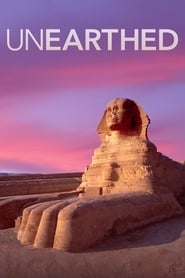
Unearthed
English வசனம் பதிவிறக்கம்
வெளியீட்டு விவரம்
குறிச்சொற்கள்
English வசனங்களின் மாதிரிக்காட்சி
முதல் 200 வரிகள்.
Refrigerator, and I'm going to open it the minute we discover planet nine.
Ian tombs
carved out over 3,000 years ago
and the final resting place
of the famed boy king,
Tutankhamen.
When he found the tomb of the king of tut,
it was fantastic.
And no discovery then or since
has ever had the excitement
that king tut's did.
Today, teams are working
inside Tutankhamen's tomb
to unearth its mysteries.
Even today, every time we turn around
we find more questions to ask.
Why is the tomb of Tutankhamen so unique,
and how did it stay hidden for over 3,000 years?
To find out...
We will venture inside the valley of the kings.
Blowing it apart,
we'll explore its hidden chambers...
And golden coffins...
To reveal the secrets
at the heart of this ancient wonder.
captions paid for by discovery communications
by the banks of the river Nile,
hidden in a labyrinth of rock,
lies a monumental ancient burial site...
the valley of the kings.
Extending deep beyond giant stone entrances,
dozens of subterranean tombs
became the final resting place
for powerful Egyptian pharaohs.
The valley of the kings was in use
as a royal burial place for about 500 years.
The primary concern
was that the pharaoh's body
be protected,
that it could survive, could endure for an eternity.
Today, teams from around the world use
the latest scanning and forensic technology
to unearth the secrets
of these subterranean chambers.
Beneath this valley
lie more than 60 hidden tombs
carved deep into the rock.
Most are similar in design,
their snaking tunnels descending
towards the underworld,
creating a rabbit Warren
of hundreds of painted chambers
filled with hieroglyphs
and paintings of the afterlife.
Hidden near the center lies the tomb
of the most famous pharaoh of all...
King Tutankhamen.
This mysterious chamber
is unlike any royal tomb in the valley
and puzzles archaeologists to this day.
Tutankhamen's tomb lies at the heart of the valley,
surrounded by the tombs of the great pharaohs
that came before and after him.
Today, Tutankhamen is the most famous name
of all these ancient kings,
but during his lifetime,
historians believe he was insignificant.
He was a kid...
9, 10, 11 years old.
The little-known relatively minor pharaoh.
Yet, Tutankhamen's tomb
transformed his fate.
This young boy king became
one of the most powerful symbols
in egyptological history.
Kent weeks has spent 40 years studying
the valley of the kings.
Kent and teams of archaeologists
are working to resolve a crucial mystery.
How did Tutankhamen's tomb transform the boy king
from a minor pharaoh
to one of the most celebrated men in history?
Kent believes the first clue lies
in how the tombs in the valley
are decorated.
He wants to understand why the imagery in tut's tomb
is so different to those belonging
to more powerful pharaohs.
Royal tombs in the valley of the kings,
they all follow pretty much the same standard rules,
contain the same standards scenes,
but the tomb of Tutankhamen
is unusual.
Kent heads to a different tomb belonging
to the great king SETI ii
to investigate how royal tombs
are traditionally decorated.
Okay, let's do the other side.
Inside, he forensically records
every square inch
of the carvings adorning the walls.
Many of these artworks show scenes
from the important religious text,
"the book of the dead."
their primary objective
was to ensure the safe passage of the pharaoh
from this life into the next.
This was a major concern to Egyptians.
When a pharaoh died, can we be sure the pharaoh
is going to have a safe journey
into the afterlife?
All of the texts,
all of the scenes in these tombs
are designed to serve those simple functions.
In ancient Egyptian beliefs,
the journey to the afterlife begins as the sun sets.
The pharaoh takes the route of the sun
as it passes down into the underworld.
Armed with spells from the walls of the tomb,
he faces many challenges,
including a lake of fire
and giant serpent.
Most Egyptians would then face the most rigorous test...
To have their heart weighed against the feather of truth,
but the pharaoh was thought to be exempt.
When he reaches the end,
a parade of gods welcomes him to the afterlife.
He is transformed into the sun god
and the sun can rise again.
With the spells and prayers on the walls of the tombs
acting like a guidebook for the pharaoh,
the ancient engravers couldn't make a single mistake.
When you look at these relief carvings,
even something as straightforward
as columns of hieroglyphic text,
the first thing I think that strikes a person
is the care,
the attention to detail.
The birds are meticulously shown.
You can identify species of birds
from the way they're depicted.
The care is important
because these texts are important.
Most royal tombs are
just as extensively decorated
with incredible attention to detail,
but surprisingly, the tomb of Tutankhamen,
the most famous tomb in the valley,
is far less impressive.
Tutankhamen's tomb is just four small chambers,
each no more than 14 feet wide.
At the heart of the tomb
is a sparsely decorated burial room
modestly painted and with no carvings.
Hidden in the walls,
mysterious niches once held sacred statues,
Ushabti to come to life as the pharaoh's servant
and the jackal god of the dead, Anubis.
Tutankhamen's burial chamber
is filled with magical decoration,
but beside it,
the rest of the tomb is left bare.
This simple tomb is unlike
any other royal tomb in the valley.
All of these things
conspire to make Tutankhamen's tomb
unlike any other in the valley of the kings,
and we can't be sure why.
Today, Kent has a rare opportunity
to study the religious text
inside Tutankhamen's burial chamber
up close.
He searches for clues that might explain
why they're not as elaborate as other pharaohs'.
Kent works with a team carefully conserving
the delicate decoration.
Lori Wong has found mysterious anomalies
in the way the ancient walls have been painted.
If we notice here, the very base of the wall,
you can see that there's drips running down.
Throughout this tomb, we have drip marks,
so it suggests this very fast fluid action
in terms of the application of the painting materials.
Also, what's really unusual
is that in this small burial chamber,
each wall has a slightly different painting technique.
It's unusual because one would expect,
in a small chamber,
that the painting technology would be the same
from wall-to-wall.
Kent has found something else strange
about the imagery in the chamber.
In other tombs, long corridors were filled
with column after column after column
of religious texts.
Here, we have just a few highly abbreviated scenes.
Kent has spotted an illustration
of the pharaoh's journey through the underworld,
but it's been dramatically simplified.
We have 12 baboons shown here,
More English subtitles for Unearthed
- unearthed 2016 s02e11 internal 720p HDTV x264-DHD · 10 downloads · 2017-08-09
- unearthed 2016 s02e10 internal 720p HDTV x264-DHD · 13 downloads · 2017-08-03
- unearthed 2016 s02e09 internal 720p HDTV x264-DHD · 10 downloads · 2017-07-26
- unearthed 2016 s02e06 internal 480p hdtv x264 rmteam · 20 downloads · 2017-07-22
- unearthed 2016 s02e08 internal 720p HDTV x264-DHD · 14 downloads · 2017-07-21
- unearthed 2016 s02e07 internal 480p hdtv x264 rmteam · 24 downloads · 2017-07-13
- unearthed 2016 s02e05 internal 720p HDTV x264-DHD · 24 downloads · 2017-06-21
- unearthed 2016 s02e04 internal 720p HDTV x264-DHD · 23 downloads · 2017-06-14
கருத்துகள்
No comments yet. Be the first to leave one.