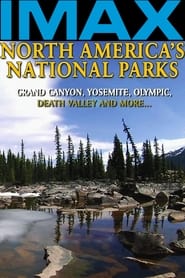
North America's National Parks
ดาวน์โหลดคำบรรยายEnglish
ข้อมูลรุ่น
แท็ก
ตัวอย่างคำบรรยาย English
164 บรรทัดแรก
The National Parks of North America.
Havens of the mountain spirits
of desert mysteries.
Living museums of nature's most profound beauty
and starkest contrasts.
The National Park is an American invention,
an expression of the American soul.
The parks are our treasures, our history,
our pride and our solace.
In their immensity of our diversity,
the provide us the fullest sense of who we are.
It is difficult to imagine a time
when these treasures were in danger of being overrun
by human progress.
Then, with the founding of the National Park Service in 1872,
we ensured that our footprint on these singular lands
would be a small one.
Men may bend, crumble and fade away
when subject to the undying power of Time,
weather, and Light.
But we may taste eternity,
if only for a moment,
as we explore our timeless National Parks.
America's National Parklands stand alone in the world.
They are the crown jewels in the North American landscape.
These places tell us the chronicle of Time,
and help us to understand the Earth's story.
By selling aside pieces of America's original wild land,
we have protected our birthright for ourselves
and given an enormous gift to the world.
Our National Parks represent us to the world with honor.
Within the parks,
managed wilderness offers us the perpetuity of wilderness.
It offers us hope and memory.
It offers us the earth as it was and,
so long as its protection remains intact,
as it will be.
These mountains rising to heights of 13,000 feet
in dramatic vertical displacement
are Temples of great wisdom and strength.
Breaking through clouds,
battling the high weather,
the mountains are symbols of our own quest
to rise and stand strong.
At Teton
sky and earth are united in more than 100 alpine lakes,
bearing the reflections of bold granite peaks,
clouds, and trees declaring the unity of all nature's elements.
In knowing this glorious land,
and in preserving it,
we also preserve the spirit within all of us.
In the American Southwest,
there is a slowness and a distance to things.
A patience.
An endurance.
There is time for snow.
There is time for the etching of great canyons.
The Colorado Plateau of the Southwestern United States
is the oldest land mass in the puzzle
that makes up the American continent.
This truly unique landscape is home to 15 of
our most spectacular National Parks.
There is barely a hint of this land's stories past
where millions of years ago,
it was an ocean floor.
These vast, petrified layers of sediment
are testimony to the eons of pressure
and sifting that were exerted by a turbulent ocean above.
Just as the needles of a cactus conceal the soft,
delicate plant hidden within,
so too does the rough external appearance of the desert conceal
a highly sensitive, and fragile ecology.
All this is measured by the delicate
beauty of this rocky land,
which has endured a long battle with the forces of weather.
In the desert,
the struggle to survive is what brings us closer
to the intangible mystery of Nature.
The old growth forests, lush meadows,
and pristine waters of the Pacific Northwest
offer us a palette of emerald beauty.
A sleeping volcano encased in snow and glacial ice,
Mount Rainier is the famous landmark of the Cascade Range
and dominates the skyline.
This portion of the Cascade mountains owes its beauty
to the rains that wash off from the Pacific Ocean.
But rather than dilute color,
these waters bring it to life.
Across the broad spectrum of nature's palette of forms,
Water occupies its own sacred position.
It is the source of life and the shaper of landscapes.
In contemplating water,
we are reminded of the essential lesson of Nature
that everything is connected.
This lesson of beauty and harmony
was not lost on our early conservationists:
Freeman Tilden,
the poet and advocate for our National Parks system,
once wrote:
"The early philosophers looked at the world about them
and decided that there were four elements:
fire, air, water and earth.
But as they grew a little wiser,
they perceived that there must be something else.
These tangible elements did not comprise a principle;
they merely revealed that somewhere else,
if they could not find it,
there was a soul of things
a Fifth Essence,
pure, eternal, and inclusive."
Denali: The word means "The High One,"
and is the name the local Athabascan people
ascribe to Mt. McKinley.
Its stunning mass reaching over 20,000 feet,
it is the rooftop of North America.
Denali stands at the apex of
the six-hundred mile long Alaskan range.
These mountains, with their surrounding glaciers
and lowlands make up North America's largest national park.
an area totaling more than six million acres.
Within this vast territory,
human influence is rendered meaningless
as the pattern of nature's artistry canvas the landscape.
From the low riverbeds that reveal swirls of earthen clay.
Through the Tundra,
a sub arctic wilderness of miniature plant life
turns into a Technicolor carpet in the fall
and into the deep, centuries-old forests,
Denali echoes the rugged independence
of a perpetual frontier.
The sands of the Pacific seashore along the Olympic peninsula
glimmer like molten gold,
as if to provide us with a hint of all the treasures that lie inland.
The place where ocean meets land,
is not to be overlooked
when we explore our protected national treasures.
Three distinct ecosystems co-exist in this park
from the Pacific shoreline to high sub alpine meadows
displaying spacious wild flower spreads.
A place that receives more than
12 feet of rain per year offers us,
in exchange,
a rare temperate rainforest with tall trees,
a sweeping canopy and a fine retreat.
Nearly 95% of Olympic National park is wilderness.
Besides a variety of Forests,
Meadows and Highlands,
the wilderness encompasses a 60 mile long Pacific coastline.
On the right day,
we can return to the Pacific Coast
as the tides recede across the of sands,
chasing the sunset westwards,
treading along the land-bound edges of our National Parks.
"Gateways to nature, to discovery,
to solitude,
to celebrate the beauty and infinite variety of our land."
That is how Parks Canada defines the country's National Parks.
What is it that impels us to respect the freedom
and majesty of the National Parks?
Is it something peculiar only to Americans?
That cannot be.
For soon after Yellowstone was created,
the Canadian government created their first national Park-Banff,
nestled in the heart of the magnificent Canadian Rockies.
North America's National Parks subtitles in other languages
ความคิดเห็น
No comments yet. Be the first to leave one.