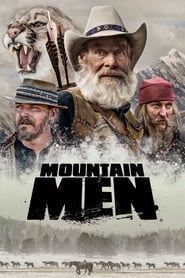
Mountain Men
ดาวน์โหลดคำบรรยายEnglish
ข้อมูลรุ่น
แท็ก
Download English Subtitle Files for Mobile (16)
ตัวอย่างคำบรรยาย English
200 บรรทัดแรก
Narrator: This season on "Mountain Men"...
nature...bites...back.
Tom: There's more wolves hiding up here than I've ever seen.
And as predators surge...
...man must stand his ground...
Man: Come on!
Line him up. Let's go.
...to defend what's his.
Man #2: There he goes.
They are the last of their kind...
Eustace: Living on a piece of wild land
is the most valuable thing I have.
...risking it all...
I'll do whatever it takes to protect my freedom.
...to carry on a tradition...
Jason: This baby is coming.
-Jason? -What?
My water broke.
Okay.
Oh!
...and survive on the edge.
Man #3: The thing that makes me nervous
more than anything is that,
you know, you could make a mistake
that costs you your life.
Captioning Provided by A&E Networks
Winter is the deadliest season
in the mountains.
And when nature's fury strikes,
survival depends on grit and guts,
but also on being prepared.
With winter just two months away,
Alaskan homesteader Morgan Beasley
is risking it all to be ready.
To stock up on food for the season ahead,
he's come to an island in the Kodiak Archipelago
that's teeming with prey...
and predators.
Morgan: The Alaska brown bears on Afognak Island
are some of the biggest in the world.
They're huge - up to 1,500 pounds and 10 feet tall.
And these bears and I are after the same thing,
and that's salmon.
Narrator: For just 12 weeks every year,
millions of salmon make the journey from the ocean
to inland streams to spawn.
It's one of the biggest migrations on Earth,
and Morgan is here to cash in.
Morgan: Back in the interior, hunting,
it's never a sure thing,
so catching some salmon is the best option
for providing us with good, quality protein for months.
So, I'm gonna try to bring home a pile of fish.
Narrator: If he's successful, he could leave the island
with enough fish to sustain him
and his partner, Margaret, through the winter.
Wow. Looks like another planet.
But with bear activity dangerously high
during the salmon run, he's packing some firepower.
I got this pistol loaded.
It's a .454 Casull, so, much larger,
more powerful round than the .357
I usually carry.
I'm gonna get into these trees
and look around for a campsite.
It's, like, pretty thick in here,
and wouldn't be too hard to spook up a bear.
Before he can get fishing,
Morgan's first priority is to set up a base camp.
This, right up here, is actually a pretty nice natural shelter.
I'm pretty pleased to find this.
I like it.
It's pretty dry under here.
The terrain will protect him from the elements,
but as long as he's on the island, he's vulnerable.
I'm sure this smells a little bit like food,
so I am going to hang this pack up,
so it's out of the reach of any bears.
It's so important to hang your food
and protect it from bears, because as soon as they realize
that humans are a source of food,
they're gonna look for every resource they can,
whether that's someone's camp or the people themselves.
Everything looks good, and I'm gonna go see
if I can find some fish.
Morgan's plan is to scout the nearest creek,
2 miles to the north,
but visibility is low in the dense forest
where bears are known to make their dens.
Oh, Bear, right there.
Hey there, big bear. You're okay.
Hey, kitties.
Hey, there's mom and three cubs, right there.
Back up. Back up.
Hey there, big bear.
Mother bears are ferociously protective...
Hey there, bears.
Hey there, bears.
...and easily provoked to attack
by any noise or sudden movement.
It's all right.
Morgan: Just talking calmly to them,
trying to defuse and de-escalate the situation.
Okay. I think they moved off.
That's as close as I've ever been to a sow with cubs.
Luckily, you know, the bears weren't agitated by me,
and I was able to back off.
Morgan: Hey, Miss Bear.
So, I just keep whistling a little bit
and talking as calmly as possible,
and telling the mama bear that I'm no threat,
and I want to keep moving.
Hello. Hello.
Taking an awful risk coming out here,
but my whole entire will is focused on
securing this source of food,
so we have a steady supply coming for the upcoming months.
We're just going on downstream.
Going to look for some fish.
Narrator: To maximize his haul,
Morgan is looking for a narrow bend in the river,
where the salmon are likely to be bottlenecked
trying to swim upstream.
I see a few good-looking fish in there.
See if I can get one,
Morgan: I got 2 days before the boat comes back to get me,
and I'm hoping there's enough time to catch 50 pounds of fish,
which is about as I much to want to try to carry.
Morgan has rigged his line with a lure that mimics
the movements of a wounded fish,
which salmon are known to prey on.
Oh, , bear.
I think it's gonna come down this way.
Oh, . There's two of them.
Yeah, I'd better get out of here.
I don't want to get a fish on and get their attention.
I'm gonna swing wide of the bears
and try to keep working my way upstream.
I'm gonna have to find somewhere else to fish.
Narrator: By late summer, the deadliest wildfire season
in history is tearing across the American West,
destroying everything in its path.
Reporter: It's one of the worst fire seasons
the state has seen in years.
The situation is likely to get worse before it gets better.
Narrator: From California to Montana...
Reporter #2: closures ordered last week
covered 6 million to 8 million acres.
The terrible fire rapidly expanded,
growing more than 1,500 acres overnight.
Narrator: ...where 21 separate blazes
have consumed more than a million acres.
Now, they're closing in on veteran mountain man, Tom Oar.
A lot of smoke up here -- a lot of smoke.
Less than 10 miles from his homestead,
a fire that's still smoldering has taken a devastating toll.
I've got a friend that lives over here on the West Kootenai,
and when that wind came up, it blew that fire 3 miles.
His place burned through, and nothing left.
So, I told him I'd come over
to see what we can salvage out of the ashes.
Look at this tree.
It just whacked everything.
What a deal.
What a deal.
Mark White is a fellow trapper and friend who,
like Tom, built his homestead by hand.
Four days ago, it disappeared in a matter of minutes.
Look like you had a fire here, buddy.
Tom, how are you doing?
Mark: This was a crazy, perfect-storm fire.
How no one got burnt to death is still a miracle.
Tom: He had a big log house that he lived in,
and everything burned down --
total devastation, all these barns and sheds.
Mark: A little shook up, to tell you anything.
-I imagine a little shook up. -Yeah.
-We barely got out. -And how --
I can't hardly imagine what you're going through.
The first thing you think about is,
what if this happened to you, you know?
Oh. Yeah.
It'd be...
It'd be devastating.
It certainly would.
35 years of collecting all went poof.
Narrator: Wildfires can burn at a scorching 2,000 degrees --
hot enough to incinerate bone and liquefy steel.
The fire was so intense.
I had a 40-gun safe that melted, quarter-inch-plate woodstove
that melted, and a cast-iron claw-foot tub.
Tom: You've got a bunch of work here.
Do you want to start doing something?
I'll take all the help I can get right now.
All right. All right.
Narrator: Tom has come to help Mark salvage
whatever he can from the wreckage.
Their priority is to find the trapping equipment
that Mark needs to get back to work.
Tom: The trapping shed didn't burn near as hot
More English subtitles for Mountain Men
- Mountain Men S12E08 1080p WEB h264-EDITH[eztv re] · 33 downloads · 2023-10-21
- Mountain Men S12E07 720p WEB h264-EDITH · 31 downloads · 2023-10-13
- Mountain Men S09E16 720p WEB h264-BAE · 14 downloads · 2021-03-15
ความคิดเห็น
No comments yet. Be the first to leave one.