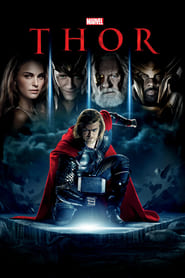
Thor
ดาวน์โหลดคำบรรยายGerman
ข้อมูลรุ่น
แท็ก
Download German Subtitle Files for Mobile (5)
ตัวอย่างคำบรรยาย German
200 บรรทัดแรก
Hello, everyone. My name's Kenneth Branagh
Everyone calls me Ken,
so please feel free to do so if you choose to talk to me
while this director's commentary is going on.
And I'm here to talk a little bit
about how we came to some of the artistic decisions we made
when we were creating our new film of Thor .
So first off, the marvel of it all.
I was asked to do this back in the summer of 2008.
And one of the first things that we had to decide is,
"What's the basic structure?"
And one of the things that I was keen about was that we should start on Earth.
And so here we are in Puente Antiguo,
"old bridge," for those of you who know your Spanish, in New Mexico.
And the sequence that you're watching now
was one of the very first ones that I worked on
with our first storyboard artist,
a brilliantly talented young man called Federico D'Alessandro.
And it was about coming up with a kind of teaser on contemporary Earth
that allowed us to do a number of things.
First of all, introduce a vast Earth landscape,
something that could be, during the course of the picture, epic.
I'd worked in New Mexico as an actor, I'd shot there,
and I knew it was the land of the big sky.
And the sense of immensity in that landscape
would be, visually, very powerful and might work as a very strong mirror
for some of the epic landscapes
that we would try and convey off Earth, as it were.
We also wanted to take this opportunity to introduce the audience to characters,
contemporary characters.
In this case, Jane Foster, played by Natalie Portman,
Erik Selvig, played by Stellan Skarsgård,
and Kat Dennings, who plays Darcy Lewis here,
at the front of the movie
who are engaged in scientific activity out in the desert watching the skies,
and who are introduced to this extraordinary aurora phenomenon.
I will digress in various ways. Let me tell you a little bit about auroras.
This kind of look, this kind of image
was the sort of image that we were finding all over the world
during the course of the two or three years of my involvement with it.
So, every time somebody saw some amazing thing happening over Moscow
or over the desert in Finland, we would pool these kinds of images,
and we would talk about it with our visual effects team.
And we would work out how closely we could mirror actual phenomena
that were found on Earth.
And that's where the beginnings of that Earth-like aurora phenomenon
meets the demands of the story, which calls for a Rainbow Bridge,
the Bifrost as the comics have it, which is part of the means
by which our characters will travel from world to world.
This first shocking moment of a race through the desert
and then hitting a man who we don't quite see
was always a strong feeling
about literally starting the movie with a bang in a big landscape,
new characters, contemporary characters,
a race, a chase, and then a big question mark,
where did he come from?
And so, here, at this point in the movie, in the original version of the screenplay,
there was the idea of some kind of prologue.
So, you have a teaser to allow the audience,
perhaps, to understand we'll be back on Earth,
a landscape and people that we'll enjoy being with.
But now we go into a version of a prologue
that tries to introduce some of the thematic material,
some of the world of the larger Thor universe.
So here, for instance, this Scandinavian influence, this fjord,
this world of Tonsberg, Norway,
a name, indeed, which those of you interested in the larger Marvel Universe,
may well find features elsewhere.
But as you can see through this very concentrated, condensed,
we hope very impactive storytelling here,
certainly what we were aiming for,
we introduce both the Viking element in Viking Earth
and then the arrival of the Frost Giants.
The Frost Giants are going to be enormously important in our story
and technically, we created them
by actually designing some very impressive make-ups
that real actors wore,
as well as creating some computer-generated versions of them.
The King of the Frost Giants,
who is facing off here with Anthony Hopkins as Odin,
was played by Colm Feore, a marvellous Canadian actor,
and we wanted anybody who had to face off
against the magnificent master of the screen, Anthony Hopkins,
to be also wonderfully charismatic and able to convey a little with a lot,
and Colm Feore, with the role of Laufey, did just that.
We wanted, here, to understand that there had been a battle,
as there were so many in the history of the Norse myths
and the history of the Marvel version of the comics,
that this is a warrior race full of historical examples
of where they fought and lost worlds and gained worlds,
and how their history was forged,
but also how their lives are led, which is to tell tales of yore,
tales of dashing exploits.
And it allowed us also to talk about where Jotunheim was,
and where Asgard is in the universe,
and to introduce it through this rather disguised upside down shot
that may or may not be some kind of power source,
some kind of lighting,
some sense of an almost nuclear reactor
at the bottom of what we now see
revealed through the water, is a fjord-like land.
You have the magic of the buildings on the right floating above their base
and then this vast central tower at the back of an Asgard,
which is very much influenced by Jack Kirby, by empire,
this kind of image that you might expect to see
in the Roman or Grecian empires.
And here, another example of how we evoke Asgard,
which is with a shot like this, that is a sort of cityscape shot,
to absolutely maximise what I'll talk a little bit about later on,
which is 3-D.
But for now, let's find ourselves here, arrived in Asgard,
with young Thor and young Loki.
These are terrific performers. Dakota is Thor and Ted is Loki,
and they were remarkable for their ability
to capture something of the essence of the older actors who play them,
and also to have fun with
and be up to speed with Mr. Hopkins in this scene.
They loved being in this set, this vault set, which we constructed.
Many of the sets, we constructed because there was a concern
that we do as much as we can to make sure
that as exotic and fantastical as some of the worlds in the movie should be,
it should not feel synthetic.
There's a sort of relative reality
we discovered that we wanted to have in a superhero movie, in this case,
which somehow wants you to believe everything, even though it's fantastical.
And building sets was part of seeing real textures,
real interaction with real people, real shadows,
so that when we go to the entirely computer-generated world,
which is the case with a shot like that one,
we can feel the reality of an architectural structure like this,
the great hall for the ceremony that will be about to have Thor king.
And so this vast crown, the great doors behind, the vast throne,
all of it were constructed over many months by Bo Welch,
our production designer's great art direction construction team.
And it did make a great difference,
for instance, here, to Chris Hemsworth, who's our wonderful Thor,
embodying that willful, rather arrogant, young warrior,
who needs to walk through the halls of Asgard
for the purposes of our story, as if he absolutely owns it.
So, if you're in a great space like that...
Although, it's entirely possible for actors to imagine it,
they do it in the theatre all the time,
you have an empty space, you have to imagine some exotic place.
Nevertheless, here, with that costume on,
these golden walls, with this curious mixture of a sort of primitive qualify
to the whole layout with the patterns on the floor,
but also the sense in the finish on the walls of a material
that you believe could be made by a race that travels through space,
so that they are technologically advanced,
much more advanced than us,
but also they have this callback to an ancient culture
that uses ancient weapons,
like that spear, Gungnir, the all-powerful weapon of Odin,
Mjolnir, the hard-to-pronounce mighty hammer of Thor,
an iconic part of the Thor story.
And I, as the director, I love this combination
of the ancient and the modern, the primitive and the sophisticated.
A character like Loki wearing his horned helmet,
but they're inside these kinds of remarkable buildings
which have their own partly Viking-influenced layout,
but also have this kind of super sci-fi qualify.
For me, it was a fascinating combination
to try and bring to bear.
People interested in the larger Marvel Universe, I think,
may be interested to answer the questions of,
what are those additional items in these alcoves, in this vault?
One of the enjoyments of being part of that larger Marvel Universe
was being able to, wherever we could, maybe just offer a little indication
of how other elements of it might play here
that perhaps feature elsewhere.
And so, I encourage anybody who fancies doing it
to maybe have some fun working out what else was in the vault.
It's time, probably, to talk a little bit about
what, I think, is the luxury casting of our film.
That man, Anthony Hopkins, if you're going to cast someone
who looks as though he should run the universe, he's your man.
It's a universe that has to protect itself against this kind of thing,
the vicious violence of the Frost Giants,
these creatures who can terraform worlds
as they do with the vault there,
creating ice that encapsulates the walls, the water,
being able to produce ice weapons from their very hands.
But they are not invulnerable
to something as extraordinary as the Destroyer,
and we get a tiny hint of this creature ruled by, run by Odin,
who will appear later on in the film and who is a sort of killing machine.
This was a very early decision
to choose that particular creature, monster, machine,
whatever you like to call the Destroyer, as a key element in our picture.
This brings me back to the casting,
and how, with some of the things we've spoken about,
the idea that at the centre of this there would be a film that you could refer to
as being about fathers and sons, or, indeed, about who would be king.
Some people have said to me,
"There are Shakespearean connections here."
Where I think connections lie are between what Stan Lee was after,
and what classic, mythic tales look at,
and in this case, it is the story of a fitness for responsibility.
Thor, here, reacts to the same thing that Odin's reacting to.
Odin reacts with what one might call judgment and discretion.
Thor subtitles in other languages
More German subtitles for Thor
- Thor 2011 WEBRip iTunes · 74 downloads · 2021-06-14
- Marvel Studios' Thor 2011 WEB-DL DSNP · 74 downloads · 2021-04-09
- Thor 2011 720p PROPER BluRay x264-MOOVEE · 93 downloads · 2019-04-07
ความคิดเห็น
No comments yet. Be the first to leave one.