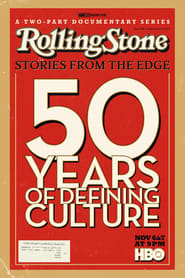
Rolling Stone: Stories From the Edge
ดาวน์โหลดคำบรรยายEnglish
ข้อมูลรุ่น
แท็ก
ตัวอย่างคำบรรยาย English
150 บรรทัดแรก
- Uh, this next song is very different
than most of my songs.
Don't make fun of me, guys.
This--this song is very personal to me,
and, uh, I wanted to, uh--
to share this one with you guys.
This is crazy.
Chance the Rapper.
He's young, he's newsy, he's got hits.
I'm interested.
- "Rolling Stone" launched a reaction
to straight establishment culture,
and it was like this explosion of color
and kids growing their hair long, sex, drugs.
- How's the John Lennon piece coming?
- I think it's a-- it's a fantastic story.
I just--it just doesn't feel like a cover to me.
- If you start out in the counterculture,
you can't stay there.
- The counterculture doesn't even stay there.
I mean, you either grow, or you die.
- Oh-ho, look at this, look at this.
Oh, Hunter!
Hunter.
We had talked about, you know,
we were going to do a story about fake news?
How's that coming along?
- The magazine that has criticized the mainstream
or pushed the mainstream and tried to make it
feel uncomfortable for decades--
I mean, the question now is,
well, what happens when these people grow up?
Next!
You know, a good series online.
We still doing Texas border? - Yeah.
- Bill McKibben's plan to fix the plan, all right.
Some solid ideas.
Okay.
Things had changed.
Now...
You know, the generation matured, got older,
but we never rejected "Rolling Stone's" past
and where it came from.
One last question.
Do you have anything to say to the youth of America?
- Why, yes, as a matter of fact, I do.
I know where it's at. Follow me.
Hey.
- "Rolling Stone" was born in San Francisco.
The magazine grew out of the youth culture
on the western edge of the continent.
But after ten years there,
they had offices in New York that were growing,
and it was clear that New York was the center of publishing.
And we're gonna have to make a choice.
He not busy being born is busy dying.
The clear choice was New York.
In order to cover the period in which we actually moved,
we had lined up this special issue about New York,
and we actually had a cover by Andy Warhol
all ready to go,
and then Elvis died, uh,
within, you know, days of getting there.
[Elvis's "Blue Suede Shoes" plays]
So we had to all of sudden produce on the spot
in less than five days an Elvis cover.
- Elvis was the king of rock and roll,
because he was the embodiment of its sins and virtues.
Grand and vulgar, rude and eloquent,
absurdly simple and awesomely complex.
He was the king, I mean, in our hearts,
which is the place where the music really comes to life.
For "Rolling Stone,"
Elvis Presley was the central liberating figure
at the heart of rock and roll.
We might think "Rolling Stone" wouldn't have happened
without somebody like The Beatles
and the Rolling Stones.
- But the truth is "Rolling Stone"
would not have happened without people
like Elvis Presley and Chuck Berry.
Those were the real revolutionaries
who really broke things open
and changed what was possible.
You know that sneering attitude that Presley had,
his own embodiment of seeming like a threatening punk...
- It became something else with The Beatles
and the Rolling Stones, just as it did
with the Sex Pistols and The Clash.
I came into "Rolling Stone" in 1977.
Punk had supplanted that radical element in music
that initially inspired "Rolling Stone."
I wanted to go to England and do a story on The Clash.
I had to do a fair amount of convincing.
- The Clash still were almost completely unknown in the U.S.
There was no way The Clash would be a cover story
or even a lengthy feature.
It'd be what was called a front-of-the-book piece.
- "Never mind that shit," says Joe Strummer,
the thuggish-looking lead singer of The Clash,
addressing some exultant kids yelling "Happy New Year"
at him from the teeming floor of the Lyceum.
"You've got your future at stake!
Take it!"
Together with the Sex Pistols,
The Clash helped spearhead the punk movement in Britain,
along the way earning a designation
as the most intellectual and political new wave band.
When the Pistols disbanded early last year,
rock press and punks alike looked to The Clash
as the movement's central symbol and hope.
- When punk began to become a sensation,
it was implicit that it was a cultural statement
of rebellion and rejection.
It was The Clash, though, who really gave punk
a necessary moral and political center.
They had a sense of the political moment,
especially in England during the rise of Margaret Thatcher
and what they saw in America at the same time
under the years of Ronald Reagan.
And they stood for the people
who were under fire at the time,
people who had their opportunities
being stripped away from them.
- Strummer's vocals sound as dangerous as he looks.
Screwing his face up into a broken-tooth yowl,
he gleefully bludgeons words.
I try to say as much
to a reticent Joe Strummer after the show
as we sit in a dingy backstage dressing room.
"Our music's violent," says Strummer.
"We're not.
"If anything, our songs are supposed to take
"the piss out of violence.
"We sing about the world that affects us.
"We're not just another wank rock group
"like Boston or Aerosmith.
What fucking shit."
I often think of The Clash
as being the real extension of The Beatles.
[playing "Let the Good Times Roll"]
- Lennon and McCartney had a style when they came in,
but they responded to changes in music.
They responded to changes in the society around them.
- The Clash did pretty much the same thing.
They grew.
- And like Lennon and McCartney,
it was pretty clear to anybody who listened
to their lyrics or saw them
that they, um-- they knew what they stood for.
More English subtitles for Rolling Stone: Stories From the Edge
- Rolling Stone Stories From The Edge 2017 Part 2 WEBRip x264-ION10 · 34 downloads · 2018-12-19
- Rolling Stone Stories From The Edge 2017 Part 1 WEBRip x264-ION10-HI · 39 downloads · 2018-12-19
- Rolling Stone Stories From The Edge 2017 Part 1 WEBRip x264-ION10 · 31 downloads · 2018-12-19
ความคิดเห็น
No comments yet. Be the first to leave one.