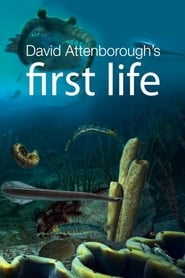
First Life
ดาวน์โหลดคำบรรยายEnglish
ข้อมูลรุ่น
แท็ก
Download English Subtitle Files for Mobile (2)
ตัวอย่างคำบรรยาย English
200 บรรทัดแรก
I'm on a fantastic journey to look for the origins of life.
I shall be travelling not only around the world, but back in time,
to try and build a picture
of what life was like in that very early period.
It will be a journey full of wonders.
Parts of it were unknown until only a few years ago.
In 50 years of programme-making, I've been lucky enough to explore
the living world in all its splendour and complexity.
The blue whale! The biggest creature that exists on the planet!
Now, I'm off to explore the origins of all this.
To look for the very first living creatures that appeared on the planet.
In recent years, scientists have unearthed dramatic evidence of what those first creatures were like.
We can also find clues in living animals.
And this enchanting little creature
is what we were looking for.
Using the latest technology, it's possible to bring those first animals to life
for the first time in half a billion years.
From the moment they appeared
to the time that they took their pioneering steps on land,
we can deduce how animals acquired bodies that move,
eyes that saw and mouths that ate.
And we can understand how those first organisms
laid the foundations for modern animals as we know them today.
Hello, old boy. How are you?
'Including you and me.'
My 40,000 mile journey begins very close to home, in Britain.
This is the Charnwood Forest in Leicestershire in the middle of England.
As a schoolboy, I grew up near here.
And in these rocks, a discovery was made
that transformed our understanding
of that mystery of mysteries, the origin of life.
The history of life can be thought of as a many-branched tree,
with all the species alive today
related to common ancestors down near the base.
The five kingdoms of life, the main branches, were established early on.
Bacteria.
Protists - amoeba-like creatures.
Fungi.
Plants.
And animals. That for me is the most fascinating question of all.
How and when did they first appear?
The answers are only now beginning to emerge -
and some of the first clues came from here in Charnwood Forest.
I was a passionate fossil collector.
But I never came to look for them in this part of Charnwood,
because the rocks here are among the most ancient in the world.
Around 600 million years old, in fact.
And every geologist knew or at least was convinced that rocks of
such extreme age couldn't possibly contain fossils of any kind.
And then a boy from my very own school, just a few years after I left it,
made an astounding discovery.
Against all the predictions of scientific know-alls,
he found a fossil in these ancient Leicestershire rocks.
And this is it.
It's called and is known around the world as Charnia,
after the forest in which it was discovered.
But what is it?
Is it animal or plant?
The fact is it comes from such a remote period
that the distinction between those two forms of life was not yet clear.
But one thing is certain.
It clearly was alive.
Charnia was a marine organism, part of an ancient community
of living things that lived in darkness at the bottom of an ocean.
That much we do know.
But what was this strange creature?
When did it first appear?
And how is it related to modern animals?
The answers to these questions are only now beginning to emerge.
There were further finds in Charnwood forest, like this disk,
which was probably the holdfast
which secured the frond of Charnia to the sea floor.
And then people began to look in rocks of this great age
all around the world.
And lo and behold they discovered a whole range of fossils
that enable us now to put together in extraordinary detail
the first chapters in the history of life.
That all happened a very long time ago.
Imagine travelling back through time.
Humans have been around for two million years.
The dinosaurs were wiped out 65 million years ago.
Charnia is more than eight times older than the oldest dinosaur.
It lived about 560 million years ago.
But compared with the age of life itself, that's nothing.
Before Charnia and other complex organisms existed,
the only living things were microscopic single cells.
They first appeared about three and a half billion years ago
when the Earth was a very different place.
The early continents were still forming.
The days were a mere six hours long, because at that time
the Earth was spinning much faster on its axis than it does today.
The land was dominated by volcanoes -
hostile and lifeless.
But deep in the oceans, life had begun.
The latest theory is that chemicals spewing from underwater volcanic vents
solidified and created towers like these,
and this produced the conditions needed for the first cells to form.
Some of these began to harness the energy of sunlight, just as plants do today, and formed colonies.
These rocky stromatolites in western Australia
have been constructed by very similar photosynthesising bacteria.
Others managed to survive by extracting nourishment directly
from the environment, like the fungi and animals that would later evolve.
This state of affairs continued for a vast period of time.
For some three billion years, simple microscopic organisms
were the most advanced form of life on the planet.
That's way over half the entire history of life on Earth.
And then suddenly, within the space of a few million years, a mere
blink of the eye in evolutionary terms, advanced organisms appeared.
Why is a mystery,
but we may find some clues to it on the coastline down here.
On the Eastern coast of Canada, there is evidence of an event that
may well have been the spark that started the evolution of animals.
These rocks have been dated by radioactivity
to just before the moment that life became very complex.
So if we can understand the circumstances under which these rocks were formed,
we may get a clue as to why it was that life suddenly became more complex.
Fragments of red stone are embedded in the darker rock.
They look out of place.
And, in fact, they are.
Geologists call them drop stones.
They were transported here by glaciers.
As the ice moved off the land,
it floated out over the sea in a great shelf,
carrying with it stones that it had gathered on the continents.
And when the ice eventually melted,
the stones fell into the sediments on the sea floor.
This wasn't the only place covered by ice.
Drop stones of the same age have been found in deposits all over the world.
The evidence points to a global spread of glaciation.
Just before complex life appeared, the world was in the grip
of the biggest ice age in its entire history.
It's been called Snowball Earth.
The Earth was plunged into a deep freeze
so severe it probably extended
from pole to pole.
The surface of the seas were frozen over.
On the continents, ice caps and glaciers developed.
In places, the ice was probably a kilometre or so thick.
We still don't know enough about the details, but it's likely that
those conditions lasted for millions of years.
Stromatolites and similar bacterial colonies that dominated the Earth
were crushed under the advancing glaciers.
Life was nearly annihilated before it had truly begun.
It's difficult to imagine how life managed to survive in those circumstances.
But survive it did.
Microbiologist Dr Hazel Barton
believes that modern glaciers can tell us how it did so.
She has come to the Columbia Icefield in the Rocky Mountains
in search of organisms that are still able to endure such extremes today.
The thing about being here
is it looks like everything's been wiped clean,
the glacier's come through and it's destroyed all life,
there's nothing living.
But to a microbiologist this looks a bit like a rainforest.
From here you can see discolouration on the surface of the ice,
but that's not dirt -
that is photosynthetic bacteria that are surviving there
and that creates an ecosystem where you have plants
and you have predators come in and feed on those organisms.
So even though it looks dead, it's actually wildly alive with life.
The kind of life you can see here is pretty ancient.
They've had to adapt to a lot of global catastrophes.
They had to adapt to Snowball Earth.
Microorganisms that live in these harsh environments we call extremophiles.
They have an amazing amount of adaptability that's hardwired in their genomes.
You can freeze them, you can bury them a mile down in ice
and its not much of a hindrance because of their adaptable nature.
We owe our existence to ice-dwelling extremophiles.
Snowball Earth almost extinguished life,
but tiny organisms like these hung on for millions of years.
I think what you had is
organisms that could withstand extreme environments
conditioning themselves to this changing ecosystem.
You had a skin of microbes on the surface of the planet,
and you had these organisms living between where the, the glaciers contacted the rock,
and that was enough life trickling over so that
when those conditions retreated, and it became more favourable,
then it was like, pff, and everything took off again.
Finally, Snowball Earth began to warm.
There is evidence that around this time,
there was a global surge in volcanic activity.
Eruptions punched through the ice, spewing carbon dioxide into the air.
As it spread through the atmosphere, it produced a greenhouse effect,
trapping heat so that the earth warmed and the ice melted.
We still have a lot to discover about what happened next,
but it seems likely that it was the melting of Snowball Earth
that led to the next great development of life.
As the glaciers retreated,
so nutrient-rich meltwater flooded into the oceans.
For the surviving cells, this flood of ground-up rock was a bonanza.
For the microbes that could photosynthesise,
the pulverised rock was a potent fertiliser.
And their growth would have a direct influence on early animal cells.
Cyanobacteria and other oxygen-producing microbes
began to bloom across the globe.
These flourished in colonies of plant-like microbes
that pumped out enormous volumes of oxygen.
And it was this increase in oxygen
that was the key to the rise of the animal kingdom.
Now, simple microscopic life
First Life subtitles in other languages
More English subtitles for First Life
- BBC David Attenboroughs First Life 720p BRRip X264-ExtraTorrentRG · 74 downloads · 2011-09-25
ความคิดเห็น
No comments yet. Be the first to leave one.