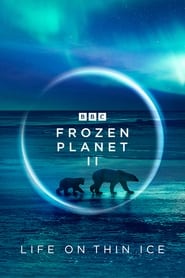
Frozen Planet II
ดาวน์โหลดคำบรรยายEnglish
ข้อมูลรุ่น
แท็ก
ตัวอย่างคำบรรยาย English
194 บรรทัดแรก
At the far south of our planet
lies the most hostile of the Earth's frozen lands.
Antarctica.
Here, temperatures can fall
to below minus 80 degrees Celsius...
...and winds blow up to 200 miles an hour.
Its icy centre is almost devoid of life.
But on the edge of Antarctica,
some creatures find a way
not just to survive, but to flourish.
Here are some of the greatest concentrations of life
to be found anywhere on Earth.
The continent of Antarctica
lies at the southern end of the globe.
Twice the size of Australia,
it's the largest, coldest expanse of land on the planet.
To the north of it, however,
across 1,000 miles of ocean,
lie the subantarctic islands,
where conditions are somewhat less hostile to life.
The largest of them is South Georgia.
Here, a million king penguins live and breed the year round.
A mother has returned after a month at sea...
...collecting food for her hungry chick.
At ten months old, chicks are the size of a human toddler,
and covered in no more than a downy fleece.
Until they get their waterproof feathers,
they themselves cannot go to sea...
...So they have to rely totally on their parents
to bring them food.
Their time together is brief -
just long enough to disgorge her crop of fish and squid.
All too soon,
parents have to return to sea to collect more.
But getting back there can take several hours.
Hundreds of parents make the commute together.
A beak can be used as an ice-pick
to negotiate the steeper parts of their trek.
This mile-long snow-covered trudge
is unique to this colony, and has never been seen before.
At last, the sea.
After several days on land,
their feathers need washing to be ready
for the long days of swimming that lie ahead.
But this is a dangerous place to loiter.
Leopard seals.
Three metres long,
more than three times the size of a king penguin,
these fearsome hunters are usually solitary.
But at this time of the year,
in this bay, there are as many as 30 of them.
If these penguins think that they're safe on land...
...they are mistaken.
Any one of these huge seals
can take as many as ten penguins a day.
Their best chance...
...Is to stay with the crowd.
There's safety in numbers.
Made it.
Only to return in a month's time...
...and once again face death head-on.
This is surely one of the greatest challenges
faced by any parent.
1,500 miles off the continent's east coast
lies another of the tiny outposts
that are vital for the survival of Antarctic wildlife.
The Sub-Antarctic Islands of the Antipodes.
In spring, the longer days turn each tiny speck of land
into a potential breeding ground...
...for the Antipodean wandering albatross.
Its wings are three metres across,
amongst the biggest of any bird.
This 14-year-old male
is now mature enough to start selecting a partner.
For the smaller, darker female,
choosing a suitable mate is of equal importance.
After all,
they may stay together for the next 50 years.
To make this crucial decision,
they use one of the most elaborate courtship rituals
of any sea bird.
He begins by sky-pointing.
It seems to be working.
Next, he attempts a move...
...known as the double head-bob.
The finale is the real decider.
Synchronised wing-spreading.
She seems impressed.
But another male appears...
...and shows off...
...his wings.
The greater the span,
the more attractive he could be.
But the first male won't tolerate
a rival cutting in.
Yet another hopeful joins in the competition.
And another.
This was not supposed to be a dance-off.
She prefers one tango at a time.
It seems that this is not going to be his year after all.
But he's caught the eye of another albatross.
Once again, he begins his courtship display.
But this is, in fact, another male.
Regardless, he continues to demonstrate his eligibility.
This could still be the one
with whom he will share the rest of his life.
On the Antipodes Islands, it's becoming increasingly common.
Today, there are three times as many males as females.
Females feed further north than the males,
in waters used by industrial fishing fleets
that catch and drown great numbers of sea birds.
As a result, the female albatross here
is now declining fast.
A same-sex partnership like this
may bring no survival advantage...
...but is apparently preferable to a life alone.
The wealth of life found around Antarctica's lonely islands
is evidence of the richness of the waters that surround them.
The Southern Ocean.
It may appear treacherous.
Its gale-force winds certainly create powerful currents.
But all this stirring has an important effect.
It brings up nutrients from the depths,
helping to create some of the richest seas on Earth.
And this provides food for the largest animal
to have ever lived.
The Antarctic blue whale.
It's more than 30 metres long...
...but it's rarely been filmed before.
Only the Southern Ocean
can provide the four tonnes of food
that the biggest of all blue whales needs every day.
This ocean giant was almost hunted to extinction,
but thanks to an international ban
on commercial whaling,
its numbers are now increasing.
The closer the seas are to mainland Antarctica...
...the colder they become...
...until, a few hundred miles offshore,
the ocean's surface freezes solid.
It forms a cover of sea ice
that is twice the size of Europe
and encircles the entire continent.
This is a stronghold
for one of Antarctica's most remarkable inhabitants.
It uses its teeth
to prevent its breathing holes from freezing over.
The Weddell seal.
The most southerly breeding mammal on the planet.
This ten-day-old pup
is still entirely dependent on his mother.
Out on the ice,
it may be safe from marine predators...
...but within its first two weeks,
it will have to venture into the underwater world
upon which its future depends.
This is the coldest water on Earth.
So it's not surprising
that a pup needs some encouragement.
It's time to leave the safety of the breathing hole.
To catch fish and then safely return,
this pup must learn how to find his way
through the maze of underwater ice caverns.
But after just eight minutes...
...his mother signals that it's time to head back.
She can hold her breath for an hour and a half.
But he is already starting to tire
and is running out of air.
On their way back to their breathing hole,
they hear a sound as loud as a fighter jet.
It is the call of a half-tonne male Weddell seal
announcing that he's on the lookout for a mate.
She, however, is still producing milk for her pup,
and so isn't sexually receptive.
But he doesn't stop trying.
To repel his advances,
she leaves her pup's side.
But the pup isn't strong enough
to haul himself out without his mother's help.
She tries to fight off the adult male.
She's wounded him so seriously
that he is unlikely to be back any time soon.
A gentle nudge from Mother
is all an exhausted pup needs
to make it to the safety of the sea ice.
Mothers stay with their pups for six weeks,
by which time they're strong enough to fend for themselves.
As spring arrives, the sea ice retreats,
and in a few places, Antarctica's coast
is exposed to the open sea.
And that attracts all kinds of animals.
Having spent the winter at sea,
chinstrap penguins can now come ashore to breed.
Soon, the coast becomes extremely crowded.
Frozen Planet II subtitles in other languages
More English subtitles for Frozen Planet II
- BBC Wild Isles 2of6 1080p HDTV x265 AAC MVGroup org · 37 downloads · 2023-03-21
- Frozen Planet II S01E06 2160p UHD BluRay x265 10bit HDR TrueHD 7 1 Atmos-GUHZER · 64 downloads · 2023-03-17
- Frozen Planet II S01E05 2160p UHD BluRay x265 10bit HDR TrueHD 7 1 Atmos-GUHZER · 70 downloads · 2023-03-17
- Frozen Planet II S01E04 2160p UHD BluRay x265 10bit HDR TrueHD 7 1 Atmos-GUHZER · 63 downloads · 2023-03-17
- Frozen Planet II S01E03 2160p UHD BluRay x265 10bit HDR TrueHD 7 1 Atmos-GUHZER · 62 downloads · 2023-03-17
- Frozen Planet II S01E02 2160p UHD BluRay x265 10bit HDR TrueHD 7 1 Atmos-GUHZER · 87 downloads · 2023-03-17
- Frozen Planet II S01E01 2160p UHD BluRay x265 10bit HDR TrueHD 7 1 Atmos-GUHZER · 88 downloads · 2023-03-17
- Frozen Planet II S01 Worlds of Wonder WEB · 97 downloads · 2023-01-02
ความคิดเห็น
No comments yet. Be the first to leave one.