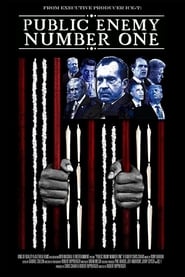
Public Enemy Number One
ดาวน์โหลดคำบรรยายEnglish
ข้อมูลรุ่น
แท็ก
ตัวอย่างคำบรรยาย English
200 บรรทัดแรก
We are sending a bad message with the Medical Marijuana Laws
and the federal government really needs to speak out against it
and show some leadership there.
There is a powerful lobby
arguing for the legalization of drugs
and that claims that drugs, particularly marijuana and hashish
are not harmful to young people.
We have these drugs in our society.
They're going to be here like it or not.
We have a choice, we can either have drugs in our society with drug lords,
or without drug lords.
We know that when drugs are legal, they're cheaper,
they're more available than they're promoted as we've seen for alcohol.
So, I think alcohol would be the last model we want to look at for marijuana.
I know annually we have well over a thousand young people dying in this country
because they're caught up in the illegal drug market.
Focus on the real bottom line.
I want to reduce both the harms of drugs
and I want to reduce the harms of our failed policies.
Policies...
I mean the easiest way for most people in this country
and really throughout much of the world to understand
the absurdity of the war on drugs is to focus on marijuana.
The drug war that I think we are experiencing today
has its roots in Richard Nixon's 1968 campaign
because of the unrest of the 60's,
the student demonstrations against the Vietnam War.
Thousands of demonstrators opposed to the Vietnam War
assembled in the nation's capital for a mass protest.
Military police contained the crowd, but clashes soon break out.
The two-day protest ends with over 600 arrested and the widespread opinion
that the demonstration made everyone a loser.
The long, hot summer riots in such places as Detroit and Newark...
With the coming of the long, hot summers,
for three years has had to face the tragic consequences of riots.
Negroes claim they have waited long enough for equal rights.
The public was in a panic.
Middle America was in kind of a panic.
Every night on the evening news it just looked like the country was coming unglued
and Richard Nixon ran in '68 on a law-and-order platform.
"I am going to restore law and order to the United States."
It is time for an honest look at the problem of order in the United States.
So, I pledge to you, we shall have order in the United States.
Well, he gets elected
and then he discovers federal government has very little role
under the Constitution, in law and order.
Law and order is a local and state matter.
And in John Mitchell's office and several people who were there told me about this meeting
in which Mitchell is saying, "Come on people, we got to come up with a way
to project the federal government into law and order."
And they kick around some ideas and finally somebody says, "Well, there's drugs."
Do you want to join me here? Won't you be seated please, ladies and gentlemen.
Come on Dr. Jaffe, yeah.
Mr. Krogh, Mister...
-Yes, Sir. Yes, Sir. -Fine. All right.
Ladies and gentlemen, I would like to summarize for you the meeting that I have just had
with the bipartisan leaders which began at 8 o'clock and was completed two hours later.
I began the meeting by making this statement which I think needs to be made to the nation.
America's public enemy number one in the United States is drug abuse.
In order to fight and defeat this enemy, it is necessary to wage a new all-out offensive.
I have asked the Congress to provide the legislative authority
and the funds to fuel this kind of an offensive.
Nixon creates the Drug Enforcement Administration
and this is half law enforcement and half Hollywood.
They go out and start Eliot Nessing around the country
and making sure that the cameras are there.
In 1993, I had an interview with John Ehrlichman and this was the interview
that got me started on this in an earnest way.
I was in the habit, every time I talked to Richard Nixon, or he talked to me
of taking very careful notes because, usually, it involved assignments
that I had to carry out, one kind or another.
And I started asking him these wonky questions about drug policy
and he held up a hand and he said, "Can we cut the bullshit?
Can I-- can I just tell you what this was all about?"
And he said, "The '68 campaign and the Nixon White House thereafter
had two enemies: black people and the anti-war Left.
And we needed a way to mess them up.
We needed a way to arrest their leaders, to break up their meetings,
to delegitimize their gatherings
and most of all to vilify them on the evening news night after night.
And it was easy to associate blacks with heroin and the anti-war Left with marijuana."
At the time of Richard Nixon, you were either, you know, part of his generation
and appalled by drug use, saw it as a moral issue,
or you were part of the counterculture.
It was us versus them.
Everyone here seems to emphasize the kids.
How can you communicate with them when they got flowers in their ears
where they can't hear and hair down to their hip pockets?
Many of us are concerned that a large percentage of our young people
are breaking the law by smoking marijuana.
I know you thought about this problem
and I wonder if you could give us some of your thoughts on it.
Well, to make a point, as you know there is a commission
that is supposed to make recommendations to me about this subject.
Richard Nixon convenes a Presidential Commission on marijuana,
which, basically, says marijuana is almost harmless and should not be criminalized.
The recommendation of the Commission in its first report
is that we do not feel that private use or private possession in one's own home
should have the stigma of criminalization.
That people who experiment should not be criminalized for that particular behavior.
Richard Nixon very publicly rejects the findings of his own Commission
and that's the last time a president convenes a commission on marijuana.
I shall continue to oppose efforts to legalize marijuana.
I became the White House Drug Czar in July 1st of 1973.
Nixon's advisor, who I was working with, said to me,
"The president is going to make the decisions about marijuana.
You can make the decisions about heroin,
but if you say anything good about decriminalization of marijuana, you're out of here.
He was elected president and not you." And that was it.
I do think that it was a-- it was a moment when the world changed.
I shall soon propose a revision of the entire Federal Criminal Code
which will give us tougher penalties against drugs and against crime.
A war on drugs is basically the assumption or presumption
that anybody who has anything to do with certain drugs
needs to be treated like a criminal, needs to be punished,
viewed as somebody who can have their freedom taken away,
their property, their home taken away.
Somebody who is regarded as immoral and for whom it makes sense for the state
to spend oodles of money, basically trying to find these people,
arrest and prosecute them, and convict them and incarcerate them.
I actually started my undercover work at the beginning of the war on drugs.
When I joined the State Police in 1964, we had 1700 troopers
and we had a seven-man narcotic unit.
In 1970, in one step overnight grew to a 76-person Narcotics Bureau,
all paid for by the federal government.
That was when Nixon got Congress to pass funding bills
that would give massive amounts of money
to any Police Department that was willing to hire officers to fight his war on drugs.
As I talked to the people from New York State
I realized the need for money to deal with this problem.
I am glad that in this administration we have increased the amount of money
for handling the problem of dangerous drugs, sevenfold.
It will be six hundred million dollars this year.
To the extent money can help in meeting the problem of dangerous drugs,
it will be available.
This is one area where we cannot have budget cuts
because we must wage what I have called total war
against public enemy number one in the United States:
the problem of dangerous drugs.
It was all a numbers game.
The whole idea was to get as many arrested as possible.
We used to joke that if we arrested the devil himself,
we'd let him go if he gave up three of these demons.
And the reporters would go away and they would write horror stories.
And the next morning, the public would pick up those papers
and read them and shake their head and say,
"Give it to him.
Give it to him."
And we'd get the money
and then we'd go out and do even worse the next time around.
I was working undercover for the state police, in the suburbs of New Jersey.
Since we didn't have real drug dealers out there,
the administration targeted me on small friendship groups of young people.
And when I infiltrated one of these friendship groups and became their friend,
come Friday night somebody might say, "Hey, you want to get high?"
Someone might say, "Yeah, while you're in the city, pick me up a couple of joints."
We're talking about five dollars worth of drugs.
We'd have a big raid and we'd swoop into their neighborhoods five o'clock in the morning
with hundreds of police. Kick down their doors and drag them out in chains.
And when we got them all lined up against that back wall,
my boss would come out and he would say, "You see that?
There's a hundred major drug dealers we took out of your community."
Everybody remain seated where you are.
Back then in 1970, we didn't have a whole bunch of laws about drugs.
We only had one law. That law said it's illegal to distribute
a controlled dangerous substance.
One joint was the same as a hundred pounds of marijuana.
Since we only had one law there was only one punishment, seven years in state prison.
Don Crow was convicted of selling marijuana to an undercover agent.
There seemed reason for hope.
It was his first offense after all
and the amount had been small, less than one ounce,
but the jury saw its duty, sentence 50 years in prison.
For Crow, 25 years old, newly returned from Vietnam, it was a bitter pill.
I had the feeling that I was fighting for my country and for my fellow man.
And it is kind of depressing to know that I should come back and be given 50 years
for allegedly selling some-- a little marijuana.
This is a Purple Heart that he received the first time that he was wounded.
There is a mother's pride as Mrs. Crow recounts Don's military record,
but it is hard for her, too.
He loved his country, she says.
He was a good boy.
It all starts off with
no hope, lack of education,
not being able to actually enter the system.
I can't enter the system. I can't get in.
I can't make a living wage, but over here is a way.
And now, you try to do that and you end up in prison,
or you end up with your life, you know, devastated.
We snatched them off the streets in the prime of their life
when they were trying to get their education.
"How are they going to get a job? They're drug dealers."
That's what we labeled them.
That's what everybody thinks.
Nobody wanted to hire them.
So, what do they do? Well, they turn right back to the drug culture,
the very group we say we're trying to save them from,
only now they become real drug dealers.
And that is how
this became the self-perpetuating, constantly expanding, policy disaster.
More English subtitles for Public Enemy Number One
- Public Enemy Number One 2019 720p WEBRip x264 AAC-[YTS MX] · 10 downloads · 2020-12-18
- Public Enemy Number One 2019 1080p WEBRip x264-RARBG · 11 downloads · 2020-12-18
ความคิดเห็น
No comments yet. Be the first to leave one.