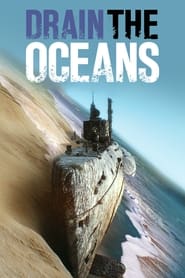
Drain the Oceans
ดาวน์โหลดคำบรรยายEnglish
ข้อมูลรุ่น
แท็ก
Download English Subtitle Files for Mobile (11)
ตัวอย่างคำบรรยาย English
200 บรรทัดแรก
Pirates, gangsters, villains and the worst of humanity.
Swallowed up by the sea.
But why?
Were they ripe for the wrath of God?
Or are there deadly natural forces at work?
What if, you could drain the ocean to reveal the secrets of the seafloor.
Now, powerful new technology can do just that.
Digital photos and sonar scans give us remarkable new
insights into a world beneath the sea.
What apocalyptic disaster wiped out the Pirate city of Port Royal?
It's a city that was literally swallowed by the sea.
And what are the dangerous forces that made Alcatraz, the Rock,
the most infamous prison on earth.
The conditions surrounding this island is what really made it an
escape-proof prison.
Drained dry, we reveal the extreme geological forces that led
to the demise of so much wickedness.
Brought to you by Sailor420 !!! Hope you enjoy the film !!!
Deep beneath the waves, is a reminder of the earth's violent beginning.
Through the use of cutting edge technology we can reveal the secrets of the sea floor
in astonishing detail.
And expose the shaky ground on which we all live.
In the 17th Century, Port Royal, on the south coast of Jamaica,
was an English stronghold at the heart of the Spanish empire.
Dominating what would become Kingston Harbor from the end of a long spit of land.
If you've seen the Pirates of the Caribbean movie,
the first town you go to, where we meet Jack Sparrow is Port Royal.
Grown fat on the profits of piracy and
slavery, Port Royal was a city of almost 8,000;
the ultimate boom town of a new world.
But it was also known as the wickedest city on earth.
It certainly had more bars and brothels than any other city
in the whole of the English colonies.
-Well the port, indeed, is very loose in itself; it is now more ruled than our Sodom.
Filled with all manner of debauchery.
On June 7th, 1692, disaster struck Port Royal.
A massive earthquake wiped two thirds of the city off the map; sending it to the bottom
of the sea.
Today, archaeologist, Jon Henderson, an expert in sunken cities, will use new
technology to discover just how the disaster unfolded.
Port Royal sank so fast that it took its secrets with it.
-This is a true sunken city; but not only that, it's a catastrophic site.
It went down so quickly that it sealed a moment in time.
It's sometimes called the, the Pompeii of the new world.
It's now underwater for us to discover and that's really rare in archaeology.
Jon's mission is to rediscover the sunken city and recreate a precise digital
model of its ruins.
Data that explains how the city tore apart, in two minutes of terror.
It's a huge challenge, but if it works, we can virtually drain the ocean...
Strip away millions of gallons of water and bring the sunken city of Port Royal back into
the light of day.
Draining the sea beyond Port Royal may explain why it became a pirate powerhouse.
It's all down to its location.
Right at the entrance of Kingston Harbor.
Pulling the plug on these Caribbean waters, reveals one of the largest natural harbors.
At ten miles long and two miles wide, it's large enough to shelter hundreds
of ships from the hurricane whipped tropical seas.
Better still was the long finger of land on which Port Royal was built.
One of the things we'll see is the spit coming out into this very deep harbor.
Its steep sides made it the perfect location to dock ships.
You had deep water on either side, large ships could come up and get very close to
the shore very quickly.
This might seem like an ideal spot to build a port; but made of constantly
shifting sand, the spit would be Port Royal's undoing.
The main problem is, there is no solid geology down there for a very long way; so,
in an earthquake, when that starts to shake, you're in trouble.
-I very much doubt that anybody in Port Royal
realized they were sitting on a time bomb.
Jon Henderson is here with,
photographer Simon Brown to photograph the sunken city.
With bad underwater visibility Simon must get as close as possible to the ruins
and take thousands of images.
After three days the many photos have been compiled into a 3D representation of what
lies on the seabed.
-Okay Simon, show me what we've got then.
-It's not been easy, but we've captured quite a lot of building five.
Building five may once have been a grand family home.
All that remains of it now is one room.
Showing up in unprecedented detail.
-I mean, this looks fantastic, given the conditions you were working in.
I mean, we can see we've got the wall, you can actually see the courtyard next to it.
You can see the fire-pit.
You can see the low walls.
This is great; we can actually see the individual bricks themselves.
For me, what's exciting is, you can show that to someone and they can instantly see
what's actually down there.
I didn't think you would get results as good as this.
Jon's mission is delivering spectacular results.
We're beginning to reconstruct, for the first time in 300 years really,
what exactly's there.
Now we can examine the most famous pirate city from every angle.
And shine light on the extraordinary disaster, that sent thousands of people and
hundreds of houses to the depths.
But clues to its wickedness still lie hidden in darkness.
Since the 1950s, three archaeology expeditions have sifted Port Royal's
underwater ruins, to uncover its pirate past; and in the
1980s, a team discovered part of the fabric of the city itself.
-During that ten years, we excavated five buildings pretty much completely.
It was the most exciting excavation I've ever conducted.
Today, we use science to map these discoveries right across the
sunken city.
Thousands of relics from a lost world.
All clues to Port Royal's cataclysmic final day.
Because this is a catastrophic site, it's sealed a whole range of goods that
were being used at a particular moment in time.
Each one is an insight into the 17th Century world of Caribbean pirates.
So we can get actual snapshots and glimpses into daily life.
From pewter tableware, to Chinese porcelain and signs of
personal wealth.
The archaeological record of Port Royal shows how quite rich it was.
Because, usually, towns in the new world are impoverished copies of those in Europe;
whereas Port Royal actually stacks up against the capitals of Europe.
But how did Port Royal grow so rich?
The city was built from the wealth of stolen Spanish treasure.
In the 1650s, England and Spain were at war.
Jamaica, an English territory in the Caribbean,
lay surrounded on all sides by the Spanish Main.
From Florida, through Mexico and South America.
To gain the upper hand over the Spanish, the English enlisted the help of pirates.
In 1657, the Lieutenant Governor of Port Royal actually invited the pirates
to come here and to act as a kind of unofficial defense force.
To the English government, pirates who attacked Spanish goods and
bring them to English ports, could be an asset.
Pirates were licensed to raid the Spanish; at sea or on land.
They became known as buccaneers or privateers.
What happens in Port Royal really is state sanctioned piracy.
And in Port Royal, at the heart of the Caribbean,
the buccaneers were perfectly placed.
In striking distance of the main shipping routes between the new world and Europe.
If the Spanish are gonna try and get anything home, they have to get it past
Port Royal; so it's rather like a fox sitting in the middle of a chicken coup full
of chickens.
Port Royal became the buccaneering capital of the world.
By agreement, the English crown took a quarter of the plunder.
The rest was shared amongst the pirates.
Among the very first buccaneering expeditions, 1659, the fleet brought back
the modern equivalent of $75 million.
The Spanish wealth that hits Port Royal in periodic waves is colossal.
Massive injections of cash transformed this fortified outpost
into a boomtown.
The drained city exposes as many as 2,000 brick and timber houses, crammed into
Port Royal streets.
Home to a growing population of almost 8,000.
The crowded narrow streets would become a death trap when the earthquake struck.
We're on a very enclosed, very overcrowded peninsula; we've got people living here
side by side, in two to four story dwellings.
When the earthquake struck, there was nowhere to run.
From the thousands of clues uncovered from Port Royal's seabed,
there is one chilling piece of evidence of when the earthquake struck.
A 17th Century pocket watch; its hands long since rusted in the sea.
But closer analysis of the find reveals something intriguing.
When it was x-rayed, it was seen that the hands had actually stopped at 11:43.
Now we know from historical records that the earthquake apparently hit just before
noon and this has been taken by some to say that the hands of that watched stopped
exactly when the earthquake struck.
But what powerful natural forces set the earthquake in motion?
To find the answer, we're draining the ocean not just from Port Royal,
but from the whole of Jamaica, to uncover the source of the earthquake.
Hidden in darkness, thousands of feet beneath the water.
-As you drain the ocean from around Jamaica, what you can see is these giant furrows
in the seabed; they're fractal lights running east/west and they're faults, they're
earthquake fault lines.
The faults form part of the boundary between two pieces of the earth's crust;
the North American Plate and the Caribbean Plate to the south.
Both constantly on the move.
-It's a place where the gradual motions of the plate either side get snagged,
stress builds up.
Essentially it's an earthquake zone.
And Port Royal sits right in the middle of it.
-And in the case of 1692, that stress that had built up very, very gradually over
time, gets unleashed into this, this huge earthquake.
As the stress in the earth's crust is released, it propels a powerful seismic
wave into the surroundings.
June 7th, 1692.
-Doomsday at Port Royal, begins like any other day.
There are daily prayers in the churches, business begins at sunrise.
People were just going about their business.
Travelling up to five miles per second, the seismic pulse was heading
straight for Port Royal.
There's records of one guy about to go and have a sherry with the
Lieutenant Governor that morning.
There was no indication of what was about to come.
Port Royal's alleyways and buildings were full of people.
Its wharfs and docks crowded with merchant ships.
I think the first indication would have got is a bang, a noise in the north, in
the mountains and a kind of low rumbling.
Well the records we have suggest there was three pulses from the earthquake.
It was what's to come that was the real killer.
-For the shake was so violent, that it threw people down on their knees.
Chasms opened up in the ground.
-We felt the ground shake and saw the bricks begin to rise in the floor.
-The ground heaved; it swelled like a rolling, swelling sea.
People ran from their lives from the falling masonry.
.
But the city offered no refuge.
Port Royal was almost the worst case scenario; really tall buildings, made of
brick, with narrow streets.
So, if you're in those streets, it's almost impossible.
Your choice whether to stay in a building or to get in the street, is, it's a lottery.
The earthquake was just the beginning.
Drain the Oceans subtitles in other languages
More English subtitles for Drain the Oceans
- Drain the Oceans S05 WEBRip x264-ION10/DSNP · 14 downloads · 2023-03-28
- Drain the Oceans S04 AAC MP4-Mobile · 50 downloads · 2021-10-02
- Drain the Oceans S03 720p Web x264 AAC 2ch ESub S420 · 30 downloads · 2021-10-02
- Drain the Oceans S02 AAC MP4-Mobile · 56 downloads · 2021-10-02
- drain the oceans s03e01 drain the atomic ghost 720p WEBRip x264-CAFFEiNE · 36 downloads · 2020-05-21
- drain the oceans s03e02 drain the viking seas 720p WEBRip x264-CAFFEiNE · 26 downloads · 2020-05-21
- drain the oceans s03e03 egypts sunken city 720p WEBRip x264-CAFFEiNE · 24 downloads · 2020-05-21
- Drain the Oceans Series 3 Part 4 The Battle of Britain 720p HDTV x264 AAC MVGroup · 26 downloads · 2020-05-21
ความคิดเห็น
No comments yet. Be the first to leave one.