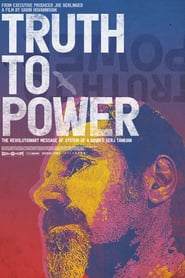
Truth to Power
ดาวน์โหลดคำบรรยายEnglish
ข้อมูลรุ่น
แท็ก
ตัวอย่างคำบรรยาย English
200 บรรทัดแรก
Okay.
So I wanna begin with a... with a simple question:
you've been pursuing justice all your life,
you've been singing about justice all your life.
Right.
So, can music change the world?
In 2015, System of a Down played our first show in
Armenia.
We were so excited to perform for our people.
But there was something that was really gnawing at me.
I knew that Armenia's government was corrupt to the core and
needed to change.
And the country's biggest square was filling up with people
waiting to hear what we had to say.
Before the show...
I had this sense of calmness that is rare.
And I just looked at the guys and it almost felt like we
were... created...
to play that night.
We've come a long way, Armenia.
But there's still a lot of fucking work to do.
I didn't know how long it would take for the reversal
of fortunes.
But I knew that it was coming.
We are System of a Down, and it's our responsibility...
to tell you these things and to rock you at the same time.
The Armenian hard rockers System of a Down are political
and popular.
They're a damn good rock and roll band!
System of a Down!
The Grammy Award-winning band...
Sold nearly 20 million CDs.
Propelled by the powerful band,
frontman Serj Tankian...
Serj Tankian has emerged as a voice of
justice for the Armenian people.
My grandfather's a survivor of the Armenian genocide.
Calling on the world to recognize the forgotten
Armenian genocide of 1915, but also taking on Armenia's own
government.
The people are out there, tired of a corrupt regime,
and they want it to change.
And calling on his millions of fans...
to bring down the system.
Continue your path of peaceful resistance and don't fall into
the traps of provocateurs.
This is our living room, and, uh, we're surrounded
by trees and... and love living amongst them.
Because of touring, I... I don't get a lot of time to relax on
the road, so when I come home, I like being in a silent place.
So we've got, uh, a Grammy here.
"System of a Down...
B.Y.O.B, Best Hard Rock Performance."
They used to be downstairs in my office but that turned into our
son's room so...
now they hang out here.
All right.
So that's the closet.
Music was always important to me.
Um, you know, I listened to music at home as a kid.
Let's see what's in here.
But I've been writing poetry longer than I've been playing
music.
So this is '97.
January 8, '97.
So this is... this must be the year we got signed with System.
Poetry, to me, was very important because it was a way
of reaching the truth without necessarily,
uh, reasonable prose.
I had a habit of writing every night before I went to sleep.
That's why a lot of it, I've converted into lyrics.
Oh, here's... here's a... here's an early System song that no
one's ever heard because we've never released it.
It's called "Friik."
F-R-double I-K.
So it goes, "What's my problem?
Here's my problem.
My problem is that I'm too visual to be blind,
too audiological to be deaf, too idealogical to be in peace,
too compassionate to be in war, too crazy to be sane,
too sane to be lazy, too emotional to be you."
It's kind of interesting because when I first started music,
I had no idea of where I would end up.
My own family came here to Los Angeles,
migrated in 1975.
You can see some of the signs, uh,
written in Armenian.
You can see a sign that says "Little Armenia"...
here.
Where?
I don't see it.
Um, trust me, it's Little Armenia.
Right in the middle of Hollywood,
the Armenian community had a school,
a church, different cafes, bakeries,
restaurants.
- Hey! - Hey!
- How are you, bro? - Hey, Serj.
You know, it was... it was a settlement with Armenians
from all over the world. Very good!
- How's everything? - Good.
Good to see you.
Very good!
You know, the different foods...
the smells that you'd get walking on Hollywood Boulevard
or Fountain...
I mean, look at this.
It's like heaven.
Gata.
Or the yelling on the streets and... and honking for someone to
come down.
All of those are kind of a really beautiful tapestry in...
in my mind as a child.
Mm.
Wow.
That's good.
That looks good, too.
I'm gonna try the same one.
When my parents came here, they had zero money and
they did not neglect our education.
From day one, they put us in Armenian school.
And within that community, I made a lot of great friends.
After graduating high school,
I got accepted to Cal State University Northridge.
At the time, I didn't really know what I wanted to do as a
career, so I thought I'd do business.
It's while I was going to university that I got a small
Casio keyboard and started playing it as a way to kind of
relieve my senses from my mind always working,
whether it was on studies or what was going on with the rest
of my life at the time.
I was always very rational, very studious,
very... kind of thinking and the studying mind.
But once I started doing music, I realized that the right side
of my brain can really take off.
The first band that I ever played in,
uh, was called Forever Young.
I started playing keyboards with them.
The one and only show that we ever played was
at the Armenian Cultural Center in Hollywood.
It was an interesting start,
'cause first of all, we were doing songs in English and in
Armenian.
'Cause that really was our lives as young
Armenian-Americans growing up in Los Angeles.
You know, we were a part of both cultures simultaneously.
So while in Forever Young,
we... we were sharing a rehearsal space with another band,
ano... uh, a bunch of friends of ours.
And at one point, they brought in a new guitarist,
and that was Daron Malakian.
The first time we actually worked together was
on a song called "Waco Jesus."
It's a song that we both co-wrote along with the guys
from Forever Young.
And it's the first song I ever recorded as a vocalist.
And the reason I sang on it was our singer wasn't around to sing
and... and I had written the lyrics already for it.
So after working on the song with Daron,
we clicked.
Dave Hakopyan was our bassist in both bands,
so he joined us as our bassist.
- Is it recording? - Yeah.
And formed a band called Soil.
Soil was around for eight months.
And it's in Soil that I started developing my chops.
I was, like, going for anything.
Why did you guys play it so fast,
man?
I was playing music at nights, but still,
I wouldn't admit to myself that that was my calling.
And after university, uh, started working with my uncle in
the jewelry business in downtown LA.
You know, uh, doing trade shows and being on the calls,
taking orders.
And a few years in, I was... I was really disgruntled.
I'm like, "This is not my vision.
This is not my path."
After a long day of work downtown,
I drove to Long Beach, uh, to take these Kaplan classes to,
uh, learn how to take the L-SAT, and I realized I had zero
enthusiasm for the legal field, even though I thought I could do
it, you know?
And I remember going once or twice and it was horrible.
I... I... I didn't know what I was doing there.
I was fuckin' depressed.
It was really late at night, raining like crazy,
and I had an epiphany, I just...
I got overwhelmed.
My subconscious literally took over.
I slammed on the... on the brakes.
I started hitting my dashboard and going "I wanna fucking do
music.
Fuck all this shit."
And from there, my life changed.
603, take two, common mark.
Ouch.
I was playing in a band...
off of Verdugo in Burbank at Nightingale Studios where Serj
was at, so that's where I met Serj.
Truth to Power subtitles in other languages
More English subtitles for Truth to Power
- Truth to Power 2020 HDRip XviD AC3-EVO-HI · 19 downloads · 2021-04-27
ความคิดเห็น
No comments yet. Be the first to leave one.