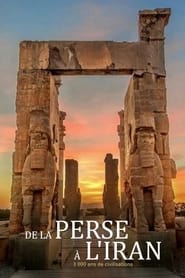
Art of Persia
English Altyazısını İndir
Sürüm bilgisi
Etiketler
English altyazı önizlemesi
İlk 200 satır.
This is a land known by two names.
The first is Persia.
TRADITIONAL MIDDLE EASTERN SINGING
Ancient.
Mysterious.
A place of adventure...
..of mighty temples and palaces built by powerful kings.
A land of unimaginable beauty.
The other is Iran.
Isolated.
Proud.
Defiant...
..especially of foreign interference.
But behind these names
lies the extraordinary story
of a complex history and culture.
The Persians can seem like a mystery at the edge
of the Western imagination,
in the Old Testament or battling Alexander and the Romans
in classical history,
but the ripples of Persia's art and language
have travel outward, throughout the world,
transforming culture across Europe and Asia.
If you think you know the Persians, think again.
Since Iran became an Islamic republic in 1979,
Western documentary teams are seldom given access.
But I'm a British journalist and I've been given
a rare opportunity to travel across this vast country
and discover its art and literature for myself.
In this episode, I'm going back to when the Arabs conquered Persia,
a conquest that was more than a confrontation
between two mighty armies.
It was a clash between two powerful civilisations.
The Arabs brought with them a new culture, new language,
and a new religion.
But, despite subjugation,
the Persians fought back.
This is the remarkable story of why Iran isn't Arab
and how it has proudly held on to its Persian identity
and language to this day.
At the beginning of the 7th century,
far away in the Arabian Peninsula,
a trader named Muhammad was said
to have received a series of revelations from God.
They formed the basis of the Koran
and a small but radical movement
rose to change the world.
Islam was born.
Soon, all of Arabia united under Muslim rule.
Through conquest and conversion,
so began the battle to forge a new Islamic empire.
First, the Arab armies took the Levant and Egypt.
Then they set their sights on Persia.
The King of Persia at the time was just a boy.
He was called Yazdegerd.
It was a ten-year-old who led the Persian army into battle
against the Arab armies of Islam.
The Persians fought bravely,
but, in the end, they were annihilated.
Yazdegerd, and what was left of his army, fled east
over the Zagros Mountains.
But this formidable barrier proved no defence.
By the year 637 AD,
the Arabs were at the gates of Persia's capital city, Istakhr.
But Yazdegerd and his family escaped.
This is the village of Chak Chak, hidden in the mountains
of Iran's southern desert.
According to legend, it was across this unforgiving landscape
the royal family fled with the Arab armies in hot pursuit,
a legend that's connected to one of
Iran's most sacred religious sites,
a Zoroastrian fire temple...
..the religion of Persia before Islam.
It's tradition that as soon as they catch sight of the temple,
pilgrims are supposed to complete the rest of their journey on foot.
The temple doors bear the reliefs of Persia's ancient kings.
Pilgrims flock here from all over the world,
but it's also a place where ordinary Iranians come to touch their past.
This is an actual fire pot and...
Farinaz is a practising Zoroastrian
and my guide to the connection between this sacred place
and the tragic fate of the Persian royal family.
Can you tell me why this site
is so sacred to Zoroastrians?
But one of the Persian princesses did escape.
The legend goes
that when she prayed to the Zoroastrian god,
the mountain miraculously opened up
and hid her from the Arab soldiers.
The waters of this spring are said to be tears of grief
in memory of the princess and the end of the Persian Empire
and its religion.
These three bull or ox heads with the tiny calves
underneath are made of brass and once formed the head of a mace
kept by a Zoroastrian priest.
You can see where the staff would have joined
and it has a real weight to it.
And they had a dual purpose, objects like these.
They were used in religious ceremonies, but also
in defence to ward off looters and invaders from the fire temples.
And this particular mace head has been dated to the 7th century,
so it's tempting to imagine it used in anger
against the invading Arab Muslims
who came to fight the Persian armies
and to extinguish the flames at the Zoroastrian temples.
For the Persians, the Islamic conquest came
as an overwhelming shock.
It must have felt their entire culture would be swallowed up,
including the religion that Islam replaced.
So what was the Zoroastrian religion
and who was the god they worshipped?
In central Iran, at a fire temple in Yazd,
this flame, it is said, was first lit before Islam arrived.
It's been burning for 1,500 years.
The fire represents the Zoroastrian god, Ahura Mazda...
..the god worshipped by King Yazdegerd and his ancestors.
Zoroastrianism is the great forgotten world faith.
It's a great shame because Zoroastrianism has embedded
in it very basic principles of good thoughts, good works,
good deeds under the head of one supreme god,
Ahura Mazda, which means "the wise lord".
And he gives this principle of Atar,
which means truth and from truth
then you get order and harmony.
The faithful were commanded to pray in the direction of the light.
The only light the ancients controlled was fire,
so they created temples to keep the flame burning for eternity.
The Iranians and their rulers had always been Zoroastrian.
Figures such as the winged god Ahura Mazda had been worshipped
since the earliest of times,
putting the Zoroastrian religion
at the heart of Persian identity.
After the rise of Islam, many Zoroastrians fled to India.
But there are still around 25,000 followers in Iran today.
I've come to a village just outside Yazd, which is the birthplace,
it's said, of Zoroastrianism.
THEY CHANT AND SING
Zoroastrians believe they will remain together
both in life and in death.
This is called a tower of silence
and it looms over the city of Yazd below.
A reminder to the ancient Persians that all life's journeys
will end here.
Traditionally, Zoroastrians did not want to pollute the Earth
by burying their dead or the air by cremating them,
so they brought them up here
and it really does feel closer to the heavens.
The bodies were left to rot, to be picked apart
by desert vultures,
the bones bleached by the sun.
Some believe Yazd is where Zoroastrianism was born
and, looking down on this beautiful desert city,
I feel I finally understand the remarkable resilience
of the Persian people who knew invasion could come
from any direction.
The spirit of the Zoroastrian religion runs right through
Persia's pre-Islamic history
because of the special powers the god Ahura Mazda
bestowed on her kings.
This place is called Naqsh-e Rostam.
It's home to a series of extraordinary rock carvings,
memorials to Iran's pre-Islamic kings.
Every year, Iranians flock here
to connect with their lost civilisation
and to marvel at the pride and strength
of their ancient rulers.
The figure on the right of this carving
was called Ardashir I
and he came to the throne in the year 224 AD.
Ardashir was descended from a Zoroastrian priest called Sasan.
He was the first in a dynasty of Persian kings
called the Sasanians.
It was Ardashir who made Zoroastrianism
the official religion of Persia
and he's shown on this rock carving
seated there on horseback,
receiving the diadem of kingship from God himself,
Ahura Mazda.
We see the king approach the god and the god gives him a ring,
so the giving of this ring is really
the investing of the king with this divine essence,
this charisma,
this light, which then sort of envelops the king
for the rest of his reign.
And, interestingly, this kind of...this light, which we kind of,
I suppose, describe as a halo, we see then transferred
into Christian art, into Buddhist art
and even into Muslim art as well,
so this idea goes very, very deep into these religions.
To many Iranians, this is one of the most precious carvings
in the country.
They're drawn to it because the mysterious symbols and cryptic
runes represent the birth of the Persian nation.
Written in three languages,
the first known inscription of the country he ruled,
it says,
"Worshipper of Ahura Mazda,
"this is Ardashir,
"King of Kings of Iran."
But even a great king like Ardashir cannot live forever.
Art of Persia subtitles in other languages
More English subtitles for Art of Persia
- BBC Art of Persia 1of3 1080p HDTV x265 AAC MVGroup org eng · 13 downloads · 2020-08-22
- BBC Art of Persia(All Episodes 1 3)1080p HDTV x265 AAC MVGroup org eng · 31 downloads · 2020-08-22
Yorumlar
No comments yet. Be the first to leave one.