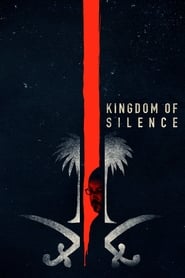
Kingdom of Silence
English Altyazısını İndir
Sürüm bilgisi
Etiketler
English altyazı önizlemesi
İlk 200 satır.
Today the United Nations released
a report on the assassination
of Washington Post journalist Jamal Khashoggi,
and I must warn you this report is the most horrifying thing
that I've ever had to read from this chair.
- It says - On Tuesday,
Jamal Khashoggi walked into this Saudi consulate
and seemed to vanish. There is an anxiety
that he could have been spirited out of the country.
The Saudi government still offering conflicting narratives
Jamal worked directly for the royal family
in different capacities. He was a loyal Saudi,
but how he defined that loyalty over time changed
as did the kingdom itself.
Turkish officials have audio and video recordings
that prove the journalist was
strangled as soon as he entered the Saudi consulate.
killed during a fistfight. asphyxiated with a plastic bag.
Khashoggi was tortured, murdered
Jamal enjoyed access to princely protection,
but that protection depended upon the princes themselves
having influence. He was already in danger,
but this was exponentially more dangerous.
The Saudi monarchy operates like the Mafia,
and you don't cross the godfather.
This lays out in forensic detail
how they planned to murder him, to dismember him.
- fingers cut off - joints separated
You could hear them laughing.
We were always doing all this work for something bigger,
for country, for king.
Anybody that tells you that they know
every aspect of Jamal's life, they are 100% lying to you.
calling for the administration to punish Saudi Arabia.
There's not a smoking gun; there's a smoking saw.
This is the worst moment
in U.S.-Saudi relations since 9/11.
I mean, the moral of the story is
the moral of the story is that there is no moral.
There is no morality. I mean, what is the morality of this?
I wouldn't be able to give you an answer.
There are reports the CIA now has high confidence
the murder was ordered by the Saudi crown prince
The United States is condoning the murder
of a U.S. resident Maybe he did. Maybe he didn't.
They did not know Why kill Jamal Khashoggi?
Okay, go ahead. Okay, great.
Are you-are you looking off camera?
Yeah, he's looking off camera.
Okay, thanks. Great. How do I describe you?
Like, what kind of title should I give you?
I'm a Saudi journalist, self-exiled in Washington.
I write for The Washington Post.
Okay, and why? Why did you self-exile?
How breathtakingly fast you can fall out of favor.
It is all quite shocking.
Saudi Arabia is the only home we know or want,
yet we are the enemy.
How did all this change?
I was a teenager in the 1970s
and grew up in the markets around the Prophet's Mosque.
As a Saudi journalist starting my career,
I witnessed phenomenal growth and expansion.
Scholars and the people were brimming with expectations.
And the United States
was our most important trading partner,
importer of Saudi oil and our main source of weapons.
The Saudi-American relationship
started as a commercial relationship.
The Saudis were a reservoir of global energy.
I was a foreign service officer for 30 years.
Basically, everybody from Jimmy Carter to, Barack Obama.
There's really nobody-- and I say that perhaps
somewhat forcefully, but it's true,
that there is no other American with my level of experience.
The American government really had no relations
with Saudi Arabia until what's today Chevron
went there and began to drill for oil.
Administration after administration,
in the '50s, '60s, '70s, '80s, '90s,
wanted to make sure that the government, in Riyadh,
was going to be, one that was closely aligned
with the United States.
I was working at the CIA in Saudi Arabia
in the early 1980s.
It was soon after King Fahd rose to the throne.
And during that period there was a significant infusion
of military support to the fledging Saudi military.
We were very concerned about making sure
the Saudi monarchy was going to be stable.
Saudi Arabia is divided into the royals and the nonroyals,
and the royals own everything.
You know, it's named after their family.
The whole kingdom is Saudi Arabia,
ruled by the sons of King Abdulaziz
for a hundred years. You can get totally lost
in the Kremlinology of the Saudi royal family.
But it's a family, and they govern by consensus.
There are spats and there are factions, but until recently,
decisions would be made by consensus.
And in the category of nonroyals,
Jamal Khashoggi carried a lot of influence.
I don't think there was any place in Saudi Arabia
that was closed to him.
It wasn't just that he was powerful. People liked him.
Jamal had an interesting analysis
of the problems of Saudi Arabia.
We talked about the schizophrenia
that so many Saudis had expressed to me.
It's undemocratic. It's intolerant.
It is one step below a theocracy.
From the beginning of our relationship,
America's had this tie to this distinctly
non-American entity
and has enabled it, up to this day, to survive.
To call them authoritarian is true in an absolute sense,
but really, most administrations
who deal with Saudi Arabia over time
become aware of the fact that Saudi Arabia
is a valuable friend, a valuable ally,
and to throw that under the bus is a bad idea.
Saudi Arabia was a part of the world
that we didn't care about, except for the oil.
They can believe what they want to believe
as long as they keep pumping. But that totally changed
when the Soviets invaded Afghanistan in December '79.
Afghanistan was the major Islamic cause
in Saudi Arabia in the '80s.
Americans did not want to appear
as if they are in direct war with the Soviet Union,
so we in Saudi Arabia and Pakistan
were doing a cover-up in the operation,
which was an open secret. Everybody knew about it,
this Saudi-American-Pakistani campaign
to drive the Soviet Union out of Afghanistan.
I do not deny that I had sympathy toward the Afghan cause,
because, I myself come out from Islamic circles,
and I still believe it was a just cause.
And Saudi Arabia should be appreciated for that.
And it was a big story, which, kind of, made my name
in the field of journalism. chanting in Arabic
The Arab News, Afghanistan, May 4, 1988.
A report by Jamal Khashoggi.
Muslims are one nation. Despite geographical barriers
and differences in color and language,
they consider themselves brothers.
As many as 1,000 Arab youths are here in Afghanistan.
They are actively involved in the war.
Most come from Saudi Arabia, Egypt, Algeria, Morocco.
The assistant to the commander
of the northern Panjshir base is an Algerian
named Abdullah Anas.
So you have to cross seven mountains to come from Pakistan.
Jamal Khashoggi, I remember, we come across with him.
You are talking about a journey
where, could have, avalanche, snow.
You could face air strikes.
You could, face ambushes from the Soviets.
But on top of being scared, you are more excited
because you feel this is a gift you are gifted by Allah,
that you are part of the mujahideen, you are,
finally, you are, making the history
with these heroes and these, brave people.
So all this makes you forget that threat,
forget the-the fear, forget, everything.
Jamal went to Afghanistan to be a war correspondent.
He did not have much of a reputation then,
but there was this little group of Arabs
led by Osama bin Laden,
who was, at that point, practically unknown.
It was a propitious moment in Jamal's career.
They got to be friends.
He was somewhat blinded by the charisma
and-and the-the sense of history
that surrounded this young man.
I met Osama the first time at the end of '87,
and that's where I took the first picture of him ever
to be printed in any media.
He was the leader or, as he used to be called,
the emir of the Arab mujahideen in Afghanistan.
Osama bin Laden became Saudi Arabia's first celebrity,
a category that didn't exist in Saudi Arabia
until that time, and I think, to some extent,
Jamal helped him become that person.
Jamal and I, I mean, I was actually an opinion page writer,
so we would meet every once in a while,
along with other colleagues.
Jamal was one of those important sources,
a treasure, I would say.
He was sitting on this crossroad of relationship
between Saudi Arabia and the United States
fighting the Soviet Union in Afghanistan.
But of course, we would take a lot of what he said
with grain of salt because he was, at the time,
associated with the Saudi establishment.
There weren't many Saudi or other journalists
who had access to bin Laden or to those groups.
These were different times.
The United States and Saudi Arabia celebrated radical Islam
as long as radical Islam was directly against communism.
Kingdom of Silence subtitles in other languages
More English subtitles for Kingdom of Silence
- Kingdom Of Silence 2020 1080p STAN WEBRip AAC5 1 x264-playWEB · 19 downloads · 2020-10-10
- Kingdom Of Silence 2020 1080p STAN WEBRip AAC5 1 x264-playWEB · 22 downloads · 2020-10-10
Yorumlar
No comments yet. Be the first to leave one.