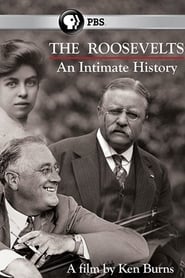
The Roosevelts: An Intimate History
English Altyazısını İndir
Download English Subtitle Files for Mobile (7)
English altyazı önizlemesi
İlk 200 satır.
One drowsy summer afternoon in 1908,
in the fifth floor offices of the law firm of
Carter, Ledyard & Milburn at 54 Wall Street in Manhattan,
the junior clerks were idly talking
about their dreams for the future.
Most hoped just to become partners one day.
But one had far bigger dreams.
He didn't plan to practice law for long, he said.
He intended to go into politics
and eventually become president of the United States.
The speaker was just 25 years old.
He had been an undistinguished student
and he was an indifferent lawyer.
But no one laughed.
His name, after all, was Franklin Roosevelt.
His fifth cousin, Theodore Roosevelt,
was already president,
the youngest and perhaps the most popular president
in American history.
And his rise to that office had once appeared just as unlikely
as their fellow clerk's chances now seemed.
Ladies and gentlemen, I am honored
to present the president of the United States.
This is the second dedication
and there will be others by other presidents...
And I think that we can perhaps meditate a little
on those Americans 10,000 years from now.
I think we can wonder whether our descendants...
because I think they'll still be here...
what they will think about us.
And let us hope that at least
they will give us the benefit of the doubt,
that they will believe that we have honestly striven
in our day and generation to preserve for our descendants
a decent land to live in
and a decent form of government to operate under.
Between them, Theodore and Franklin Roosevelt
would occupy the White House for 19 of the first 45 years
of the 20th century,
years during which much of the modern world...
and the modern state... was created.
Jefferson's view of government was
that government can only do that which is explicitly enumerated
in the constitution of the United States.
Theodore Roosevelt coming one century later,
precisely one century later, says, "no.
Government can do anything that is not specifically prohibited
in the Constitution."
And he believed that the government of the United States
had to be much more central, energetic, and assertive
than the constitution had envisioned it
or we could not go on as a nation.
I think both presidents regarded the constitution as a nuisance,
that is something that was all right in the late 18th century
but just wou... didn't fit a, their country
and, more important, them.
They had bigger dreams, and they thought that, ah,
the Constitution was elastic enough
to accommodate their ambitions.
They belonged to different parties.
They overcame different obstacles.
They had different temperaments and styles of leadership.
But it was the similarities and not the differences
between the two that meant the most to history.
Both were children of privilege
who came to see themselves as champions of the workingman...
and earned the undying enmity of many of those
among whom they'd grown to manhood.
They shared a sense of stewardship of the American land;
an unfeigned love for people and politics;
and a firm belief that the United States
had an important role to play in the wider world.
Both were hugely ambitious, impatient with the drab notion
that the mere making of money should be enough
to satisfy any man or nation;
and each took unabashed delight
in the great power of his office to do good.
Each displayed unbounded optimism and self-confidence,
each refused to surrender to physical limitations
that might have destroyed them,
and each had an uncanny ability
to rally men and women to his cause.
And you can't expect people like that
to happen all the time.
The exceptional presidents are the exception.
And these two Roosevelts were exceptional
with a capital "E" underscored.
The two Roosevelts belonged to two branches
of an old New York family whose members sometimes
viewed one another with suspicion.
The living link between them was Theodore Roosevelt's
best-loved niece and Franklin's wife... Eleanor.
She had learned to face fear and master it
long before her husband declared that the only thing Americans
had to fear was fear itself.
Her own character and energy and devotion to principle
would make her the most consequential First Lady...
and one of the most consequential women...
in American history.
It's Shakespeare to have a single family
in which human flaws and virtues are on such vivid display.
And the constant struggle
between those vices and those virtues
to try to do good and to fulfill one's duty.
I think all of the Roosevelts
were wounded people.
They had things, things had happened to them
that they had to overcome.
And somehow all of them learned from that,
that people could overcome things and that it was
worthwhile trying to help people overcome things.
And what's so extraordinary is to realize
that they're connected by this web of ties.
The fact that Franklin Roosevelt
idolizes Theodore Roosevelt when he's a young man
and tries to follow his path through
Assistant Secretary of the Navy,
through the governor, through the presidency.
The fact that Franklin and Eleanor Roosevelt
who are related to one another get married
and become this couple and this
extraordinary president and first lady.
And the fact that Franklin Roosevelt finally is able
to put into place the very goals
that Theodore Roosevelt had expressed
in the Bull Moose platform in 1912
that he was never able to realize,
that Franklin Roosevelt brought to fruition.
It's an extraordinary story.
The drama of it is unmatched probably in our history.
This is the story of the Roosevelts.
No other American family has ever touched so many lives.
About 1644, our common... very common ancestor,
Klaes Van Roosevelt, came to New Amsterdam from Holland
as a "settler"... the euphemistic name for an immigrant
who came over in the steerage of
a sailing ship in the 17th century
instead of the steerage of a steamer in the 19th century.
From that time, for the next 7 generations, from father to son,
every one of us was born on Manhattan Island.
Theodore Roosevelt.
Americans don't like to think of themselves
as divided by class.
But the Roosevelts are patricians.
They were born and raised to believe that they really were
better than other people.
They could all have been perfectly comfortable and happy.
And instead they decided to get into public life
and see what they could do about
making the lives of other Americans better.
The Roosevelts eventually became one of
New York's most prominent families,
their substantial fortune built on
Manhattan real estate and banking,
west Indian sugar, and imported window glass.
They were known for their dignity and decorum.
People like the Roosevelts, one old New Yorker remembered,
were "the only nobility we had.
Men could not stand straight in their presence."
All the Roosevelts worked and lived in the city,
but two branches of the family would become known
for the places where they had their summer homes...
north of Manhattan, at Hyde Park on the Hudson River,
and to the east, on the north shore of Long Island at Oyster Bay.
On October 27, 1858, Theodore Roosevelt was born
at his family's Manhattan townhouse on 20th Street,
the second of what would be 4 children.
His grandmother pronounced him "as sweet and pretty
a young baby as I have ever seen, "
but within 3 years, his parents were fearing for his life.
He suffered frequent colds, fevers, headaches, cramps,
and he often gasped for breath.
This little boy was ill virtually from the time
he was aware he even existed.
And he was very ill with asthma.
It's as close to feeling that you're being strangled to death as is possible.
And with an acute asthmatic it is,
you are being strangled to death.
And with a child, of course, it is utterly terrifying.
He heard his parents say, when they didn't think he could hear,
that he wasn't expected to live very long.
He also was a spare, spindly little fellow and full of fear.
He was afraid to go out of the house
without his younger brother Elliot accompanying him.
And he's constantly trying to cope with fear,
cope with his inner terror.
I was a sickly, delicate boy,
suffered much from asthma, and frequently had to be taken away
on trips to find a place where I could breathe.
One of my memories is of my father walking
up and down the room with me in his arms at night
when I was a very small person.
His father would always be his hero.
My father combined strength and courage
with gentleness, tenderness, and great unselfishness.
No one whom I have ever met approached his combination of
enjoyment of life and performance of duty.
Theodore Roosevelt, Sr. 's inherited fortune
permitted him to indulge his whims...
ensuring he had a yellow saffronia rose
The Roosevelts: An Intimate History subtitles in other languages
Yorumlar
No comments yet. Be the first to leave one.