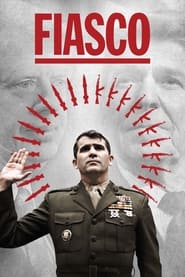
Fiasco
English Altyazısını İndir
Sürüm bilgisi
Etiketler
English altyazı önizlemesi
İlk 200 satır.
When a new hostage crisis takes hold in Lebanon,
Ronald Reagan is determined to avoid the same mistakes
made by his predecessor, Jimmy Carter.
But as the crisis deepens, Reagan becomes consumed
with bringing his countrymen home.
Then National Security Advisor Robert McFarlane
presents a risky proposal to sell weapons to Iran
in exchange for the release of hostages.
Reagan eagerly signs off.
So far, we have been following the strands
of the Iran-Contra saga separately,
tracing each one from conception to execution,
as they wove, one by one,
through the mind of Oliver North
and the universe of room 392.
- The contras. - Kidnapped in Beirut.
Ayatollah Khomeini.
But this is the moment
when the strands come together
to form the surreal plot
we have come to know as the Iran-Contra scandal.
Iran was exporting its revolution
to wage war against Western interests
and conservative Arab interests.
Father Jenco from Illinois
is the fifth American to disappear
from the streets of West Beirut in the last ten months.
We had hostages that had been taken, in Lebanon.
Our responsibility is to try to get those hostages back home.
CIA officers have directed
and funded the war against Nicaragua.
CIA employees executing the more damaging attacks.
But Congress passed an amendment
which said you can't spend any money to support the Contras.
They were gonna die on a limb.
Hell of a mess.
How did Ronald Reagan's
ambitions in Central America
become fused with his priorities in the Middle East?
How did the money, the personnel, the logistics,
and the policy all get tangled together?
There was a major screwup.
I mean, you can just imagine today,
if the White House was caught selling arms to Iran,
there would be outrage.
But then, to take the money from a Middle East operation
and give it to a group that's involved
in a civil war, it becomes diabolical.
From the beginning, there was one person
who could have predicted that Reagan would fall prey
to an out-of-control hostage crisis.
It was his national security advisor,
Robert "Bud" McFarlane.
He saw the risk clearly
during his first week in office back in 1983...
The count of American dead in today's terrorist attack
on the U.S. Marine compound in Beirut stands at 135.
...as the situation in Lebanon went from dangerous to deadly.
I didn't know what hit us.
You hear about 1,000 people, it seemed like, screaming,
"Help me. God help me."
Reagan was just shattered by it.
At the earliest opportunity,
he wanted to go to Camp Lejeune
and be consoling and whatever he could do, and he did.
If this country is to remain a force for good in the world,
we'll face times like these, times of sadness and loss.
Your fellow citizens know and appreciate
that Marines and their families are carrying a heavy burden.
I watched him,
and I became quite emotional too.
He was both embittered
and sorrowful for the survivors
and the parents who were there.
It was clear that Reagan
cared deeply about his fellow countrymen abroad.
But for Bud McFarlane,
the President's grief provoked a troubling thought.
That investment personally
of the time and effort to go and be there.
You couldn't deny this is vivid evidence
of how an enemy would see a vulnerability.
And it was in this vulnerability
that Iran, once again, saw an opportunity.
They could capitalize on it by coaxing Reagan
into risking everything
for the rescue of seven hostages.
I am Leon Neyfakh.
This is "Fiasco:
the Story of Iran-Contra."
When Reagan came into office, I was at the State Department,
and he wanted me to be his interlocutor
between the heads of state throughout the Middle East.
His secretary of state, he asked me,
"What do you think is the most important issue
that we must study hard?" And I said,
"Well, the wild card in the mix here is really Iran."
We've had a revolutionary figure emerge
as the leader of Iran.
At the geopolitical center
of the energy world on the planet,
this is a terribly important country,
and it is bound to be a target for the Soviet Union.
Iran was, in many ways, thought by Americans,
including those in the Reagan administration,
to be a new kind of face of anti-American evil.
The American Embassy in Tehran ceased operations
in November 1979
when it was taken over by militants,
and it has never opened since.
Inescapably, this story always comes back
to that year of revolution: 1979.
In early 1979, the Shah gave up,
and he left the country.
He never came back to Iran again,
and everything connected
with his regime soon completely collapsed.
The Iranian people are united, and they believe,
and all of them are behind Khomeini's leadership.
Khomeini and his forces really gain the upper hand
and begin establishing the institutions
that we see today, 40 years later,
in the Islamic Republic of Iran.
He was the one who understood and made real
how to combine Islam and politics.
Around the time the U.S. hostages taken
during the Carter administration returned home,
Ayatollah Khomeini consolidated his power over Iran
and hardened his stance towards the United States.
This was the first group of Americans
to leave the country
since the U.S. embassy said it could no longer guarantee
the safety of U.S. citizens in Iran.
Pan American Airlines brought a plane in
to take its people out
and opened the flight to a few other companies
and about 20 newsmen
who decided it was time to get out.
So how did we get
from being literally shut out of Iran
by our archenemy, Ayatollah Khomeini,
to selling his government deadly weapons
just six years later?
To understand that, we need to look next door
to the region's other reigning despot.
He likes to be called Saddam,
but some Arabs have other names for him.
The Butcher of Baghdad is one.
Remember him? Saddam Hussein.
A character from a completely different American fiasco.
Well, he plays a role here too.
Saddam Hussein al-Tikriti,
president in name for the past 14 months,
but Iraq's strongman for the past decade,
variously attired in Arab headdress
or in the uniform of a field marshal
although he was never a soldier.
But his favorite image:
the cuddly father figure.
Before he was a menace to Kuwait,
Saddam waged one of the longest and bloodiest wars
in modern Middle Eastern history.
It was against his neighbor,
the radical Muslim cleric
solidifying his power in Iran and posing a new challenge
to Saddam's aggressively secular dictatorship.
Saddam Hussein was a Sunni leader
who was running a majority Shiite country,
and he kept the Shiite community in check.
And Khomeini had a theocracy.
He had visions of having a government
based on religious power,
maybe emulated in other parts of the Arab world.
They were exact opposites.
The Arab Gulf countries were extremely nervous
about the kind of regime that emerged in Iran.
And there's this traditional rivalry
between Sunnis and Shia,
and they felt threatened.
What Saddam feared was that
the ethnicity of the Shia
and their loyalty to the Shia Imams
would trump their faith in the government of Iraq,
which was primarily Sunni
and which did very little to help the Shia majority.
So the ability of Khomeini
to threaten Saddam was quite profound.
In 1980,
in the wake of Iran's chaotic revolution,
Saddam Hussein saw an opportunity.
Saddam and his aides want to establish Iraq,
not Iran, as the major power in the area
and elevate Saddam as the leader of all Arabs.
And so Saddam did what dictators often do.
He attacked.
Basking in their nationalist identity,
Iranians flocked to the frontlines
to defend their country.
The men and boys who have responded wear headbands
that say simply, "Yes to Khomeini."
More English subtitles for Fiasco
- Fiasco S01E06 XviD-AFG · 25 downloads · 2021-10-26
- Fiasco S01E06 XviD-AFG · 14 downloads · 2021-10-26
- Fiasco S01E05 XviD-AFG · 24 downloads · 2021-10-20
- Fiasco S01E05 XviD-AFG · 16 downloads · 2021-10-20
- Fiasco S01E04 XviD-AFG · 19 downloads · 2021-10-10
- Fiasco S01E03 XviD-AFG · 16 downloads · 2021-10-10
- Fiasco S01E03 XviD-AFG · 17 downloads · 2021-10-10
- Fiasco S01E02 480p x264-mSD · 19 downloads · 2021-10-01
Yorumlar
No comments yet. Be the first to leave one.