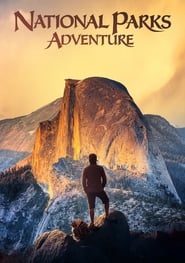
National Parks Adventure
Tải xuống Phụ đề English
Thông tin phát hành
Tags
Download English Subtitle Files for Mobile (2)
Xem trước phụ đề English
170 dòng đầu tiên.
The Native Americans
who first came and set eyes
on these lakes and mountains
encountered a vast wilderness.
An entire continent
that still lay wild and free.
These Native Americans believed
that the greatest natural wonders belong to no one.
They belong to all.
Over a hundred years ago,
these treasured places were protected for eternity,
for everyone...
and the National Parks...
were born.
Conrad says,
go slowly...
listen for those who came before.
Yes!
The first people here had no idea what they'd find.
The adventure is stepping into the unknown.
Conrad Anker is a world-famous climber,
and a National Parks Ambassador.
Think I got everything I need to shoot up there, Dad?
Looks good.
During semester break,
Conrad always takes his stepson,
Max Lowe, on a climbing trip through the parks.
Their family friend,
Rachel Pohl, comes along.
Let's roll.
Let's get this done.
Yellowstone.
The land sits over the molten fury
of the largest super-volcano on Earth.
Each year, over two million visitors
are carried back in time.
Heat-loving bacteria
create the vibrant colors.
Over half of the geysers on this planet are here.
Yellowstone is a place where you can feel
the beating heart of the planet...
And gaze into its eye.
From this beating heart,
great rivers flow out to all corners of the continent.
In past trips, we've rafted down these rivers,
the highways of the Native American.
The Colorado River carved the Grand Canyon,
digging a mile down into the earth,
exposing rock layers formed 1.7 billion years ago.
In the great river valleys,
Native Americans hunted and gathered.
At Chaco Canyon,
in New Mexico, they built a thriving city.
If you listen...
you can still hear their voices on the wind.
We're heading north, towards Wyoming,
and another Native American icon.
The Lakota Sioux revere a thousand-foot
monolith called Devils Tower.
Here, they passed down stories of powerful spirits...
...and giant terrifying bears.
The National Parks protect land...
and animals, too.
The threatened prairie dogs are safe here.
Prairie dogs have a highly developed vocabulary,
which includes specific warning calls for each predator.
It's the females who sound the alarm.
Oh, look at him.
Yeah, come on...
And flip it.
You're not helping, Max.
Max and Conrad are amazing climbers.
- Okay. - Get back on there.
It's so hard.
Come on, you take... you gotta take that dip.
Me?
Yeah.
I'm working on it.
Oh, now you're just showing off.
- Come on. - Yeah!
Fall off already, so I can try.
Max!
The Native Americans believe
there is a solemn power here.
They tie prayer flags on the trees.
The columns are said to be claw marks
made by the giant bear,
and we're trying to climb those claw marks.
The claw marks are massive crystals of rock,
formed in the heart of a volcano.
The rest of the volcano has eroded away.
It's very slippery.
It's really deceiving.
Devils Tower sits like a lightning rod
up on the Wyoming highlands.
Not a good place in a storm.
Lightning!
We're going down!
From Wyoming, we head northwest into Montana,
my home state.
Welcome to Glacier National Park.
Here, too, nature can catch you off guard.
No, no, no, no, no, aw.
Waterton Glacier International Peace Park
spans Canada and the United States,
and is a World Heritage site.
The team plans the rest of the summer.
Came up through Colorado...
to Devils Tower... and then we're gonna go...
through Yellowstone, to Glacier National Park,
cross the Great Divide, down to Redwood National Park.
Redwood National Park, in California,
shelters the tallest trees on the planet.
But these ancient survivors,
some 2,000 years old,
are now as vulnerable as a field of wildflowers.
That is a nice-looking tree.
Over here, dude.
Some scientists devote their lives
to the study and urgent protection of redwood forests.
These graceful groves almost
didn't survive an onslaught 150 years ago.
95 percent of the redwood forest
was felled for lumber.
In the Western states,
scientists who study trees
understand that, in order to thrive,
forests large and small all depend on fire.
Many conifers seal their cones with resin
which must burn away before the seeds can germinate.
Out of the ashes...
springs new life.
Here, at Yosemite Valley,
trees are born in fire.
Wild nature needs protectors.
120 years ago,
the fiercest of those protectors was John Muir,
a poet of nature.
The sun shines not on us,
but in us.
The rivers flow not past,
but through us.
Break away, once in a while,
and wash your spirit clean...
Muir loved Yosemite Valley,
but he couldn't stop it from being destroyed by loggers,
ranchers and developers.
But then his passionate articles and sketches
caught the eye of a powerful man.
In 1903, President Theodore Roosevelt
visited Muir in Yosemite,
where they camped for three days.
The president had good reason to treasure wilderness.
When Roosevelt was 25,
his mother and his wife fell ill.
They both died on the same day.
He wrote:
"The light has gone out of my life."
He took his grief out into the wilderness--
where he discovered nature's power to heal.
He never forgot it.
Their camping trip saved America's natural wonders.
Muir and Roosevelt crystallized a sweeping vision for the first
unified system of National Parks anywhere on Earth.
Slowly the idea caught on.
National Park Service lands now encompass an area
three times the size of England.
These 400 sites range from Yosemite...
to the volcanoes in Hawaii...
Niagara Falls in the East...
National Parks Adventure subtitles in other languages
More English subtitles for National Parks Adventure
- America Wild National Parks Adventure 2160p 4K (2016) Eng · 17 downloads · 2018-08-29
- America Wild National Parks Adventure 2160p 4K (2016) Eng · 32 downloads · 2018-08-29
Bình luận
No comments yet. Be the first to leave one.