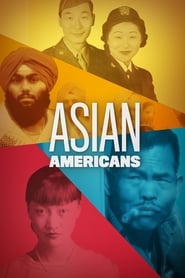
Asian Americans
English সাবটাইটেল ডাউনলোড করুন
রিলিজ তথ্য
ট্যাগ
English সাবটাইটেল প্রিভিউ
প্রথম 200টি লাইন।
I grew up with the American dream.
But all Asian immigrants were denied the right of
naturalized citizenship and with the Exclusion Act,
the Chinese became the first undocumented immigrants.
The American Dream is a lovely dream to have and so
people continue to aspire; enduring whatever it is that
they've got to do as immigrants.
Japanese Americans foughton the side the United States,
while the rest of their family was incarcerated.
Legal challenges were so important because they did not
have political power.
And as much as tragedy is a part of our heritage here,
so is possibility.
Asian voices are coming out.
You've got these young people fighting to
make change happen.
They had to assert their rights.
It was like a giant genie coming out of the bottle.
You couldn't put us back in.
These were stories about what it meant to be human.
What it meant to be resilient.
To transform the system into something more just
for everyone, that's the hope from which the Asian American
movement was born.
They come from all corners of Asia,
from tiny villages and teeming cities.
The first immigrants cross the seas from China and Japan,
from Korea, India and the Philippines.
Some flee poverty, war and oppression,
others seek opportunity or adventure.
They dream of new possibilities in America.
Every dreamer has a story.
One is 12 year old orphan, Antero Cabrera,
who sets off from the Philippines in 1904 to see the
land of riches he's always heard about.
He arrives at the St. Louis World's fair,
and what a fantastic sight it is.
Exhibits from over 50 countries dazzle
20 million visitors.
St. Louis did itself proud with the fair.
It was a real marvel to behold.
All the technology that was on display.
I mean, that must have blown everybody's minds.
Pseudo multicultural exhibitions were popular
at the time.
The fair was huge.
The United States was telling the world that
they had arrived.
They were an imperial power and their biggest
exhibit was the Philippines.
Their newly acquired colony.
It is the age of American imperialism:
the U.S. defeats Spain in 1898,
and annexes colonies one by one.
Its biggest conquest is in Asia.
After a long and bloody conflict with Filipino nationalists,
the U.S. takes the Philippines.
Thousands of Americans go there as school teachers,
as military people,
as anthropologists to study all
the different people in all the different islands
of the Philippines.
As McKinley, the president at the time says, you know,
"It's to save the little brown brothers."
In the Philippines, Antero is educated by
missionaries who believe their divine mandate is to civilize
the native population.
Antero is a star pupil who works as an interpreter and
houseboy for anthropologist Albert Jenks.
Jenks was tasked with bringing a shopping list of
Filipinos to the fair.
The Visayans were the most civilized and then there were
kind of grades going down.
Then at the bottom or near the bottom were the Igorots.
Albert Jenks really believed that they were savages.
I belong to the Bontoc tribe.
We call ourselves the Igorots.
My grandfather Antero,
he was a very intelligent little boy.
Jenks trusted him and asked my grandfather to come
with him to the United States.
Here was a, quote unquote, "promised land".
But the promised land is not
what Antero expected.
His home at the fair is a replica of an Igorot village,
inside a living anthropological exhibit.
Anthropology at the time had an evolutionary
aspect of it where they believed that there were races
that were inherently barbaric and races that
were inherently enlightened,
and they were arrayed according to skin colors.
It was kind of for Americans to realize how superior they
were to the rest of the world.
A day for my grandfather in the fair would
be waking up, of course, to the requirements of
the fair managers.
So they had a routine.
They were asked to perform dances.
They were told to do some dog eating.
These are savages and this is how they look.
This is how they live.
The Americans, they just saw them as objects of
display in those human zoos.
The Igorots were not blind.
My grandfather actually had a motive himself,
to earn money so that he could bring it back and
then make his life better.
So Antero, he's also encountering all kinds of
different people.
He's picking a lot of things up and he's already gotten a
taste of what the possibilities are.
Antero continues after the world's fair.
He can make a living, have his expenses paid,
see the world,
and then develop economic and social status.
He even gets married and he has a daughter that's actually
born in the United States.
When you think about Antero,
he came home and he told stories of his amazing
adventures in America and maybe the people that he told
those stories to thought, "Oh, we want to go too.
We want to experience that."
I grew up with the American dream.
My mother tells stories about square dancing and learning
how to do the boogie and the reality is the people who have
made it to America and are now enduring whatever
it is that they've got to do as immigrants.
Maintain the fiction with the people at home.
The American dream is a lovely dream to have and
so people continue to aspire to the American dream.
Every dreamer has a story.
Antero goes on to lead a prosperous life,
moving back and forth between the US and the Philippines.
And his descendants will plant roots in America.
These Asian immigrants arrive during a
time of great upheaval,
of reinvention and expansion.
Asians will play a crucial role as a new
America is being forged.
2019, May 10th, we have this incredible celebration of
the 150th anniversary of the completion of the
transcontinental railroad.
Connie Young Yu and descendants of Chinese
railroad workers are here to honor the men who laid
these tracks 150 years ago, and share stories of their
astonishing exploits.
This is a milestone in Asian American history
And the home of the brave.
My great grandfather,
Lee Wong Sang came at the age of 19.
He came to the United States in 1866 and first job was on
the railroad because the railroad offered opportunity.
The Chinese are first lured to America by
tales of riches in California.
They join the great Gold Rush of the 1850s.
But many arrive too late.
The Gold Rush is over, and instead they find jobs
on the railroad.
They become known as a cheap source of labor,
willing to take on back-breaking work.
And so more Chinese are recruited,
and they cross the ocean in overcrowded ships.
The ships would come in and to the
astonishment of observers, they would begin to see these
Chinese come up above deck.
Most of the ships were populated by young men,
prime of life coming over here to work,
take their chances and see what life would bring them,
and they of course would have their traditional queue,
their so called pigtail,
which was required of them by Manchu emperors.
And this was really a novel sight.
Chinese, after they arrive in San Francisco,
were sent into the Sierras to work.
The transcontinental railroad
fulfills the nation's grand ambition to expand westward,
seizing Native American land along the way.
The new railroad connects the Atlantic to the Pacific.
Irish immigrants lay the track westward,
while the Chinese work their way eastward to meet them.
My great grandfather,
he learned English and he became a foreman.
He was paid $1 a day and the cost of the food
was taken from that dollar and the rest of it would be
sent home to his village.
The rail Chinese become indispensable
for the railroad company.
They become 80 to 90% of the construction crew.
The railroad line could not have been built
without the Chinese.
The Chinese railroad workers work through some of the most
difficult terrain imaginable.
The Sierra Nevada.
The Chinese dug out 15 tunnels through solid granite.
It was all hand tools with blasting powder.
They would run out of the tunnel and after the blast,
they'd muck it out and start doing it again.
And can you imagine how dangerous that was?
The most dangerous time was wintertime.
The snow avalanches would just come down in monumental force
More English subtitles for Asian Americans
- Asian Americans Part 3 Breaking Through WEB h264-TVADDiCT · 9 downloads · 2020-05-14
- Asian Americans Part 1 Breaking Ground A Question of Loyalty WEB-DL AAC2 0 H 264-MRWHISKA · 13 downloads · 2020-05-14
- Asian Americans Part 2 Good Americans and Generation Rising WEB h264-TVADDiCT · 10 downloads · 2020-05-14
- PBS Asian Americans 2020 S01E05 Breaking Through WEBRip x264-ZYURANGER · 17 downloads · 2020-05-13
- PBS Asian Americans 2020 S01E03E04 Good Americans and Generation Rising WEBRip x264-ZYURANGER · 20 downloads · 2020-05-13
- PBS Asian Americans - Part 3 Breaking Through · 18 downloads · 2020-05-13
- PBS Asian Americans - Part 2 Good Americans & Generation Rising · 20 downloads · 2020-05-13
- PBS Asian Americans - Part 1 Breaking Ground & A Question of Loyalty Webrip · 23 downloads · 2020-05-13
মন্তব্যসমূহ
No comments yet. Be the first to leave one.