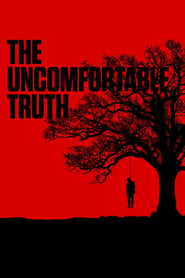
The Uncomfortable Truth
English সাবটাইটেল ডাউনলোড করুন
রিলিজ তথ্য
ট্যাগ
English সাবটাইটেল প্রিভিউ
প্রথম 200টি লাইন।
- So, a few years ago there was this friend of mine and,
you know, like, Facebook friend.
and he makes this post and this image pops up and it's him
holding this black licorice gummy bear.
And he's like, "Yeah! I found it! I can't believe it,
"a black licorice gummy bear, it's just like the other ones,
"except for it jumps higher."
And I write, "Wow! Really?"
And he says, "What, Loki? It's not racist.
"It's a positive stereotype."
Now before I can tell him there's no such thing
as a positive stereotype, one of his buddies jumps in
and says, Yeah, and the yellow ones are better at math."
That becomes a cue for all of his friends
his like minded friends to just to pile on it just gets
worse and just starts going downhill.
And that's when I realized.
I'm like, "Wow! These guys are racist
"and they don't even know it."
And that's why I'm making this film because doing
nothing is not an option.
- But really it's all of us who must overcome
the crippling legacy of bigotry and injustice.
And we shall overcome.
- I don't know if I could have done what my mother did.
I don't know if I would have joined the Freedom Rides or
sat at the lunch counters.
But I also know that because of her I don't have to.
And yet my family's darker legacy compels me to speak
publicly about my family's and our nation's past.
To try and help right the wrongs we all face today.
Before the War, our family had over a hundred slaves
and when it ended they were told that they were free to go
but if they stayed, they'd be paid.
Now, if they left they could never come back.
And of those hundred slaves only one left.
That's how well we treated our slaves.
They were like family.
My grandmother loved to tell me this story
and I loved hearing it.
I took pride in it.
And it was such an ingrained part of our family's history
that even my mother shared it with Ebony magazine and they
led a six page article with part of that story about my
mother in January of '63.
And none of it was true.
So there was actually six slaves and they all left but one
and her name was Aunt Mary.
And my great grandmother Addie, Addie Chandler,
she would see her when she would visit her grandfather
Walton Harris when she was a little girl.
And yet somehow, over the years,
fact would become myth and myth would become fact.
And it's crazy because if you go to Oconee, Georgia
and you see how they lived,
you knew for a fact that they didn't have 100 slaves.
And yet somehow, despite all that,
it still comes through in the family history.
And I always wondered how did that six become 100,
and who was Aunt Mary.
Why are they doing this?
I'm not going to tell any stories on Joan.
Joan was the model of propriety and she tried to keep us
out of trouble.
And she didn't like causing trouble
in the state of Mississippi and uh...
I've only been here two days
and that doesn't sound true.
She was a proper Southern woman.
- So I first met Luvaghn during the 50th anniversary
of the Freedom Rides when we were in Jackson, Mississippi.
I think it was the Smith Robertson Museum.
And later I would interview him for a documentary about my
mother's life in the Civil Rights Movement and before the
camera crews showed up him and I were talking and he says
something that really jumped out at me.
He says "You know, everyone knows where the drugs are
"but you'll never see a SWAT team raid a university,
"but you'll always find 'em in the hood.
"So why is that?"
Honestly, I really didn't know.
I just hoped he didn't know that.
So I started reading everything I could get my hands on.
And it wasn't like I didn't know anything at all.
Growing up with my mother you had to know something but to
the depth of what he was talking about that was new
territory for me.
So, again, I started reading everything I could,
"The New Jim Crow", "The Condemnation of Blackness,
"When Affirmative Action was White",
and the list just goes on and on.
We had books like "Coming of Age in Mississippi"
from Anne Moody, and she actually wrote in the back,
"To Loki, I know you have heard all of this from your mother
"before but you will read about our experiences in my book.
"Your mother and I had many great laughs together."
We had John Salters book, "Jackson, Mississippi."
And then my mom starts sending me all these books.
She's like, "Oh this is what you're studying? Great!"
So we start getting things like
"Inside the Ku Klux Klan"
and "The Strange Career of Jim Crow",
gosh what else we got here?
"100 Years of Lynchings" and, of course,
Stokely Carmichael's "Black Power."
- No, I had no reason to like white people.
First of all you're not told anything
about white people that's good.
My grandmother, I lived with my grandmother the first five
years of my life, she lived on land or housing that the
white families had put up.
So she saw that, and I lived with her for awhile
and the way they treated
people was just horrible.
It's like sometimes you don't even have a name.
Like my grandmother was Aunty because she was old.
So it was "Aunt Something."
Not even "Aunt Something" it was Aunty.
And then you became Uncle.
You didn't you never had a freaking name.
And you knew you didn't have any rights.
You couldn't do what you wanted.
You had to be careful what you said.
And sometimes we didn't have enough to eat
and what we ate basically was my grandmother would make
cornmeal bread and we'd put that in water with sugar
and that would be dinner.
And so I had no reason to like white people.
- To me, I kind of see it as a miracle that we even
know each other because our lives through American history
took theses two very different paths, very divergent paths.
And yet, at the end of the day, they would intersect in
the summer of 1961 and would be together ever since,
despite what my family had done but also because of it.
- We were coming back from a conference somewhere, probably
in Memphis or Nashville, or certainly not
in Mississippi I mean.
You weren't telling this.
Oh right.
And we made it to Jackson.
- Alive. - Alive.
- Oh I'm gonna get this story some day.
And we got the kids to prove it.
Well, yes we do.
She has hers and I have mine.
- But what I would soon learn is my family helped
create the world that would enslave and subjugate Luvaghn
for generations; establishing a foundation of racism
from which the political and economic engine
of our nation would be built.
And while the structures created on top continued to be
dismantled, the foundation remains.
Well, the foundation of our country.
Well, first of all we had to wipe out all the red people.
I mean, we have a very violent history and the solution
has always been we will kill as many people as we have to
to establish the place for white people to be.
If you look at the foundation of the country.
If you look at what it became.
If you look at the economic system it built; the social
systems it set up.
It was all about: somebody's gotta be on the bottom,
and here's a convenient bunch of people to do it.
- This social order would be codified by
a Constitution that allowed slavery to continue
in this new land of liberty.
In declaring enslaved blacks as only
three-fifths of a person.
White Supremacy was now the official policy
of the United States of America.
And this mentality would become truly engrained
in our nation's psyche.
From 1789 to 1850, 80% of our Presidents owned
slaves, eight while serving as President.
18 of the first 31 Supreme Court Justices also owned
people and the interests they looked out for and the
policies they ruled on would have a lasting impact.
So I wanna show you something here as well.
So, since our first Continental Congress in 1774 until
today, over 12,000 people have served in Congress.
And over that 240 plus year period,
only 3% have been women or people of color
and of that three percent a third are serving right now.
So, the other 97 percent have been white men because
remember women, at least white women, couldn't vote until
1920, and African Americans, all African Americans,
couldn't vote until 1965.
Now there was this short period of time during
Reconstruction when black men could actually vote
and even hold office.
As a matter of fact the first one to do so
was Hiram Rhodes Revels of Mississippi,
who was a US Senator in 1870.
That's shocking to a lot of people I know because it only
took Mississippi 148 years to get around to ratifying
the Thirteenth Amendment in 2013.
That's the one that freed the slaves, by the way.
- There are a lot of things that are set up
to make sure that people fail.
Now people argue: well there's nobody that sat down and
More English subtitles for The Uncomfortable Truth
- The Uncomfortable Truth 2017 1080p BluRay x264 AAC-[YTS MX] · 10 downloads · 2021-03-08
মন্তব্যসমূহ
No comments yet. Be the first to leave one.