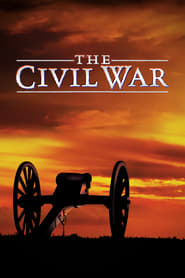
The Civil War
English সাবটাইটেল ডাউনলোড করুন
রিলিজ তথ্য
ট্যাগ
English সাবটাইটেল প্রিভিউ
প্রথম 200টি লাইন।
What we're doing here today with "the civil war"
is that we are actually remastering the whole project
onto a digital medium so that we can release it on DVD.
And also have an anniversary,
12th year anniversary rebroadcast on pbs
in September of 2002.
What makes me excited about the process
is technology has advanced so much in the last 12 years
that the original film to video transfer
back in 1990...
the technology was nowhere near as good as it is now.
Also, back then, Ken and I were not particularly happy
with the overall look of the film,
both in the film prints and in the video master.
And this gives us the opportunity
to apply technology that we've used on projects recently
all the way up to "jazz,"
working here at tape house
and with all these new technological advances
that have been developed,
to be able to make "the civil war"
as gorgeous and as beautiful as, let's say, jazz was,
you know, last year.
So we're both very, very excited about the possibilities
that we can really make this thing
look the way we really wanted it to,
as we intended to 12 years ago.
There we go, yeah, make it a little brighter.
Let's increase the contrast a little bit on that.
Man: I was privileged to meet
ansel Adams in 1971.
And we remained friends till his death in 1984.
And he taught me a great deal.
He actually became quite a mentor of mine.
And one of his great quotes is, "the negative is the score
and the print is the performance."
Well, here's the score...
this film, 12 years old, it's our score,
and on this spirit datacine, we are going to
create a whole new performance.
We're going to give you an image that is greater,
better, more textured, more beautiful to your home.
12 years ago the technology we're using
the spirit datacine,
which is going to scan this movie film, did not exist.
In those days,
film was transferred on what was called a telecine,
meaning television and cinema.
So a telecine was scanning the film
only at television resolution.
So each frame, there's so much information
in one single frame of movie film,
yet we were coarsely scanning it,
only about 480 lines to a single frame.
The spirit is scanning the film five to six times greater
than the old telecines.
We're actually scanning the film at its film resolution.
This image that I have up, if I zoom in,
we're right down on the absolute grain structure
has been captured
at 2k resolution.
Each film frame
is about 14 megabytes of information.
So we're scanning it
and then in this 14 megabyte file
I'm actually changing the contrast,
black levels, white levels, color imagery,
on a shot by shot basis.
Uh, 12 years ago,
when this film was shot, film was a bit grainy.
It's improved significantly since then.
We have a device on the spirit,
brand-new, called scream.
What I'm going to do is isolate...
let me actually give you a split screen
to show you what we're doing.
Here, let me run the film here.
Look on the right side, that's corrected.
Isn't that fabulous?
And on the left side is the uncorrected.
So we're actually, yeah, we're actually going on.
We're not losing any information.
Let's try it, let's try it on this one, too.
Barnes: Oh, that's unbelievable, look at that.
Dowdell: This is really going to help us.
You can see all that activity, the high frequency information
oh, exactly, it's all smoothed out,
it's almost all gone.
I'm also getting rid of the flutter.
Right.
So, yeah, I think this is going to really improve it.
And notice we're really dealing with
this whole grain structure.
Oh, boy, what was that?
Whoa, that's one hell of a piece of dirt there.
We'll deal with that upstairs.
I've got the perfect guy,
got to get George on this project.
And he can do that in the paint box,
he'll clean that right up.
Man: My name's George bunce.
I'm a Henry artist here at the tape house in New York.
And I work on a Henry from quantel.
And today we're going to be taking away
some hair and dirt from episode five
of "the civil war."
So, for example, this hair...
Which would have been very difficult
to get rid of in the past...
by taking information from the following frame,
putting that frame over the top of it,
bringing it into the painting side,
then we can just
zoom way in on the problem,
and just paint it away.
And then wherever I paint, it's replacing
the information from the top frame
with the underlying image.
So really...
Pretty seamless.
Then you just put it back into the clip
it disappears, now you can see
that hair's gone.
Barnes: "The civil war" was not done in stereo.
So that was the first big decision was,
let's make a new stereo mix for broadcast
of "the civil war."
And then, of course, the thought came up
that we could also re-release the film on a DVD.
And with DVD, we have
the opportunity to do a richer mix
with a 5.1 stereo surround sound.
And we decided that we would go ahead with that as well.
Man: So that's basically what we've done,
we've taken the original soundtrack, which was mono,
kept all the dialogue now in the center speaker
and we have a left, right center to play with
so we could have more effects surrounding the voice
to give you a more powerful feeling of the battle scenes.
And, of course, the music now is total surround.
It's five music... points of music.
And it's a much more interesting experience
on the sound level.
In the crowd, just a few...
replace it in the surrounds, this music, a little bit.
Man: This is like playing a fine game of chess
going back over the same material,
seeing it on a digital screen.
You know, computers now have a visual quality,
you can see sound,
looking at a waveform.
In the old days, you couldn't see it,
and you could only listen to one at a time.
You know, in the pro tools
and any of these other editing systems,
you can listen to 20 or 30 tracks at once.
That was just unimaginable in '88, '89.
Barnes: I think we should pull the applause away, actually,
not swell it.
Let it drift off.
Barnes: But as well as doing a remix,
we also wanted to maintain the integrity of the track
that was already there.
And Ken and I discussed that
that was very important to do that.
When people first saw the film broadcast,
they commented how much they liked the music,
they commented on how effective the sound effects were...
so that we didn't really want to change a lot in the track.
It was really a matter of putting everything
into stereo as much as we could.
And to enhance it,
and to make it a richer experience sound wise.
And some of the high notes are getting in the way.
So let's go back and redo this cue.
Barnes: And when we first finished the film,
back in '89, '90,
you know, we were struggling with money and time.
We were never completely happy with the way it looked,
and even made certain compromises in the mixing,
just in order to keep things within budget
and time schedules.
And this has allowed us a little more freedom to go back
and improve the color across the board,
and to enhance the sound or make the sound better
across the board.
So I think that what we're able to achieve here,
and why the two of us are so happy about doing this is that
it's going to feel like a totally new film.
I mean, for those who have seen it before,
the experience will be the same, I'm sure.
But it's going to be,
I just think, visually and aurally,
it's going to be a richer experience for folks
to take another look at this.
Rolling.
Okay, that was a tilt, medium tilt to doorway.
We approach our projects
with ignorance and curiosity.
This allows us to have a process of discovery.
The Civil War subtitles in other languages
More English subtitles for The Civil War
- The Civil War SEASON 1, 1080p Bluray x265 10bit AAC 5 1-LION[UTR] [23 976 FPS] · 21 downloads · 2026-07-31
- TheCivilWar1990S01720p 10bit BluRay x265-budgetbits · 90 downloads · 2023-08-11
- The Civil War 1990 S01 1080p BluRay - HJ · 221 downloads · 2022-06-10
- The Civil War - 25th Anniversary Edition · 104 downloads · 2021-05-03
- Ken Burns: The Civil War (1-9) · 162 downloads · 2021-04-07
- The Civil War S01E09 (1865) The Better Angels of Our Nature 720p BDRip (SamSerial) · 210 downloads · 2016-04-20
- TheCivilWarS01E08(1865)WarIsAllHell720pBDRip(SamSerial) · 127 downloads · 2016-04-20
- TheCivilWarS01E07(1864)MostHallowedGround720pBDRip(SamSerial) · 119 downloads · 2016-04-20
মন্তব্যসমূহ
No comments yet. Be the first to leave one.