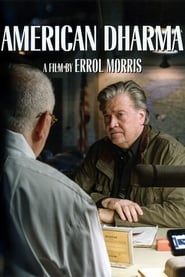
American Dharma
English സബ്ടൈറ്റിൽ ഡൗൺലോഡ് ചെയ്യുക
റിലീസ് വിവരങ്ങൾ
ടാഗുകൾ
English സബ്ടൈറ്റിൽ പ്രിവ്യൂ
ആദ്യത്തെ 200 വരികൾ.
First time I saw it was at Harvard Business School.
It just blew me away.
When he goes out to that runway
and then you see the bombers coming in.
I think it's got a lot of good life lessons in it.
It sets up very clearly this kind of two types of leadership.
One being the touchy-feely guy
and Gregory Peck, who is clearly a hard-ass.
But he's not a hard-ass.
Smoke, Ernie?
Thank you, sir.
Think about the scene where he's coming to take command.
The staff car pulls up to the gate,
and he's riding shotgun with the driver.
And I think he even calls him by his first name.
He gets out, he smokes a cigarette,
he gives a cigarette to the sergeant,
then he throws the cigarette away,
gets in the back seat of the staff car,
and he's a general.
All right, Sergeant.
He understands his dharma.
He understands what he has to do.
He understands that for the betterment of those guys,
for them to fulfill their task, he has to do it.
Attention!
Dharma is the combination of duty, fate, and destiny.
For me to fulfill my dharma, I have to fulfill my duty.
Rest.
I've been sent down here
to take over what has come to be known as "a hard-luck group."
Well, I don't believe in hard luck.
So we're going to find out what the trouble is.
We're going back to fundamentals.
And I can tell you now, one reason
I think you've been having hard luck--
I saw it in your faces last night.
I can see it there now.
You've been looking at a lot of air lately.
You think you ought to have a rest.
In short, you're sorry for yourselves.
Now I don't have a lot of patience with this,
"What are we fighting for?" stuff.
We're in a war, a shooting war.
We've got to fight.
And some of us have got to die.
I'm not trying to tell you not to be afraid.
Fear is normal.
But stop worrying about it-- and about yourselves.
Stop making plans. Forget about going home.
Consider yourselves already dead.
Attention!
I think it's a very simple film
with a very simple powerful message that...
modernity is based around emotionalism,
what you think is helping everybody,
but in fact is not allowing them to fulfill their destiny,
to fulfill their fate.
Even though that fate and that destiny
may be their own personal destruction.
A lot of your ideas are about tearing things down,
war, and destruction.
I believe that you need some fairly radical restructuring
of this, and rethinking of this.
The permanent political class that controls our country
is going to stay exactly like it is,
until you have true disruption.
It can't be a pillow fight.
You need some killers.
You get some killers, you're going to see some change
We all know what the problems are.
"Do you have the guts to do it?"
Trump had it, and that's why
he's President of the United States.
Can I bring up one last thing?
just Twelve O'Clock High, one thing I thought of is that
in the motivation of the men
to focus on the mission, and not themselves,
he was prepared to not be loved,
in fact to be hated.
If you want to effect change the important thing is to--
Effect change, yeah.
I used to tell the guys at Breitbart,
Napoleon's saying to his Marshals of France,
"When you set out to take Vienna, take Vienna."
I had gone to Telluride on and off for years.
I don't even think I knew at time
that you were going to have an interview
with McNamara afterwards.
I was just there to see the film.
I wanted to at least start to produce these myself,
and start to make films like this.
Seeing "The Fog of War" at Telluride was the inspiration.
It's all of you to blame.
Yeah, why not?
If you go back to Twelve O'Clock High,
to this Quonset hut where those pilots were,
that's kind of the populist side.
The working men of America.
But then you see your film and you understand
the precision daylight bombing and flying in a fortress
and all that...
was conceived and thought of by guys like McNamara.
What worked against Germany and Imperial Japan
clearly was the exact wrong thing
for how you fight a war against people
trying to get their independence and their freedom.
You can see in McNamara
the personification of globalization.
It's that scientific, engineering, managerial elite,
that everything's a set of math to them.
This is all out of Harvard Business School.
It's all out of Harvard Business School.
They had this concept, I think it's become a radical concept,
about the maximization of shareholder value--
the whole beginning of the shipping of jobs.
Everything could have a mathematical base to it,
or have a logical, or a reason base to it.
I look at The Fog of Waras a very despairing film,
where McNamara very near the end, says,
"Rationality will not save us."
I took it a different way.
It's a Greek tragedy, I took it as hopeful, and here's why:
What's hopeful about Greek tragedy?
Because you learn the lessons of it, right?
His rationality can't save us, didn't save us,
actually buried us into Vietnam much, much deeper.
What makes us omniscient?
Have we a record of omniscience?
We are the strongest nation in the world today.
I do not believe we should ever
apply that economic, political, or military power unilaterally.
If we had followed that rule in Vietnam,
we wouldn't have been there.
We were a hardcore Democratic family.
I went to a Catholic military prep school.
Vietnam tore that community apart.
We had a football coach, Mr. Monaghan.
His boy got killed in Vietnam.
Some of these families, they never recovered from that.
I'm a paperboy at the time,
and delivering the papers every day
and you see 200,000 troops and 250,000 troops,
and 300,000 troops,
and you're a patriot so you still believe in it,
but you see the families destroyed.
So I'm at West Point.
My daughter's sophomore year, it's 2008, I think it is.
It's a tough story to tell.
The West Point girls' volleyball team
was going to get new uniforms,
and they bring the uniforms in in boxes off to the side,
and the girls are practicin' in this huge old dirigible hangar,
where the volleyball team plays-- from the 1920s.
Looking at this, and looking at the West Point girls,
and I look over at the boxes.
I just kind of go over and look at the new uniforms.
They're sealed.
"Made in Vietnam."
"Made in Vietnam."
I lost it.
"Made in Vietnam."
Fifty thousand dead, you know,
a hundred thousand wounded, families torn apart,
the whole of Southeast Asia, what,
10, 20, 30 million people murdered?
Right?
What was it all for?
What was Monaghan's kid, what was that for?
"Made in Vietnam."
With all the jobs lost to globalization.
It was an incredibly clarifying moment for me.
In the 20th century, we decided,
that these individual nation- states at war with each other
would produce disaster,
and that some solution had to be contrived.
And when you say we, what do you mean, "we"?
We didn't decide that at all.
I completely and totally disagree with that.
-I know you do. -No, but--
It wasn't the common man that got us into World War I,
and in World War II, and in Vietnam,
and all the other wars that have been fought.
It's Monaghan's son that's always the recipient of all the crap.
When you say, these "nation states,"
it's the elites that got us into that mess,
and then they came up with some sort of supranational apparatus
that's gonna take care of it.
No, no, no, no, no. I disagree 100 percent.
They are the ones that drove the destruction
of the 20th century.
The reason I'm a populist,
I've gone to the elite institutions.
I was in the United States Navy as an officer,
went to Harvard Business School,
went to Georgetown and got a Master's in Foreign Affairs,
was in all the board rooms,
went to Hollywood...
and here's the one thing I can tell you:
If you gave me the choice
അഭിപ്രായങ്ങൾ
No comments yet. Be the first to leave one.