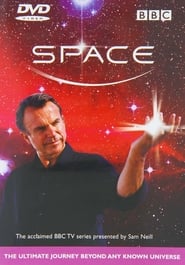
Space
English സബ്ടൈറ്റിൽ ഡൗൺലോഡ് ചെയ്യുക
Download English Subtitle Files for Mobile (6)
English സബ്ടൈറ്റിൽ പ്രിവ്യൂ
ആദ്യത്തെ 125 വരികൾ.
I want to take you on a journey.
It's a journey like no other. A journey out there...
Look up at the night sky. What do you see?
The planets, the stars,
a million points of light...
You're looking at your universe.
This series will take you there.
We'll experience first-hand the wonders of the universe, its power and its danger.
And to take a CLOSER look, we'll even bring space down here to Earth.
We'll seek out alien life.
Witness the birth of new worlds.
And we'll discover why what happens out there in space affects all of us here
on the one small planet we call our home.
We'll take you from the beginning of time...
..to the far future of humanity.
This is the voyage of a lifetime. This is the voyage into space.
We begin with the BIG question: where did we come from?
Aliens.
What would you think if I told you that you, me, everyone came from outer space?
Weird though it sounds, it's true - we're all aliens.
Once upon a time, every single thing that makes us what we are came from the stars.
We live in a small corner of the universe.
This is our neighbourhood - the solar system.
At its centre, the sun.
And just 150 million kilometres away is our home: the Earth.
It's an astonishing planet.
The only place we know of in the whole universe where conditions are right for life.
The air we breathe...
Rich seas and oceans...
Our planet is alive!
And what's remarkable is, it shouldn't be!
Life on Earth shouldn't even exist.
So where DID it all come from - me, you, the planet we live on, even our sun?
It's a puzzle because at the beginning none of it was here.
Let me show you what I mean.
This is the moment it all started - the Big Bang.
And that was it. The Big Bang created the universe,
but a universe containing only a vast cloud of hydrogen gas.
So how did something so featureless create our world? And how did it create us?
The journey from a cloud of hydrogen
to the building blocks of life is extraordinary.
The calcium in my bones, the oxygen we breathe, where did it come from?
It all began at the time the universe gave birth to the stars.
For millions of years, the entire universe
was nothing but the single vast cloud of hydrogen gas created in the Big Bang.
But within the cloud, something amazing was happening.
Shock waves from the Big Bang were echoing through the cloud,
making it billow and swirl.
Huge whirlpools of hydrogen formed, sucking in the cloud that created them,
spinning them tighter and faster to form huge balls of gas.
And as they span, these enormous spheres got hotter and hotter
until the moment came that changed the universe forever.
The first-ever stars were born.
But these stars alone are not enough to explain why WE'RE here.
What turned stars into us?
Beneath the deserts of Arizona is a device which may reveal the answer.
Lawrence Krauss is a physicist, but this isn't a lab he's visiting.
It's a weapons silo.
The closest we've been able to come to that incredible release of energy
associated with the violent birth of a star is with the hydrogen bomb, or the superbomb.
Hidden in bunkers like this is the technology that allows us
to understand what goes on in the heart of a star.
It's the most destructive weapon on our planet.
This is the power of a hydrogen bomb.
It's the same hydrogen that fuels the fire of every star in the universe.
I'm standing on the gantry
near the very top of a Titan intercontinental ballistic missile.
A huge rocket designed to propel, at its very top,
a small payload containing the most explosive device ever created by mankind.
The amount of hydrogen gas in an H-bomb is tiny.
It's barely enough to fill a party balloon.
But the energy it can unleash is devastating.
This is the same energy which keeps the stars alight.
All this is from a single balloonful of hydrogen.
The ball of hydrogen that makes a star is a million kilometres across.
A star releases the energy of millions of H-bombs every second.
But, far from being destructive, inside the nuclear furnace of every star
there is an extraordinary process of creation.
As I stand here in this silo and look up at the thermonuclear device 100 feet above...
If it were to go off, I and everything in a ten-mile radius would be evaporated.
But it's also likely that almost every element in the universe would be created.
Just as inside stars hydrogen fuses to form helium, which fuses to form carbon,
then nitrogen, then oxygen, silicon, iron...
As I look around me, everything I see was once the inside of a star.
Every atom came from inside of a star.
The universe began with hydrogen.
And hydrogen created the stars.
And the stars created the elements we need for life:
oxygen in the air, calcium in our bones.
It all came from the stars, but how?
If it was created THERE, how did it make our world?
It's astonishing to think all the ingredients to make the Earth and every living thing
were created inside stars.
Every star is an immense factory churning out billions of tons of chemicals.
But the chemicals aren't much use to anybody while they're in there.
Luckily for us, stars don't last forever.
Just occasionally, they explode.
Amazing but true. Entire stars can blow themselves apart.
To understand WHY,
let me take you back to the very last few moments of a star's life,
just as it teeters on the point of destruction.
This is a star that died billions of years ago.
It's huge. Its life has been violent and short.
And its death made our lives possible.
You are about to witness one of the most violent and wondrous events in the cosmos.
The star has run out of hydrogen fuel.
The nuclear fires that have kept it burning for millions of years have gone out.
As it cools, it shrinks.
It starts to collapse under its own weight.
It crashes inwards
and explodes.
The whole event is over in a thousandth of a second.
They call it a supernova,
an explosion so bright it outshines entire galaxies.
Billions of tonnes of star stuff...
..hurtle outwards, into space.
So look at a supernova and you're witnessing a moment of creation.
Even with our most powerful telescopes, these explosions remain frustratingly distant.
The best way to find out what happens when a star dies is up close and personal.
We are now charging. Process...
Ten, nine, eight
seven, six, five,
four, three,
two, one.
To understand the moment of creation that happens when a star dies,
Space subtitles in other languages
More English subtitles for Space
- Documentary BBC Space · 30 downloads · 2010-10-04
- 6of6 Boldly Go DivX5-AC3 www mvgroup org ENG · 17 downloads · 2007-08-26
- 5of6 New Worlds DivX5-AC3 www mvgroup org ENG · 16 downloads · 2007-08-26
- 4of6 Are We Alone DivX5-AC3 www mvgroup org ENG · 18 downloads · 2007-08-26
- Space 3of6 Black Holes DivX5-AC3 www mvgroup org ENG · 12 downloads · 2007-08-26
- 2of6 Staying Alive DivX5-AC3 www mvgroup org ENG · 16 downloads · 2007-08-26
- 1of6 Star Stuff DivX5-AC3 www mvgroup org ENG · 13 downloads · 2007-08-26
- -=COMPLETE=- DivX5-AC3 www mvgroup org ENG · 18 downloads · 2007-08-26
അഭിപ്രായങ്ങൾ
No comments yet. Be the first to leave one.