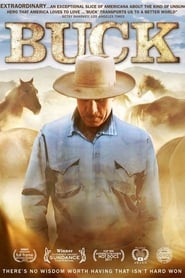
Buck
English സബ്ടൈറ്റിൽ ഡൗൺലോഡ് ചെയ്യുക
റിലീസ് വിവരങ്ങൾ
ടാഗുകൾ
English സബ്ടൈറ്റിൽ പ്രിവ്യൂ
ആദ്യത്തെ 200 വരികൾ.
How you doing there, buddy?
See, that feels good, doesn't it, huh?
All right, well, I'm off to the office.
To start off, are there any of you
that have any particular problems
you'd like to tell me about?
Don't be bashful. You're among friends.
Whoa, whoa, whoa.
Let him be, 'cause he's learning
how to kind of settle in with you.
A lot of times, rather than helping people
with horse problems,
I'm helping horses with people problems.
And for a lot of people,
they want it all to be fuzzy and warm and cosmic,
but it is no different with a horse than with a kid.
You can't always be the kid's best friend.
First you have to be the parent.
A horse like this isn't any different
than a kid that takes everybody's milk money
on the way to school, beats up old people.
Maybe it isn't the kid's fault.
Maybe the parent ought to be in jail.
Boy, do you feel like a fool and kind of like a failure.
- You know? - Aw, it's all right.
People bring a lot of baggage to the table
when they come to these.
Sometimes they're here for a different reason
other than just getting to where
they can ride their horse a little bit better.
If you find a way to fit this thing right here,
it'll make you better.
It'll make you better in areas
that you didn't think related to horses.
Good job, buddy.
Horses are my life,
and because of some of the things
I've been through as a kid,
I found some safety
and some companionship in the horses.
I was just looking for kind of a peaceful place to be
where I wasn't threatened, where my life wasn't threatened.
So I have an empathy for horses
that when something is scared for their life,
I understand that.
He's a pretty nice horse, six years old.
Making some good progress, anyway.
Just a youngster, just telling him...
I want him to be aware of me.
If I slow down, I want him to slow down.
See, if I go like this...
I have to practice my old man walk.
So when I'm really old,
it might take me an hour to get over there.
He ought to be able to just go with me,
as slow as I want to go, and not crowd me.
Might be a little slower than what he'd like to go.
If I stop, he ought to stop.
If I go back, he ought to go back,
and I ought not to have to beg him.
Right now, I walk at a little faster pace,
but I'm always testing him to see if he's with me.
When I first seen him, I thought,
"What kind of voodoo stuff is this, you know?
How are you getting this done, you know?"
He walks into a round pen.
In five minutes, he's got a horse following him around
like a dog.
He and I go together.
Most of us have a bag of tricks,
and Buck has an arsenal.
Hey, boys.
Morning.
Hello, how you doing?
- Good. - Good.
Colt starting is always interesting
because most of the youngsters have never been saddled,
never had anyone on their back or a bit in their mouth.
So there is a lot of fear in both the horse and the human.
The way I do these colt classes, you guys,
you'll have to get them exposed to a lot of things
that seem perfectly normal to you,
but it doesn't seem normal to the horse.
You walk up to them smelling like a Big Mac, you know,
or something...
Your diet is gonna make you smell different to the horse,
and then you're gonna tell the horse,
"Don't worry. I want to crawl on you..."
In a similar posture to how a lion would attack
and kill a horse.
They jump right up in the middle of them,
and they reach their front claws around,
and as they're biting down on their spine,
they're cutting their throat with their claws.
You're asking the horse to let you be in that posture
and crawl on him.
And then about the time he says, "All right, maybe,"
and then you say, "Oh, oh, one more thing.
"I want to strap some hides of other dead animals around you
before I crawl on you."
You damn sure have to have some trust.
He's got to believe in you to let you do that,
and amazingly enough, they'll let you do it.
Now, the first thing that I'm gonna show you
is leading the horse by.
Step in here. Extend the front over like that.
Then he'll go on forward around me.
This takes some practice to get good at.
Your horse might be afraid to move.
It's a real trust thing between the two of you.
What's your name, dear?
Martha?
Okay, Martha, you want to go the other way.
You got your horse leading by good,
just the wrong direction.
That's all right.
Tap her.
Don't be afraid of tapping her with that flag.
You aren't gonna hurt her.
It would be like you getting spanked with a sock.
There, yeah.
Dave, lead with the right hand.
Yeah, it's in your left hand.
The other left.
Walk to the hip.
No, walk to the hip.
You're at the head. That's the eating end.
This is always a hard one for folks.
Pam, that walking on you.
Now, your horse is kind of naughty.
You guys make a big old circle around me.
This horse, it knows to get away,
'cause she's pretty fearful.
No, you won't get away.
She said, "I thought I had the angle on you there."
See that head slinging to the outside?
That's unacceptable.
But she doesn't know the difference.
She said, "Well, up to this point,
I've had some pretty damn good luck with that technique."
See there where she went to run me over?
That means she's trying to protect herself.
But when I get done,
I will not have to close my hand on the end of this rope.
Now, I'd touch her here on the neck.
I'd say, "You find out this flag won't hurt you.
Nobody's here to hurt you."
One of the things that really struck me
was that you always grow up hearing about breaking horses
or breaking broncos or something.
There's a whole element of abuse, really, of, it's...
man is stronger than this big animal.
We can break them down
almost like Parris Island and a drill instructor,
and I think it first clicked for me with Buck
at the whole concept of starting.
My early exposure to horses was severe:
Tying horses to posts with an inner tube tire
so that when the horse pulled back,
they would slam back into the post.
It was really brutal,
really, truly brutal.
It was heartbreaking.
I didn't know any different. I was a child.
But I remember crying a lot.
I felt very, very bad for the animals.
So when I met Buck, I was the instant convert.
You can't be a good guy when you leave the barn
and a bad guy when you get to the barn.
And if I treat animals this way, do I treat people that way too?
We all know the answer to that.
I met Buck probably at his first clinic that he gave.
If I wasn't at his first clinic, I was probably at his second.
There was a nice change.
And the first time I saw was amazing to me.
L... l... it just blew my mind.
It just blew my mind that it could be done in a way
that the horse would cooperate, like the people,
and not be scarred up and afraid for life.
I couldn't believe what that man could do
with a horse without anything on it.
I mean, he could load horses in a horse trailer
without touching them.
I mean, it... the horse has never been in a trailer.
That's phenomenal.
Why let an animal live in fear?
Why not fix it?
That's pretty good.
You notice how I don't have to have a death grip
on the doggone lead rope now.
In this particular discipline, if you want to be great,
you have to be a sensitive person.
That vulnerability,
that sensitivity to feel the subtle change
is what makes you great.
That's why so many of the folks that are really good at this
are... you know, sometimes they're tortured souls, you know?
I've seen some kind of dark things in my life,
but everybody has a bit of a burden to bear
of some sort,
Buck subtitles in other languages
More English subtitles for Buck
- Buck 2011 · 43 downloads · 2011-10-07
- Buck 2011 LIMITED DOCU DVDRip XviD-PSYCHD · 28 downloads · 2011-09-27
- Buck 2011 LIMITED DOCU DVDRip XviD-PSYCHD · 30 downloads · 2011-09-27
അഭിപ്രായങ്ങൾ
No comments yet. Be the first to leave one.