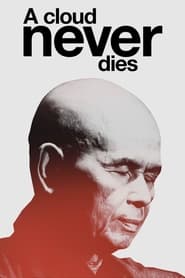
A Cloud Never Dies
English സബ്ടൈറ്റിൽ ഡൗൺലോഡ് ചെയ്യുക
റിലീസ് വിവരങ്ങൾ
ടാഗുകൾ
English സബ്ടൈറ്റിൽ പ്രിവ്യൂ
ആദ്യത്തെ 140 വരികൾ.
He is a global spiritual leader
a scholar,
a peacemaker,
a writer and a poet.
Revered worldwide for his teachings on mindfulness,
he remains a humble Buddhist monk
most at home in the stillness of nature,
surrounded by his community.
Thich Nhat Hanh has written over a hundred books,
read by millions worldwide.
Martin Luther King publicly nominated him
for the Nobel Peace Prize.
But how did this unassuming seeker from central Vietnam
confront the horrors of war and emerge as a spiritual pioneer,
bringing the Buddha’s teachings to the West,
to become a force for change in the world?
Thich Nhat Hanh was born in central Vietnam in 1926,
under French colonial rule.
Even as a child,
he was aware of the political instability
and turmoil in his country.
At the age of nine,
he saw a picture of the Buddha on a magazine cover,
and experienced a deep desire to be as calm and peaceful
as that Buddha.
When he was sixteen,
he became a novice monk at Từ Hiếu Temple
in the imperial city of Huế.
There he began Zen training in meditation,
while also tending buffaloes and working in the rice paddies.
He soon mastered classical Chinese and French,
and devoted himself to the study of ancient Buddhist texts.
He lived through the Japanese occupation
and the Great Famine that followed.
Whilst many of his peers turned to foreign ideologies and violence,
he was determined to find
another way to liberate his people from suffering.
As a young monk he took the name ‘Nhat Hanh’ meaning ‘One Action.’
Determined to renew Buddhism,
he became one of the first monks of his generation
to study science,
literature,
economics,
and English.
He soon realised
that monastics must offer society more than just chants and prayers,
and developed a vision for "Engaged Buddhism"
In 1954,
as the communist North and anti-communist South vied for dominance,
Vietnam was divided, and violence raged.
He meditated intensively through this time of grief and despair.
Only when he discovered the practice of mindful breathing
in an ancient text, did he find the key to heal his suffering.
He expanded the practice to develop a new way of walking meditation,
combining the awareness of breathing with each step.
These practical methods for handling painful feelings
became central to his life’s teaching,
and have today been taken up by people all over the world.
He and his friends established a mountain refuge
where they could restore their spirits.
They called it Phương Bối:
Fragrant Palm Leaves.
They realised that only by coming together as a community,
close to nature,
could they resist the oppressive atmosphere of anger and despair,
and sustain their efforts to renew Buddhism.
It was during this time
that Thich Nhat Hanh met a young biology student
pioneering a new approach to social work in the slums of Saigon.
Inspired by his teachings,
she went on to become his lifelong collaborator,
later receiving the name Sister Chan Khong.
After just four years, deadly fighting reached Phương Bối.
Thich Nhat Hanh and his friends
were forced to abandon their sacred refuge,
and their dream evaporated like a cloud.
In 1961,
as the war continued,
Thich Nhat Hanh travelled to study and teach
at Princeton and Columbia universities in the United States.
It was a time of respite and healing from the horrors of war.
His meditation deepened
and he touched the possibility of true peace,
freedom
from hatred,
fear
and sorrow,
in the heart of the present moment.
He later described his insights there
as “the first blossoms of awakening”
When South Vietnam’s oppressive Diệm regime was overthrown,
Thich Nhat Hanh was called home
to help guide the Buddhist peace movement.
Soon, he became a leading light in this nonviolent
“third force”
that refused to take sides in the conflict.
He and his colleagues founded a publishing house,
a university,
and a leading Buddhist journal,
which printed fifty thousand copies every week.
The journal reported on the protests
and published his peace poems.
They were taken up by well-known singers of the day
and were sung in the streets.
In 1965
Thich Nhat Hanh and his colleagues established
the School of Youth for Social Service,
a non-partisan “peace corps”
training thousands of young people
to go into the war-torn countryside
to rebuild shattered villages.
But it was dangerous work
and several students
were targeted
and killed.
In February 1966,
Thich Nhat Hanh created a new Buddhist order.
Today the order has over three thousand members worldwide.
In 1966, determined to change the situation,
Thich Nhat Hanh once again left for the US
to raise his voice for peace.
He was supported by many influential, spiritual
and political leaders of the day
including
Dr. Martin Luther King, Jr.
He knew that if he could persuade Dr. King to come out against the war,
the tide of public opinion
would change.
Somehow this madness must cease.
We must stop now.
This is the message of the great Buddhist leaders of Vietnam.
Recently one of them wrote these words, and I quote:
"Each day the war goes on, the hatred increases
in the hearts of the Vietnamese,
and in the hearts of those of humanitarian instinct.
The Americans are forcing even their friends into becoming their enemies."
In 1967,
Dr. King nominated Thich Nhat Hanh for the Nobel Peace Prize, saying
"His ideas for peace,
if applied,
A Cloud Never Dies subtitles in other languages
More English subtitles for A Cloud Never Dies
- ACloudNeverDies(2022)1080webEnglishfull · 15 downloads · 2022-11-21
അഭിപ്രായങ്ങൾ
No comments yet. Be the first to leave one.