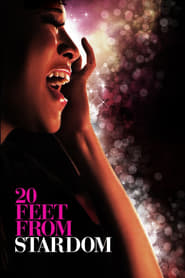
20 Feet from Stardom
English സബ്ടൈറ്റിൽ ഡൗൺലോഡ് ചെയ്യുക
റിലീസ് വിവരങ്ങൾ
ടാഗുകൾ
English സബ്ടൈറ്റിൽ പ്രിവ്യൂ
ആദ്യത്തെ 136 വരികൾ.
SUBTITLES BY LUIS-SUBS
It... It's a bit of a walk, you know,
from, you know, back by the drummer over here.
That walk to the front is... is complicated.
Singing background remains
a somewhat unheralded position, you know.
- So people make that leap. -
So, what you guys do on that part?
It's almost more of a mental leap than...
than just the physical act of singing.
It's a conceptual leap,
and if you can comfortably come up with it, you know,
then you may find a spot out there.
But I know tremendous backup singers
who just aren't comfortable in that position.
You gotta have that narcissism, you gotta have that ego.
- - So shall we do it?
It can be a pretty long walk.
- One, two, three! -
There's a power to what it is that we do.
No one till right now has publicly acknowledged it,
but people love to see the background singers.
I mean, when you think about Lou Reed, "Walk On The Wild Side,"
you know, that iconic song with the line that makes a lot of people uncomfortable
because it says "colored girls." But what is he... what is he referencing
when he says, "And the colored girls say do-do-do-do-do?"
The fact that there's a power to these women
that stand on stage and sing with these guys.
Backup singers just bring so much more life to the situation.
When a voice opens up, there comes the life.
That's when it's a person-to-person connection.
You don't hold on necessarily to your individual vocal persona.
'Cause you're trying to get your persona
to blend and mesh with the other voices. That's awesome.
There's something that happens when you lock in with somebody
and all the harmonics ping, and, I mean,
if you don't like that, what do you like?
I could... I could be different people, a chameleon, you know.
It's just like you could change up. You're never bored.
I'm a part of the sisterhood. I got to earn this.
It wasn't just a dream that I had
I actually got to sing these songs and sing on key.
As a background singer, they would like you to come in,
make things sound great, take very little credit...
and go home quickly.
- - Thank you, Jesus.
Thank you, Father.
God gave us the ability to create, didn't he?
- Yes, he did. - OK.
Today we're gonna pin this down to music.
I see these kids doing this slide, I said, "Oh, child."
He think he got that from, uh... James Brown.
I said, "Oh, that came from one of my pastors."
- My father was a minister. - My father was a...
- My father was a... - Pastor's daughter.
- Isn't that cliché? - That's how I was actually
- introduced to music. - I started as a four-year-old.
All through grammar school.
You come up learning the part that your voice actually fits in.
Nobody tells you that's how singers learn how to do background.
Hallelujah, glory, glory.
- - Thank you, Lord.
Thank you, Lord.
God gave me this talent and I intend to use it.
And that's what my life has really been all about,
trying to make a success of the gift that I have.
Darlene Love is the one that's the cause of all of this.
Darlene Love and Fanita James, The Blossoms.
They were the first black background singers
- working in the studios. -
When we first got into recordings, it was totally white.
They were all white girls, and they were very tasteful.
They could do arm movements and they could, you know,
get in and go... go to the microphone
and come out of the microphone, but that was about it.
Because it was white singers. We call them the readers.
They couldn't do nothing without that music sitting right in their face.
People would see us walk in.
They wondered what we were doing there.
They handed us our music and we took it like we was pros too,
like we would really read this.
Then as you got more into the music,
people would want background singers that were free enough
to put feeling in what they were singing.
Not saying that those singers back then
didn't have feeling, but they were
committed to what they saw on the paper.
The song that was coming from them was so raw.
That's what it... it was so raw, and so real,
that it was hard to deny it.
Now this is a surprise!
This is history.
None of us have sung together in 30, 40 years.
I was 15 when I first met them.
- Ain't that something? Fifteen. - That's not funny.
That's not funny.
But we were really white before you got in,
- and then you added it... - We had a sweet sound.
She brought guts and...
that bottom gospel thing and it made it perfect.
They made that platform theirs.
The Blossoms made it theirs,
and when they came in, every producer in California
and everywhere else, that's the sound they wanted. That was from The Blossoms.
- -
All you had to do is tell them in what direction you were headed,
and they took you there.
- See when we had to sound white? - Yeah, uh-huh.
What was unique about The Blossoms, we could change our sound.
We worked with people from Buck Owens to James Brown.
That was perfect, without even rehearsing.
The amazing thing about Darlene and Fanita and Jean
is that they weren't afraid of anybody else that did what they did.
And if that producer asked for a particular person
that could do something, Darlene would say,
"That's not what I do, but I know a girl that can do it."
And that's how she'll get in, and that's how Merry got in.
- - Can you turn off the radio?
There...
I mean, how could you not have music on, Morgan, in the Merry Clayton car?
- I know, right? - That's just...
That's not even logical to me.
See, it's much better for us to add the music later.
I know it, but I'm just saying, Morgan, how could you...
How could you logically not have a diva have her music on?
I don't get that.
Merry Clayton was always the lead background singer,
but she was always a little set apart from that group.
I started going to summer school with Merry,
and she'd start singing down the street, and I'd go like,
"This girl is amazing."
no hidden agendas about it.
She just, "That's what I do."
Ray Charles. He was the only artist
that my father would allow us to go and see,
and I'd stand at the end of the stage with my hand under my chin.
20 Feet from Stardom subtitles in other languages
More English subtitles for 20 Feet from Stardom
- 20 Feet from Stardom 2013 BluRay 720p x264-Ganool · 139 downloads · 2014-02-08
- 20 Feet from Stardom 2013 HDRip X264 AC3-PLAYNOW · 84 downloads · 2013-12-21
അഭിപ്രായങ്ങൾ
No comments yet. Be the first to leave one.