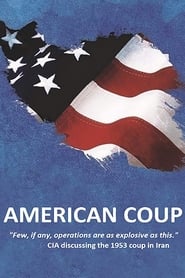
American Coup
English സബ്ടൈറ്റിൽ ഡൗൺലോഡ് ചെയ്യുക
റിലീസ് വിവരങ്ങൾ
ടാഗുകൾ
English സബ്ടൈറ്റിൽ പ്രിവ്യൂ
ആദ്യത്തെ 200 വരികൾ.
In August of 1953 Iran had a democratic government.
Its parliament and prime minister,
the popular Mohammad Mosaddegh,
had nationalized the oil industry
to control the country's chief asset.
Then, the CIA intervened.
I am honored to be in the timeless city of Cairo.
We meet at a time of great tension
between the United States and Muslims around the world.
Tension rooted in historical forces
that go beyond any current policy debate.
For many years Iran has defined itself in part
by its opposition to my country and there is,
in fact, a tumultuous history between us.
Since the Islamic revolution Iran has played
a role in acts of hostage taking and violence
against US troops and civilians.
In the middle of the Cold War the United States
played a role in the overthrow
of a democratically elected Iranian government.
This history is well known.
I have never heard anything about the CIA,
especially in 1953.
I don't know anything about it.
I'm sorry, I don't know anything about that.
I have no knowledge of that whatsoever.
Something I've never heard of, never known anything about.
I have no clue.
Uh...
Uh...
Uh... can you repeat that?
Well I wasn't born in 1953 so I've never heard of the coup.
That was a little bit before my time.
After the Eisenhower administration made its decision
to overthrow Mosaddegh, Allen Dulles selected Kermit Roosevelt
to carry out the coup. At the beginning of august 1953
Kermit Roosevelt arrived in Tehran
and began this covert operation.
It's really a fascinating operation to study
because it answers this odd question.
How do you overthrow a government?
Former Premier Mosaddegh’s ruined house is a mute testimony
to three days of bloody rioting culminating in a military coup.
Suppose you get sent to a country and you're told
"overthrow the government" so what do you do on the first day?
What do you do on the second day?
In the quick shift of power, Mosaddegh
was finally apprehended and awaits trial for treason.
The Shah, who had fled to Rome, comes home
backed by General Zedekiah, military strongman,
who engineered his return to power.
The general will now have a strong voice
in the newly formed government whose cabinet
is seen here with Shah Pahlavi.
How do you overthrow a government?
Many countries in the Middle East are what you might call
fake countries or invented countries.
They're countries that were created by outside powers,
usually in the wake of World War I and I think
there's a temptation for people that aren't familiar
with the region to see Iran in that category
but that's not true. Actually the opposite is true.
Iran, formerly known as Persia,
is one of the world's oldest civilizations.
At a time when Europeans are still living in caves
and wearing animal skins people in Persia
were conducting experiments in astronomy
and learning about mathematics
and writing beautiful poetry.
So this is a civilization that has a great deal of sense
of its history, a sense of self confidence, a sense of identity
and a sense of being rooted
in the long course of world history.
This is not a country that just arrived and it is trying
to figure out who or what it is.
In 1908 the British discovered oil in Iran.
Geologists soon learned that Iran sits on an ocean of oil.
The British decided that they needed oil to run their cars,
to power their Navy and to fuel their economy.
But Britain has no oil.
When oil was discovered there the British decided
that they would like to control that entire resource.
Soon after the discovery this Anglo Iranian Oil Company
was formed and it purchased the majority stake
and then the oil company arranged a concession with Iran.
The entire stock of Iranian oil was the property
of this British company and all the rights to exploit oil
in Iran belonged to this company.
Oil, of course, became very profitable
from the 1920s onwards
and the way the division was, was abysmal.
For instance, Iran was getting sometimes
16 percent of the profits
and the profits were defined in such a way
that it actually short changed Iran.
Books were not open to the public,
even to the Iranian government.
In 1951, Mohammad Mosaddegh was chosen Prime Minister of Iran.
Mosaddegh was a tireless social reformer,
fiercely nationalistic and incorruptible.
No account of the 20th century
is complete without a chapter on him.
Mohammad Mosaddegh was an outstanding politician,
political figure in Iran for a long, long time.
He had relatives who were part of the previous dynasty,
The Qajar dynasty and he was a prominent figure
for a number of decades in Iran.
Before he became Prime Minister in 1951 he was
a vocal opponent of British control over Iran's oil industry
and generally Britain's control over Iran as a country.
We have to remember this is at a time
when there's a wave of nationalism going through Iran.
There's been long struggle against the British
since the late 1800s and there was a feeling in the country
that it was time for Iran to really be independent.
As Iran's vast petroleum reserves aroused nationalists
following seizure by the Iranian government
of the British operated refineries
and distribution facility.
Demonstrations at the huge oil port of Ibadan culminate
in the tearing down of signs over company offices
and the raising of the Iranian flag over the installations.
- And here comes Gossamer, a very well respected person,
a lawyer, who managed to get himself
in this very powerful position in the country.
Mosaddegh was a fascinating figure.
He must be one of the towering figures
in the 20th century history of the developing world.
Bear in mind that when he emerged there had never been
a figure from a poor country who had risen up in such
a visible way to challenge the masters of the universe.
Nobody from a poor country had ever stood up and said
"we own this resource, it belongs to us,
it doesn't matter what companies you've imposed on us
or what agreements you've imposed on us;
all of that was unjust.
We have this resource and we are miserably poor.
We need the money from this resource
and we insist on having it."
Mosaddegh is very much interested
in national sovereignty but there's something more
than that. He's not just a national leader.
He was very sincerely committed
to the notion of liberal democracy.
Time Magazine made Mohammad Gossamer
its man of the year for 1951.
They chose him over Douglas MacArthur, Harry Truman,
Winston Churchill and a number of other
towering world figures and they were right.
He was the most important person in the world at that time.
And he did what a lot of Iranians strongly agreed with,
which was to make sure that Iran would keep
the revenues of its own oil, at least a big portion of it,
whereas in the past it didn't keep any of it.
So people in Iran began challenging
Anglo Iranian Oil Company and saying
"you've got to change your contract with us
and give us 50 percent, you keep 50 percent",
not keep 90 percent or more, whatever it was,
no one ever knew since Iranians were never allowed
to audit the books.
The Anglo Iranian Oil Company refused.
They would not concede an inch. They were quite pigheaded.
I think they were still maybe caught
in the colonial mentality of the past and thought that
the idea that some poor country could try
to pressure them or dictate terms to them was unthinkable.
The important thing is who actually controls oil production
because if you control oil production then you can decide
whether you're going to increase it or lower it
and that then determines, of course, price.
What Mosaddegh was doing was threatening that
because by nationalizing he was saying MANIOC is not going
to be in charge of production, Iran will be in charge.
We can decide how much to produce,
who to sell it to and that could influence the market.
So that's where it became the threat.
The ability of a foreign company to control oil
in the Middle East was also important, not just
for the British but also in the American's eyes.
They didn't want other countries in the Middle East
to begin thinking that all you have to do is make trouble
and foreign companies are going to have to
make concessions to you.
The pretense was that they were willing to compromise
but the Brits from right at the beginning
they didn't want to give up control.
They started spending some money on, you know,
parks, swimming pools and stuff.
So by '51 they were saying "the Iranians should be
grateful to us because we've built you
swimming pools and stuff."
Well of course a swimming pool might cost
the oil company 2,000 pounds.
What's that when you know profits are like
50 million pounds a year or something like that.
They were treating them kind of like the way
we treated black Americans in per civil war south,
or even post civil war south when we put them in
economic slavery instead of real slavery and persisted,
American Coup subtitles in other languages
More English subtitles for American Coup
- American Coup 2010 1080p WEB h264-OPUS · 14 downloads · 2021-11-11
- American Coup 2010 1080p WEB h264-OPUS · 13 downloads · 2021-11-11
അഭിപ്രായങ്ങൾ
No comments yet. Be the first to leave one.