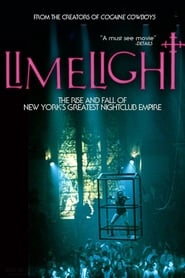
Limelight
English സബ്ടൈറ്റിൽ ഡൗൺലോഡ് ചെയ്യുക
English സബ്ടൈറ്റിൽ പ്രിവ്യൂ
ആദ്യത്തെ 200 വരികൾ.
Female reporter: In New York City Peter gatien sits at the pinnacle
of a near monopoly on nightlife.
And generally speaking, if it'’s a hot club,
it'’s most likely owned by Peter gatien.
You see, around here he is king of the night.
Well, Friday night is a big club night as you know here in the city.
But the problems with the drugs and the fighting
have tarnished the club scene.
The limelight and the tunnel, cops say they'’re a drug buyers paradise
where the owner acted like he could do anything
and get away with it. He was wrong. He'’s in jail.
Male reporter: Cops raided the place and found rampant drug dealing.
Male reporter #2: Peter gatien allowed over 50 drug dealers
to distribute cocaine and hallucinogenics
such as ecstasy, roofies and special k to young partygoers.
Male reporter #3: Gatien could receive a maximum of life behind bars
if convicted on all five counts of racketeering
and drug conspiracy charges.
Male reporter #4: ...And the possible end of two of New York'’s
most popular nightclubs.
Man: And he was basically banished
from the United States and cannot come back.
Peter gatien: I grew up in a town called cornwall, Ontario,
a small industrial town of 40,000 people.
Brought up catholic, one of five boys.
My father was a postman, mother a housewife.
Very sort of '’50s, middle-class upbringing.
Male reporter: When he was 15 Peter gatien lost an eye playing hockey.
Female reporter: He used his $17,000 settlement from his accident
to open two blue jeans stores in Ontario.
Male reporter: Three years later he sold the store for a 300% profit.
Female reporter: With the profits he bought a dilapidated bar
in cornwall, Ontario, converting it into a rock club.
Did a three-day renovation and opened up with a group called rush,
which are really huge now, a Canadian group.
And that was my start in the nightclub business.
The first month, like anybody else owning a place,
i’m the happy owner having drinks with everybody.
The place is packed. Things are looking great.
Five, six weeks later my checksare starting to bounce.
I learned a very early lesson with my first club:
That you can'’t be part of the party, I guess.
Female reporter: After just a year in the bar business,
he sold his rock club just as disco hit.
The sales pitch for disco was just as flashy as the product.
And it’s created a new generation of disco entrepreneurs.
Gatien: I went to the first disco conference
here in New York City in '76, '77.
I loved america, man.
Canada'’s a great country and I really love it,
but opportunity-wise there'’s no question
if you are focused and willing
to make the sacrifices and are a little bit lucky,
opportunities in america are second to none.
Picked up an issue of "the New York times,"
which I had never read in my life.
I looked at the business opportunities
and they described this place in Florida.
It held 2000 people, $600,000 light system,
half-a-million-dollar sound system.
The ad went on and on and on.
Selling price $400,000.
Guess who'’s on the next flight to Miami?
Male reporter: It will be the limelight.
- The limelight. - The limelight.
- Limelight. - Limelight.
The newest nightspot for nightlife.
Gatien: Everything had been, prior to that, live entertainment.
So the sort of concept was now you were going to a disco
and you were the star, you were the entertainment or whatever.
So between the-- sort of a little bit of play on words,
you know, being in the limelight
and the limelight lights and all that kind of stuff.
So it was just-- it was a good name I thought.
From '’76 to like almost '80,
you could do no wrong in that business.
You just couldn'’t.
Everybody was going out. It was a real joie de vivre.
I think I was 22 or 23.
I probably had one of the largest clubs in america.
Female reporter: Gatien'’s next stop-- Atlanta.
Gatien: I took over a bankrupt dinner theater there.
Female reporter: The one in Atlanta has a glass-top dance floor
that in winter covers a polar bear den
and in summer a shark tank.
Gatien: It developed a reputation as being
and quoted often as being the hottest club in the south.
Woman: Why didn'’t you stay?
Gatien: It'’s been probably said about every industry:
Unless you make it in New York you really never made it at all.
So that'’s why I got out of Atlanta.
I felt at the time-- you know, i'’d been to New York--
that my clubs at least physically
were every bit as well- thought-out, put together
as any New York club including studio 54.
I felt i'’d paid enough dues that I could compete in New York.
Steve Lewis: Unbelievably exciting time.
There were very few rules in terms of buildings, smoking.
At that point clubland really did seem like a dream land
because it wasn'’t part of the real world.
It was really an insular society.
It was a secret still. Nobody knew it except the right people,
except the really cool, smart, creative people.
I worked at the club called danceteria,
the original danceteria on 21st street
between 5th and 6th avenues.
I mean, I didn'’t hang out at studio 54
which I always considered to be like 2000 guys
with their shirts opened down to their dicks
asking what sign you were
and 200 unbelievable Elizabeth Taylors or Truman capotes.
Mercado: We were the alternative, danceteria, to studio 54.
We did rock and roll. Madonna was there,
run d.M.C., Russell Simmons.
Even the Beastie Boys got their start there.
Lewis: I would go to Max'’s Kansas City
which was Lou Reed, Debbie Harry
and Johnny thunders and the ramones.
Mercado: At this point it was the art stars.
It was francesco clemente
and Keith haring, Jean-Michel basquiat.
Gatien: People were totally uninhibited.
And i'’ll tell you, really uninhibited.
Lewis: My first rule was never go home with a girl
whose hair could hurt you.
This was the way you lived. It was that kind of mentality.
I think the drug of choice then was cocaine.
That was pretty fashionable.
But it was so clandestine.
You went in a bathroom stall
to do a bump of cocaine and you didn'’t tell anybody.
This was pre-aids, pre-herpes,
pre really anybody having buddies that were junkies
or coke addicts or freebasing or any of that kind of stuff.
So I think nobody really saw the downside of living on the edge.
Everyone was having a good time.
You need to be original. You need to be innovative.
You need to be the best in your industry.
You know, you just can'’t be as good as the next guy.
I sort of felt like for the '’80s,
because the chrome and neon thing had been brought
to as far as it could go, that art and architecture was the way to go.
So my instructions to a real estate person were
I want a historical building if possible. I want a church if possible.
I want a strong architectural building with high ceilings.
But if you can get me a church that would be perfect.
It'’s not like you can walk up to a pastor
and say, "father, how muchwould you like for your church?
I think it would be a terrific nightspot."
Male reporter: This is the episcopal church of the holy communion
in New York, built in 1846.
Male reporter #2: It served briefly as a drug rehabilitation center
for down-and-out heroin addicts.
After that it stood empty until Peter gatien came along.
Gatien: The fact that it was in the heart of New York was terrific.
It was on an Avenue. Anything that'’s on an Avenue
has to have 100,000 people drive by
or walk by on any given day.
I fell in love with it and started negotiating.
Male reporter: Peter bought the old church building
for 1.7 million American dollars.
It'’s been declared a historic site
and the exterior of the building cannot be altered.
Gatien: It had high ceilings, 50-foot ceilings,
great arches, incredible woodwork.
Male reporter: The church'’s dedication plaques remain in place,
a reminder that the limelight disco
was once a house of prayer.
Gatien: There was a main room
which also I put two tiers of balconies in it.
V.i.p. Rooms upstairs had their own little sound systems.
Male reporter: Centuries-old pews make way
for the latest sound systems, lights and video screens.
Gatien: The square footage, the dimension,
the scale of those rooms were just great.
Male reporter: Gatien spent close to $5 million on the renovation.
Gatien: And we opened up in November of '’83.
Some people actually opening night came with a huge crucifix
with a guy laying on it and, you know, partying
all in drag and that kind of stuff.
Female reporter: Critics were outraged
by what they saw as a desecration.
It drew fire from religious groups
and media attention because it became the in place for celebrities.
Male reporter: Where Yoko Ono and Andy warhol
hosted parties during its first week.
Male reporter: There'’s a trick to making a disco a success:
Keep the beautiful people coming back
so that ordinary folk can rub shoulders with them.
Male reporter #2: It costs $15 to get into this disco.
Drinks cost another $5 each, even a coke.
Male reporter: As for dress, the flashier the better.
Male reporter #2: The theme night is just one of a number
of marketing strategies Peter adopted
on his way up the disco ladder.
Male reporter: On this particular night, a tribute to federico fellini.
But modern addictions sometimes destroy
the atmosphere of ancient Rome.
We need cigarettes.
We must have cigarettes.
Limelight subtitles in other languages
More English subtitles for Limelight
- Limelight 2011 720p DVDRip x265 HEVC AAC · 20 downloads · 2020-05-28
- Limelight 2011 720p DVDRip x265 HEVC AAC · 16 downloads · 2020-05-28
അഭിപ്രായങ്ങൾ
No comments yet. Be the first to leave one.