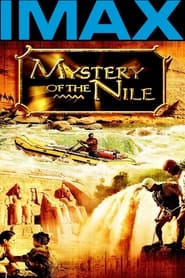
Mystery of the Nile
English സബ്ടൈറ്റിൽ ഡൗൺലോഡ് ചെയ്യുക
റിലീസ് വിവരങ്ങൾ
ടാഗുകൾ
English സബ്ടൈറ്റിൽ പ്രിവ്യൂ
ആദ്യത്തെ 181 വരികൾ.
- Long before the heart of Africa was ever mapped
explorers were irresistibly drawn to this secret world.
Africa's greatest secret of all
for thousands of years was the source
of the world's longest river, the Nile.
The Nile is unique among the world's rivers.
Some call it the most important river on Earth
because it gave life to the first great civilization.
To a geologist like me, this desert
is a rich and productive environment.
Yet just a mile from the river,
I don't find a single living plant.
As long as 8,000 years ago,
farmers diverted water from the Nile
to irrigate their crops and made the desert bloom.
Without the Nile, there would have been no great pyramids,
no advanced civilizations with all its innovations
in language, art, and astronomy.
Each summer the water level of the Nile
rose several feet without a single drop of rain
falling in Egypt.
The early Egyptians built structures
to measure the rise of the river precisely,
but a few times in history,
the river mysteriously failed to rise
for several summers in a row,
causing famine throughout Egypt.
Every year the farmers watched the river
and wondered where does all this water come from?
This was the Nile's first great mystery.
In 1858, a British explorer set out
to solve the mystery of the Nile.
He proclaimed Lake Victoria
the one true source.
There was one minor problem, though.
He was wrong.
Lake Victoria contributes only a fraction
of the Nile's rivers.
The main source of the Nile
is in the rugged Highlands of Ethiopia.
The riches of Egypt are a gift from Lake Tana.
Over 80% of the Nile's water
comes from Ethiopia's Blue Nile and its tributaries.
My goal is to lead the first team
down the entire length of the Blue Nile
from here in Ethiopia
all the way to the Mediterranean, 3,000 miles.
I've brought my team to Lake Tana
for the expedition of a lifetime.
We reached the Ethiopian Highlands
just in time to witness a Christian procession.
- I went for the first time to Ethiopia,
and I trust Pasquale as our leader.
Yeah, he's one of the nine satyrs
who came from
- Pasquale has led expeditions to Mount Everest
and run many of the world's most violent rivers.
He knows very well what he's doing.
- We're here to attempt the first descent
of Africa's mightiest river, the Blue Nile.
I've hired some Ethiopian boatmen to be our cooks,
our helpers, and bodyguards.
We'll be heading into territory
few outsiders have ever seen.
The upper part of the Blue Nile
was first run and mapped in 1968
when a British Army expedition explored just this section.
They had many serious injuries.
One man died.
They found that the Blue Nile was crawling
with huge swarms of crocodiles.
They had 70 experts.
Pull back.
My team is mostly novices.
All right, you're in the water again!
Okay, get in, in the boat.
I'll really have to keep an eye
on our Egyptian scientist, Dr. Mohamed Megahed.
Mohamed, where's Mohamed?
- As a hydrologist, I spend my time indoors
in a laboratory.
Pasquale is worried about me, and so am I.
- Gordon Brown, our safety kayaker,
is the only one who will be with me
for the entire four month expedition.
Come by.
You grab these loops right back here
and pull yourself up on the boat.
I'll take you back to the raft or take you to the shore.
- All right. - Either way--
- Four years ago, Gordon was diagnosed
with a brain tumor.
It would have killed most of us,
but he fought it off with a year
of radiation and chemotherapy.
He's really a survivor.
Yeah.
- Saskia Lange is a journalist from Spain.
She's writing an article
about religion along the river.
The river travels through areas
with no roads, so I'll be able to study
indigenous people, people I could never meet
any other way.
Thank you very much.
Myriam Seco is our team's archeologist.
- Here, in the holy city of Lalibela,
the Ethiopians step down 40 feet into bedrock.
This church was chiseled out of one giant block of stone.
It's one of 11 carved churches linked by tunnels.
For 16 centuries, the Christians here
remained very closely aligned
to the Church in Egypt, 3,000 miles away.
I wonder how the Nile kept that connection alive.
Some people say that hidden
in these stone churches is the Ark of the Covenant,
the box that Indiana Jones was after.
The Ark contains the tablet engraved
with the Ten Commandments, the actual tablet given to Moses.
Is it really here?
Lalibela is the Eighth Wonder of the World,
or if it's not, it should be.
Just as the Christians in Lalibela carved
magnificent churches out of solid rock,
the Blue Nile River has been carving this huge canyon
through the Highlands of Ethiopia,
which the British named the Great Canyon of Africa.
The Scout helps, but it's deceptive.
From the air, it's really easy to forget
that it's the most dangerous river in Africa.
The aerial scout confirmed that the high water
had finally peaked.
It was time to start the expedition.
Gordon and I plan on being on the river
for probably more than four months.
This is Bahir Dar, and again, this is Lake Tana.
This is where we'll be putting in.
Here I was, leading the greenest bunch
of river rookies that ever climbed into a raft.
Keeping everyone on this expedition alive
is my greatest responsibility.
And then finally, to Tissisat Falls.
We will then go through this canyon,
which has a lot of Class 5 and such, white water.
Before we departed, Mohamed had a promise to keep.
- My grandfather is a farmer in Egypt.
He gets 100% of his water from the Nile.
I promised him when I go to the river source,
I would bring him a vile of holy water.
The Ethiopians treasure the Nile,
just as we do in Egypt.
As we head down the river,
the whole team is pumped.
Most of the wild rivers on every continent
have already been run.
Not the Blue Nile.
This is one of the last great river expeditions
left in the world.
No one has ever succeeded in running
this entire river from source to sea.
All those who've tried it have either died or given up.
As a geologist, these lava flows
have a certain fascination for me.
Lava flows like this one pinch the water together,
forcing all the water through a narrow channel,
creating huge rapids.
But the volcanic rocks are sharp as knives,
and our rafts are made of fabric.
This was Mohamed's very first swim in the Nile.
I kept a close eye on him.
There's a fine line between an exciting rapid
and a deadly one.
The rafts are really heavy,
so when the river gets to deadly to run,
we send one raft through empty,
and then we portage the rest of the gear.
One sure way to get a laugh in Ethiopia
is to carry a rubber raft on your head.
The Ethiopian Highlands were once carpeted in thick forest,
but just in the past 30 years, the Amhara tribe
have cut down 90% of the trees to make charcoal
Mystery of the Nile subtitles in other languages
അഭിപ്രായങ്ങൾ
No comments yet. Be the first to leave one.