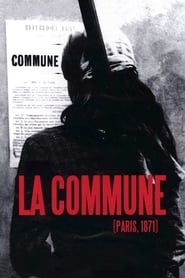
La Commune (Paris, 1871)
English സബ്ടൈറ്റിൽ ഡൗൺലോഡ് ചെയ്യുക
റിലീസ് വിവരങ്ങൾ
ടാഗുകൾ
Download English Subtitle Files for Mobile (2)
English സബ്ടൈറ്റിൽ പ്രിവ്യൂ
ആദ്യത്തെ 200 വരികൾ.
The Franco-Prussian war which began in July 1 870
causes the fall of Napoleon lll's Empire.
A Government of National Defence,
mostly made up of moderate Republicans,
seizes power in an attempt to pursue the war.
lt ends in failure.
The Government signs an armistice,
against the will of the Parisians.
The Germans challenge its legitimacy
and demand a new one be elected to sign a peace treaty.
The elections of February 1 871
bring back to power a strong majority of monarchists.
The Parisians express their discontent openly
'' in what are called the ''''Red Clubs''''.''
From September 1 870, District Committees
shape their claims into a counter-power
which throws Paris into a pre-revolutionary climate.
My name is Gerard Watkins
and l play a TV journalist
in this film which deals not only with the Paris Commune,
but also with the role of the mass media
in past and present society.
My name is Aurelia Petit
and l play Blanche Capellier, journalist for the Commune TV.
First, what was quite difficult was that
she's a credulous person, a naive optimist,
and knowing the end of this story
and the events of the Commune, it wasn't easy to keep smiling.
Secondly, she likes her work in front of the camera so much
that she forgets to denounce and question
the power of the media, which she represents entirely.
These premises are currently occupied by Armand Gatti
'' and his troupe ''''La Parole Errante''''.''
ln April of this year, Peter Watkins and 1 3 Production
started to construct a film set,
recreating the atmosphere of the 1 1 th District
during the Paris Commune.
We would now like to present
our work-place during these past three weeks.
Yesterday we finished the shooting
and the set is exactly as we left it
after the last scene.
The following text will be added a few months later.
Above the barricade,
flies the tricolour of the Government,
replacing the Commune's red flag, which hung there earlier.
On the left is what remains of the Town Hall,
where the revolutionary Sub-Committee,
enjoyed absolute power, until yesterday.
Outside,
a Government army officer sat at this table
with pen and ink,
sentencing hundreds of neighbourhood Communards
to instant death
by firing squad.
Beyond this table is the local courtyard
with its flies and cesspool,
and the cafe
where we filmed discussions with the actors
about revolution and contemporary society.
Behind it, the Mont-de-piete,
a Government pawnshop,
which kept the working class in permanent debt.
Precious goods:
mattresses, sheets, shoes,
kitchen utensils,
sold if the families could not buy them back.
A cannon bought with the community's meagre resources
stands abandoned.
Yesterday evening,
this open space was littered with corpses.
An execution squad fired and reloaded without ceasing.
Among the people killed,
were workers repairing rifles,
women from a workshop,
children aged 1 3 and 1 4
who fought on the barricades,
and the local baker and his wife.
We ask you to imagine that it is now
March 1 7, 1 871.
l'm grandfather Thibaudier.
There are 5 of us
living in a small room
in the 1 1 th District of Paris.
The 1 1 th is a very poor neighbourhood...
not an easy place to live.
Many kids
sleep out in the streets.
So our family is not among
the most miserable in this society.
But we have to change it one day.
My name is Henri Dubrieux.
l live in this courtyard, as you can see.
l came to Paris from Franche-Comte
24 years ago, during the economic crisis.
l lived through 1 848,
and what's going on now reminds me of that period.
However, the circumstances aren't the same.
We've been defeated and humiliated by the Prussians
who proclaimed their Empire in Versailles last January 1 8.
On what's happening in Paris - it's a shame that
the newly elected National Assembly, representing the Provinces,
has passed a number of ridiculous decrees and laws,
like paying the rents.
We've just lived through a siege and very difficult circumstances,
it's no surprise that everyone is broke.
They could have waited and been more diplomatic.
l'm afraid it will all get worse.
We don't know where we're heading.
For work, l do odd jobs, but mainly l'm a public letter-writer.
l teach people, like little Marcel here.
He's my neighbours' son, very nice people.
He reproaches me for being strict
when l ask him to read, write and count.
But that's what it takes to become a free man.
l'm still a bit worried that things might get worse.
lf things go bad on either side,
the one to laugh
will be that bastard Bismarck.
The peace plan strips France of Alsace-Lorraine,
imposes 5 billion fr. compensation and,
supreme humiliation, allows the German army to enter Paris.
From 5:00 a.m.,
mothers are here with children crying in their arms.
lt's sad, people had nothing to eat during the siege,
they ate rats, roots,
what they went through was awful.
And now, the children are sick,
we hear things at the bakery,
young children starving because the bread is of poor quality.
During the 6 month Prussian siege,
the Parisians were cold and hungry.
The mortality rate doubled.
The jobless join the National Guard for 30p. a day.
For 30p., in January 1 871, one can buy
a lettuce or a dog's brain.
Yes, for the bread, we do what we can,
we are starting to get flour but it's not good quality.
So in order to make a lot we have to mix the flour.
We add buckwheat, rye,
we add bran to try and make bread
because people are hungry,
and we have to make a lot.
People want bread.
lt's almost the only food you can find today.
l can't stand seeing people so miserable any longer.
These people crying, mothers crying.
lt can't continue,
the people are suffering too much, they've had enough.
Nearly 300,000 strong, mostly opponents to the new Assembly,
the National Guard is a Federation of elected delegates.
lts aim: to defend the Republic
against a Prussian invasion or a monarchist Restoration.
'89 was a bourgeois revolution. Nothing changed for us.
Same for Haussmann's building works in the fancy areas.
Sure, we pass by shop windows with splendid suits
and hams hanging from the ceiling. But for who?
Three working lives couldn't buy that stuff.
We're as poor as ever.
l don't want my kids to live like that.
So l want to do something, l don't know what.
But being in the National Guard seems a good start.
Only 1 0% of Paris flats have drainage,
70,000 cesspools require sewage workers labouring at night.
Candle is the only source of light for 80% of Parisians.
My name is Constance Fillon,
l live here with my daughter Frederique.
The courtyard is like a family for her.
l've been a widow for 5 years...
and she's found her place
at the orphanage on Rue Oberkampf.
We were lucky to have the sisters of St-Vincent de Paul.
l'm a midwife. l couldn't take care of her.
Things are stirring in Paris now.
We elected the mayor - Mottu -
he's talking of organizing state schools.
We need schools, we need education,
we can't have kids on the streets.
The nuns are here, they were here during the siege,
they give us soup, medical attention.
You like it with them?
Yes, the sisters are very kind.
l'm afraid they'll shut the school.
My name is Francoise Boidard.
l'm a primary school teacher...
unemployed.
Unemployed voluntarily.
l refused to work.
l refused to swear allegiance
to an education l loathe.
An education based on religion,
which makes children withdraw into themselves...
and submit to authority.
'' ''''The Black Army moves in fury, peddling night and darkness.''
'' ''''Each year state schools shut down by the hundreds,''
'' ''''and more religious schools open in their place.''
'' ''''The plan for universal cretinisation is alive.''''''
Blanqui, 1 870
My name is Marie-Louise Beauger.
l'm a primary school teacher too.
La Commune (Paris, 1871) subtitles in other languages
അഭിപ്രായങ്ങൾ
No comments yet. Be the first to leave one.