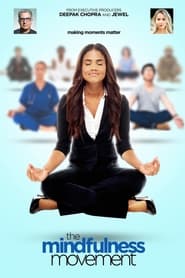
The Mindfulness Movement
English സബ്ടൈറ്റിൽ ഡൗൺലോഡ് ചെയ്യുക
റിലീസ് വിവരങ്ങൾ
ടാഗുകൾ
English സബ്ടൈറ്റിൽ പ്രിവ്യൂ
ആദ്യത്തെ 200 വരികൾ.
Our lives are filled with distractions.
Email, Twitter, texting.
We're constantly connected to technology,
rarely alone with just our thoughts.
Which is probably why there's a growing movement in America
to train people to get around the stresses of daily life.
It's a practice called mindfulness.
I believe that the entry point
for living a more conscious life is mindfulness.
I would urge you all
to start practicing mindfulness right away.
What is your favorite thing about racing?
I think the mindfulness of it
is what I really enjoy the most
because you really have to be focused on the here
and the now.
When this year's top buzzwords are compiled,
mindfulness will surely be close to the top of the list.
So Angie, in the video you talked a little bit
about mindfulness, so could you tell us a little bit more
about what it is and how it works?
And what we're talking about
is called mindfulness meditation and people who do it
believe that it makes their brains healthier and fitter.
I grew up in Alaska.
My mom left when I was eight
and my dad took over raising my brothers and I.
We moved to the homestead where my dad had been raised.
He was raised in an abusive household and went to Vietnam.
Picked up some more trauma.
He began drinking to try and medicate his anxiety
and it didn't go well for him.
He became abusive and I ended up moving out at 15.
I knew when I moved out at 15
that statistically I should end up repeating the cycle.
As much as we get a genetic inheritance,
we get an emotional inheritance.
If you look at my family's emotional inheritance,
it leads to substance abuse or alcoholism or physical abuse.
I didn't want that to be me.
I wanted to avoid being a statistic.
After I graduated high school,
I ended up in San Diego where my mom was.
I went to take care of her.
I was working in a computer warehouse.
My boss took me aside to have a talk with me
and I realized he was propositioning me
and I turned him down.
When I wouldn't have sex with him,
he wouldn't give me my paycheck.
I wasn't able to make rent
and so my mom and I began living in our cars.
My car ended up getting stolen
and I ended up being homeless for a year.
I was having panic attacks and stealing.
I wasn't doing well.
Somewhere between the age of 15,
when I said I would never be a statistic, to 18,
three short years later, I was a statistic,
I was homeless and gonna end up in jail or dead.
I quit believing in myself.
So I had to get very, very serious about my thoughts.
Two-three-four, what is your position?
Be aware of two IEDs
near a house on the main road.
The combat mission may technically be over,
but for anyone who thinks the danger is over,
consider that there have been 560 IED explosions in Iraq
in just the past month.
I had spent a lot of time after 9/11 in war zones.
Afghanistan, Pakistan, Israel, the West Bank, Gaza, Iraq.
Many times in Iraq.
Do you feel like the war is over?
We're combat troops, we're still here,
we've still got a job to do.
I had come home and gotten depressed.
I was insufficiently self-aware to even know
that I was depressed and I made the very dumb decision
to self-medicate with recreational drugs
including cocaine, ecstasy.
Even though I hadn't been doing drugs every day
or anything like that,
it was enough to artificially raise the level of adrenaline
in my brain to change my brain chemistry
and made it much more likely for me to have a panic attack.
Now one of the world's most commonly prescribed medications
may be providing a big bonus.
Researchers report people
who take cholesterol lowering drugs called statins
for at least five years
may also lower their risk for cancer.
When I was anchoring the news updates
on Good Morning America,
that's the person who comes on at the top of the hour
and delivers the headlines,
and just a few seconds into my spiel
I just lost it.
But it's too early to prescribe statins slowly
for cancer production.
My heart was racing, my lungs seized up,
my palms were sweating, my mind was racing.
I actually just couldn't breathe, I couldn't speak anymore.
So I had to quit right in the middle
and that was really embarrassing.
That does it for news.
We're gonna go back now to Robin and Charlie.
The backstory was even more embarrassing
because when I went to see a doctor about it
he asked me a bunch of questions.
One of the questions was, "Do you do drugs?"
And I said, "Yeah, I do."
And he leaned back in the chair and gave me this look
that communicated the following sentiment:
"Okay asshole, mystery solved."
I loved to run.
Whether it was cross country, playing basketball, jumping,
and just be engaged physically.
There's something magical about that.
There's something magical while being in flow
where things are just happening
and it's like you're not there
but you're right in it, you are it.
So when I was in college I was actually rooming
with Dr. J at the time, Julius Erving, back at UMass.
It was preseason, just playing with the team,
and I got injured.
I had an ankle injury and it pretty much ended my career.
I didn't really know who I was
if I wasn't playing basketball
because I was one of these quiet types
that let my game do my talking for me.
Being an athlete all my life and loving to run
and loving to compete and having the camaraderie
of being with a group of people that had a common purpose,
that was very challenging for me
to get away from all of that.
And that's when I started the pain medicine.
I started abusing that
and then getting into drugs and alcohol.
My parents split up when I was four.
My mother died when I was nine.
I lived with my father's parents after that,
whom I hardly knew.
My father came back briefly.
I hadn't seen him since I was four and by now I'm like 11
and he was like a different person.
Took an overdose of sleeping pills.
He didn't die but he spent the rest of his life
in some mental health facility or another.
I'd lived in five different family configurations
and every one of them had been switched
because of trauma or loss or something like that.
And so I was terribly unhappy and afraid and angry
but I didn't quite know what was going on within me
I just knew it didn't feel really good.
The pace of life seems to be accelerating.
We've got a major accident H-1 east side.
It's actually the most polluted city in America.
We're more connected to information
but less connected to each other.
In these increasingly uncertain times,
a growing number of people have discovered
a surprisingly effective antidote.
Mindfulness.
Mindfulness comes in two forms.
One is a specific type of meditation,
mindfulness meditation.
Every time you put your mind on your breath
and then it wanders, that's what the mind does,
and you notice it wander and then you bring it back,
you're strengthening the neural circuitry
for paying attention.
This is quite a parallel with going to the gym
and lifting weights.
Every time you lift that weight, every repetition,
strengthens that muscle just a little bit more.
Among novice practitioners,
we saw changes in the brain
after just two weeks of practice.
This was a kind of proof of concept study
that underscored how quickly these changes can arise.
Strengthening that mental muscle
builds an ongoing quality of attention
simply known as mindfulness.
The way I define mindfulness is paying attention
to our present moment experiences with openness
and curiosity and a willingness to be with what is.
So it's a quality of attention
that we can have at any moment
whether we're walking down the street or talking to a friend
or eating or brushing our teeth.
We can bring that quality of awareness to our experience.
We just start making better decisions for ourselves.
In other words, we start taking better care of ourselves,
we feel better about ourselves,
we generally feel better about other people.
We just become more relational, more empathic.
So I think that's all good.
When you're aware of a sensory experience
while you're having it without the compulsive activity
More English subtitles for The Mindfulness Movement
- The Mindfulness Movement 2020 1080p WEBRip x264-RARBG · 22 downloads · 2022-07-14
അഭിപ്രായങ്ങൾ
No comments yet. Be the first to leave one.