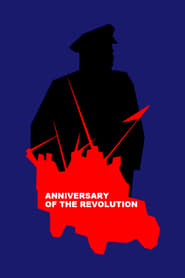
Anniversary of the Revolution (Годовщина революции)
English സബ്ടൈറ്റിൽ ഡൗൺലോഡ് ചെയ്യുക
റിലീസ് വിവരങ്ങൾ
ടാഗുകൾ
English സബ്ടൈറ്റിൽ പ്രിവ്യൂ
ആദ്യത്തെ 200 വരികൾ.
Nikolai Izvolov
Russian State Documentary Film & Photo Archive
present
a film by DZIGA VERTOV
Anniversary of the Revolution
Anniversary of the Revolution Part 1. February - October
At the beginning of 1917,
the slavery, the 3 years of war,
and food shortages caused mass unrest
that was reaching a dangerous state.
The crippled and cruel government, and even more so the dissolute power
couldn't hold back the popular masses.
On 25 February the riots in Petrograd grew.
The people took to the streets.
The State Duma tried in vain to prevent the coming events.
On 27 February Rodzianko sent a telegram to the tsar:
“Situation worsening.
Must take immediate action, for tomorrow it will be too late.
The time has come
''when the destiny of motherland and the dynasty is on the line.''
But... the ruler was silent.
The troops began to side with the people.
The Volhynian and Pavlovsky Regiments
declared their support for freedom.
A crowd gathered at the gate
to the building of the armoured brigade.
The people persuaded the soldiers to rise in defence of freedom.
The first blood was shed on Znamenskaya Square.
Joyful crowds, seeing the dawn of freedom,
took to the streets.
Demonstrations started.
A huge rally was held at the Tauride Palace.
One after another, military units approached the palace
and joined the people.
The members of the State Duma, who had taken power at the time,
went to the crowds and spoke pompously
about the triumph of truth and freedom.
Among the crowd is the Duma member Purishkevich.
The Duma member A. F. Kerensky.
In two days the liberated people
have crushed the stronghold of Tsarism:
the police and its departments.
A building for pre-trial detention perished in the fire.
The Alexander Nevsky district police station.
The district court.
The Palace Square,
surrounded by mansions of the tsars, lies in gloom.
The officers of the allied armies
congratulate the Volhynian Regiment,
the first who sided with the people.
On 4 March Petrograd buried its freedom fighters
at the Field of Mars.
Tens of thousands walked in the funeral cortege.
Members of the Provisional Government
headed by Rodzianko gathered at the common grave.
There was the War Minister Guchkov.
Coffins, one by one, were lowered into the grave.
On 26 February Moscow was alarmed by the news from Petrograd.
Wanting to find out the truth, Muscovites took to the streets.
The next day the City Duma
and the Resurrection Square
became the centre of Moscow’s life.
The interim committee and Council of Workers’ Deputies
held a meeting,
informing people of the latest news from Petrograd.
The Council of Workers’ Deputies released briefings
which were snatched up immediately.
The whole of Moscow gathered near the Duma.
Inspired and joyful, the soldiers in defence of freedom
approached the square.
The artillery arrived. Guns were placed round the Duma.
Food that had been confiscated in the districts was brought in.
Tverskaya Street was packed with people and demonstrations.
On 4 March, elected by the interim committee,
the commander-in-chief Lt. Gruzinov inspected the revolutionary troops.
The troops marched down Red Square in perfect formation.
At the same time in Petrograd, the new government was formed
which from the very beginning revealed itself as bourgeois.
The leaders of the two parties that formed the government were
Kerensky and Milyukov.
They were joined by: Nekrasov
Stakhovich
Efremov
Yakubovich
Manuilov.
The democratic layers of the population
opposed with councils of workers and soldiers' deputies.
A congress of councils was formed, and to its presidium were elected:
Chkheidze, Gots, and others.
Chairman of the Soviet of workers and soldiers’ deputies Chkheidze.
The congress gathered an enormous number
of representatives from the proletariat.
The leaders at the congress were: Dan
Gvozdev
Plekhanov
The Provisional Government listened to the congress
and introduced another method for the fight
against the proletariat.
Tsereteli and Skobelev were made ministers.
Comrade Tsereteli
Kerensky, who managed to get popularity with the masses,
was given the post of Prime Minister
and soon, the Supreme Commander-in-Chief.
Kerensky appointed Gen. Brusilov as Commander-in-chief.
Adm. Kolchak was appointed Commander-in-chief
of the naval forces.
18 June, a date still remembered in Russia,
initially brought a victory.
At the front, our units gave in to Kerensky and attacked.
Kerensky celebrated.
In Petrograd, a grandiose demonstration
took place on the occasion of the victory.
The proletariat, demanding peace, didn't take part in it.
During the demonstrations there were incidents.
A Cossack banner was forcefully taken down.
Shock troops of cadets continued to leave for the front.
In the capital, military organizations
held meetings and demonstrations, proclaimed slogans for the war.
But then there came the events of 3-7 July:
the lower classes, exhausted from the war,
took to the streets and tried to seize power
from Kerensky’s government.
Kerensky’s troops were immediately sent
to make arrests and conduct searches.
Clashes occurred on Nevsky Prospect.
The Exchange building has come under fire.
After the suppression of the proletariat,
Kerensky’s troops solemnly buried their casualties.
This turned the masses even more away from the power.
Kerensky, wanting to save the situation,
formed a coalition government, which included
Avksentyev
Zarudnyi
Nikitin
Yurenev
To consolidate power,
a state conference was called in Moscow.
The building of the Bolshoi Theatre was guarded by troops.
The “Grandmother” of the Revolution arrived:
Breshko-Breshkovskaya
Kerensky
Kishkin
Avksentyev
Kokoshkin, Kartashev
Chkheidze
At the meeting, a block of members of the four State Dumas
was organized.
The October Revolution in Petrograd
The October Revolution in Petrograd started by the palace
where the so-called Pre-Parliament created by Kerensky was located.
The only support of the Provisional Government
came from the cadets.
For the protection of the palace
the cadets constructed barricades from firewood.
And set up pickets.
But a bunch of White Guards couldn't protect the palace
from the rising proletariat.
The palace came under gunfire.
The centre of the October-November Revolution
in Petrograd was Smolny.
Here was the military HQ of the communists.
Smolny was protected with cannons and machine guns.
Units of sailors, soldiers, and workers went from here to fight
and returned with joyful news.
Here were the leaders of the Revolution,
among them Trotsky,
Lunacharsky,
Kollontai, and others.
The troops went from Smolny to Gatchina,
where a battle with Kerensky's followers was fought.
Here the fight was led by a special Revolutionary-military HQ.
Under the command of comrade Dybenko,
who had been appointed Commander-in-Chief.
The HQ had cannons at its disposal
and an armoured car, the ''Lieutenant Schmidt'',
which had proven itself in the fights with the cadets.
The pilot Lokaichuk was employed by the HQ.
Medical staff in cars assisted the wounded.
Units of revolutionary troops pursued the fleeing followers
of Kerensky.
New units were coming from Gatchina.
Cannons that had been used in the city.
After the suppression of the Kerensky mutiny,
a solemn funeral of the victims of the October Revolution
took place in Petrograd.
Several tens of thousands of workers
took part in the procession.
THE OCTOBER-NOVEMBER REVOLUTION IN MOSCOW
The Aleksandrov military college, where the HQ
of the White Guard was located.
The college sauna,
where the cadets held the arrested Bolsheviks.
The Aleksandrov military college,
stubbornly defended by the cadets and junkers.
The college suffered badly from shelling.
The cannon with which the cadets fired at Moscow
is still outside the college.
The shelling caused considerable damage to the Nikolsky Gate
and to the Kremlin which had been captured and defended by the cadets
The Spassky Gate.
അഭിപ്രായങ്ങൾ
No comments yet. Be the first to leave one.