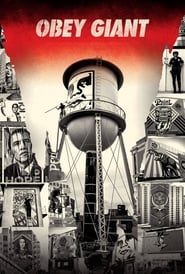
Obey Giant
English സബ്ടൈറ്റിൽ ഡൗൺലോഡ് ചെയ്യുക
റിലീസ് വിവരങ്ങൾ
ടാഗുകൾ
English സബ്ടൈറ്റിൽ പ്രിവ്യൂ
ആദ്യത്തെ 200 വരികൾ.
Shepard Fairey has exploited a notion
that art can be anywhere
to compete with advertising,
so I don't consider it art.
Well, the guy is famous for being a plagiarist.
It's vandalism.
Shepard Fairey is pillaging the work
of important political and cultural movements.
Shepard is a genius.
His artistic work overshadowed
by his alleged criminal activity.
He employs cut and paste as his artwork.
And at the end of the day, it's a very empty experience.
I think he's our generation's Warhol.
His work is too obvious.
He's reinvented a political image
for today's world.
A wheatpaste artist is not to be taken seriously.
The more famous he got in the art world,
the less fans he had.
He created an icon.
From the very beginning when
he was doing Andre the Giant,
the joke was on the public.
It meant nothing.
Not only is Shepard Fairey not an artist,
he's about the furthest thing from art there is.
Things are not all great in the world,
and it's not all the Carpenters
and love songs and Wings.
I grew up in the '70s,
and when I felt frustrated,
there was nothing that seemed like
the creative analogue to that.
But when I discovered punk rock,
the Sex Pistols talking about frustration,
the Clash talking about frustration,
Black Flag, very angry music.
But they also were not just angry
for the sake of being angry.
A lot of it was critiquing
the problem of conformity,
oppression,
corruption of power.
And all these things connected with me
because I grew up
in a very, very conformist town
at a conformist school,
and I was--I was frustrated.
Everything that I felt like wasn't being addressed
in other parts of the world and other parts of my life,
punk rock addressed.
Skateboarding too.
Skateboarding was about
creative reuse of the landscape
that was intended for other things,
and it's aggressive.
I was inspired by bands putting up flyers.
I was inspired by graffiti.
Graffiti culture is all about lettering
and putting your name up.
Colors, designs, style.
-Technical, advanced. -Just get loose.
Get loose, and when they see you got a vicious style,
they be wanting to get loose about it, you know,
and that's what keep it going.
And that's what sparks graffiti.
Right.
The technique of graffiti,
people going out
and doing daring locations anonymously,
and doing it for the sake of saying, "I exist,"
I kind of loved that.
I'm looking for the graffiti artists.
We are all graffiti artists.
Being from South Carolina
and watching movies like Breakin'
and Beat Street,
my assumption ignorantly was
that I had to be black or Latino
and be in a crew
where I'd practice in a black book
until some peer said
that I was ready to hit the streets.
You know, it's like an art gang.
To me, street art is any art that's done in public,
but what it's really about is democratizing art,
making art accessible,
saying that there's room for more in public space
than just commercial advertising
and government signage.
Where you get up,
how much you get up,
how daring the placement is,
and just the coverage, that's everything,
especially pre-internet,
because the credit you're getting
within that world
is based on people seeing
the different examples firsthand.
Some giant posters.
Andre the Giant.
Here we have this week on Piper's Pit, of course,
Andre the Giant,
supposedly the biggest man in the world ever.
It's a pleasure to have you.
Where are you from, Andre?
I'm sorry, do you speak English?
Where--Andre, where do you come from?
None of your business.
The first thing I ever did as my own street art
is the Andre the Giant Has a Posse stickers.
I worked at a skate shop
the summer after my freshman year at RISD,
and I was putting up some of the stickers
of some of the brands I liked,
because I got the stickers free at the store.
And I was trying to teach a friend
how to make stencils,
so I looked through the newspaper
and saw this picture of Andre the Giant
and said, "Why don't you make a stencil of this?"
He said, "No way, I'm not gonna do that, it's stupid."
And I said, "What are you talking about?
Andre's posse is taking over,"
which was just a spontaneous joke.
We were listening to a lot of hip hop--
Ice-T, Public Enemy, the Beastie Boys, NWA--
and they all used the word "posse."
I'm living large as possible
Posse unstoppable
It's vividly optical
Listen, you'll see 'em sometimes I'll be 'em
Cops, critics, and punks
never ever want to see me in power
And I made a few stickers just as a joke.
Only a few friends knew about it.
Put some up at some skate spots.
I had a fake ID so I put some up in some clubs.
Put some on some street signs.
And then I noticed that, you know,
I was out at a party and I saw a guy
with one stuck to the front of a plain baseball cap,
and I could see paint chips at the edge,
so he'd clearly peeled it off something
and stuck it to the hat.
And, you know, I asked,
"Hey, what's up with that Andre thing?"
He was like, "I don't know, you know,
I saw it on the street, I thought it was fresh."
And I realized very quickly
that even though the subject was totally silly
that it was spreading
in an underground, mysterious way.
It impacted people.
What the hell do you think you're doing?
And I knew that when I'd seen things
like the Bob Dobbs Church of the SubGenius,
the '50s guy with the pipe,
I was like, "What is that thing?
What's the story behind that thing?
I want to know, I want to get to the bottom of this."
I just had a feeling
that it would be likeminded people
perpetuating it,
and I think that that was the effect
that my Andre sticker had on other people.
Not all of them.
There's a huge range of reactions.
I remember seeing somebody writing very small
in the negative space in ballpoint pen on one:
"Nazi shit."
Any painter, any poet,
any musician sets a trap for your attention.
That is the nature of art.
The great thing about Andre the Giant Has a Posse
is that it somehow doesn't have to mean anything
and it's still very cool.
It must be a cult, it's deviant.
There's no--there's no overt purpose.
By proclaiming this posse,
it was talking about skate posses, right,
this idea that, like, you know,
kids form tribal communities
in music and art and skateboarding, whatever.
But it was also talking about how,
on a mass cultural level,
that we are unconsciously aligning ourselves
with forces all the time.
This is my propaganda.
See, a lot of people use models for propaganda.
You associate the product
with an attractive person,
and therefore that makes it desirable.
I don't want to be as straightforward as that.
One time I was in the grocery store
behind a couple,
and the girl said,
"Hey, have you seen that Andre the Giant sticker?"
And the guy's like, "Yeah, I've seen that."
Obey Giant subtitles in other languages
അഭിപ്രായങ്ങൾ
No comments yet. Be the first to leave one.