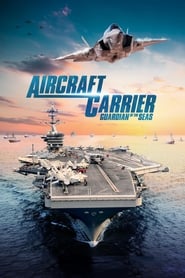
Aircraft Carrier: Guardian of the Seas
English സബ്ടൈറ്റിൽ ഡൗൺലോഡ് ചെയ്യുക
റിലീസ് വിവരങ്ങൾ
ടാഗുകൾ
English സബ്ടൈറ്റിൽ പ്രിവ്യൂ
ആദ്യത്തെ 200 വരികൾ.
They have assembled here from the four corners of the earth.
Fifty-five warships.
Among them, the newest and most sophisticated ever produced.
The United States is here,
Great Britain, India, Japan,
Canada, France, Australia, Germany.
Twenty-six nations altogether.
Each will introduce the latest naval technology in their arsenals.
Twenty-two thousand men and women
will be tested over the coming month,
across a vast expanse of ocean covering thousands of square miles.
Have a great weekend.
The command center and flagship of the operation
is the nuclear-powered supercarrier,
a marvel of modern engineering.
The operation is called rim of the pacific,
the world's largest and most complex naval exercise.
It will be as close to actual warfare as is peacefully possible.
They began to appear nearly 5,000 years ago in the mediterranean sea.
They were the largest and most glorious moving objects known to mankind.
Powered by oars, their tactics were simple.
They rammed and sank enemy ships.
Aahh!
Soldiers on board carried only bows, arrows and Spears,
yet great battles ensued.
Raging for weeks, there was often the loss of hundreds of ships
and thousands of men.
For centuries to come, navies with the best-trained crews,
the bravest commanders, and the mightiest warships would rule the world.
The modern supercarrier remains at sea for months at a time,
and is home for over 5,000 personnel.
A virtual city at sea.
All right, con. Let's go.
Let's go 3-6-0. Let's go 15 knots.
That'll get us into the box on time. Aye, sir.
The captain is from an elite group
that has over 25 years of naval aviation experience.
Territorial waters over there, right? We gotta...
Hey, so, just let the helos know
territorial waters are only eight miles to the east.
Yup. Thanks.
Okay.
Con, left steer, course 1-7-5.
Con, left steer, course 1-7-5, aye.
Conning officer, my rudder is left two degrees, coming into course 1-7-5.
Ninety-two fixed-wing aircraft and helicopters
are readied for a month of intense flight ops
as demanding as combat itself.
Those wearing green shirts maintain airframes and engines.
Red shirts are responsible for ammo and weapons.
Popeye symbolizes the Navy as a strength.
You think of popeye, and you think of a really strong, you know,
us sailor that you want to represent yourself as.
And I think we all use him as a role model today.
Purple shirts, or “grapes,” fuel the aircraft.
Aircrew are now Manning up for the event seven, case three launch, case three recovery.
The temperature is 68 degrees; The altimeter, 2-9-9-6;
and the density altitude, 940 feet.
On the fod walk, crews are looking for anything
that might get sucked into an engine as the aircraft take off.
Pilots have been killed by almost invisible nuts and bolts.
Nuclear-powered carriers have almost unlimited range,
like sailing ships of the past.
Two centuries ago, sail-powered galleons with a hundred guns
emerged on the high seas to fight at battles like trafalgar.
The French and Spanish were the superior force.
Led by Napoleon, they were thought to be invincible.
But the British commander Horatio Nelson
had innovative tactics and was more aggressive.
Cannonballs fired at close range inflicted a terrible carnage.
Nearly 8,000 sailors were killed on both sides.
The French and Spanish lost 22 ships.
The British lost none.
Nelson, though he was killed,
became a legend, along with his flagshipvictory.
From the triumph at trafalgar
grew a worldwide British empire
that would last another century.
Control of the high seas requires a mastery
of the most advanced possible technology.
Deep in the heart of the ship
sit two uranium-powered nuclear reactors.
Essentially miniature suns,
these radioactive furnaces boil water
to create high-pressure steam that spins giant turbines.
The carrier's eight electric generators
could easily power a city of 100,000 people.
Using massive reduction gearboxes,
the turbines also turn four mammoth propeller shafts
that drive the ship at around 35 knots.
Its top speed remains highly classified.
With regular maintenance, they can run continuously
without refueling for 20 years.
Teamwork, collaboration, camaraderie,
staying mentally and physically fit,
are all critical among the crew of a smooth-running ship.
Every one of the 5,212 personnel
is integral in the success of the operation.
Do a nice, easy turn. Don't thrust or pull.
No tiny detail is left to chance.
Does that make sense?
Absolutely. Okay, cool.
Roger that.
Deck patrol, 2-11 needs to be spotted off cat one.
Blue shirts position and secure the aircraft on the deck,
making sure they are presented for launch in the right order.
Training has been continuous
since the very first carriers were launched
more than a century ago.
The battle group commander
is responsible for the coordination
of all 26 nations during the exercise.
Yeah, that's true. I mean, we had ships from Italy...
Patience, communication, and diplomacy
were not the hallmarks of legendary admirals,
but in an increasingly complex and lethal world, they are critical.
People want to participate, and they want to help,
and give their navies a chance to shine.
Came around on track, sir. Previously reported contacts now on our port bow drawing left.
Recommend maintain, sir. No. I think what I want to do
is come a little bit more to starboard, and, uh...
It's starting to merge through the fog. Let's get through this. Come up at speed 20 knots.
The Japanese on the starboard, and then the Canadians are coming up...
They're just behind us, right? Uh, yes, sir.
The carrier, as the flagship,
is responsible for getting 55 vessels from all over the world
organized and sailing together in reasonable order.
Delta, bravo...
Seven hours per day.
It's a big beacon.
It's, uh, distance... 2,500 kilometers from...
This kind of international cooperation
was inconceivable even a hundred years ago.
By the beginning of the 20th century,
the giant guns of dreadnoughts, or battleships,
would dwarf the cannons of trafalgar.
As the first world war began,
britain had a significant edge over Germany
in both ships and guns,
and did not expect to be challenged.
But in June of 1916,
250 British and German ships
engaged off the coast of jutland in the north sea.
It would come to be known as the greatest battleship duel of all time.
Fourteen British and eleven German ships were sunk.
8,500 young men were killed.
The age of the battleship had come to an end
in less than two hours of fighting.
Modern defense systems are evolving at an accelerating pace,
questioning the wisdom of expensive new procurement,
challenging the status quo.
The goal of rimpac is, in part,
to test and integrate advances in weapons technology.
It gives crews a chance to perfect their skills
under battle-like conditions.
The operation of an aircraft carrier is, in itself,
nearly as dangerous as actual combat,
and everyone on board is well aware of that.
Easy with it now. Easy with it.
Easy with it. Easy with it.
Modern fighter aircraft, like the f-18 super hornet,
can lock on and intercept enemy aircraft
long before visual contact,
yet they still carry machine guns
that look like they might belong on a world war I biplane.
Even in an age of advanced missiles,
pilots must still prepare for the unlikely prospect
of an old-fashioned dogfight.
Launching a 37,000-pound f-18 super hornet
off a carrier may look simple,
but bad weather, enemy fire, and accidents
all contribute to very real danger.
After a century of trial and error,
one launch system has proved robust and reliable.
Below deck are tanks of high-pressure steam
from the nuclear-powered boilers.
They provide explosive expansion power to pistons
sitting in 300-foot-long tubes.
Like shells waiting in the barrel of a gun.
Once released, the power of the piston
can launch an aircraft with the force of four g's,
catapulting the plane from zero to 160 miles an hour
in just three seconds.
Every role on board is critical
to the exquisite ballet of launch and recovery.
Heads up!
As exciting as the steam-powered catapult launch
is for the fighter pilot,
a safe landing is even better.
An aircraft's tailhook must snag one of four arresting cables.
This braided wire weaves 900 feet through the carrier
down to an arrestor engine.
As the momentum of the plane pulls on the cable,
a huge piston forces hydraulic fluid in one tank
against air in another,
compressing the air up to 400 pounds per square inch...
Stopping the aircraft and pilot in just two seconds.
The comforting embrace of the arresting cable
is regarded as among the most euphoric experiences in all of aviation.
Japanese on the starboard, normandyin front. That looks pretty good.
Aircraft Carrier: Guardian of the Seas subtitles in other languages
More English subtitles for Aircraft Carrier: Guardian of the Seas
- Aircraft Carrier Guardian of the Seas 2016 DOCU 1080p BluRay x265-VXT · 45 downloads · 2024-09-14
- Aircraft Carrier Guardian of the Seas 2016 DOCU 720p BluRay H264 AAC-RARBG · 37 downloads · 2020-09-16
അഭിപ്രായങ്ങൾ
No comments yet. Be the first to leave one.