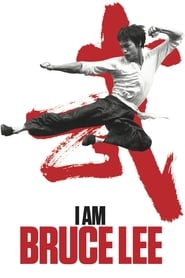
I Am Bruce Lee
English സബ്ടൈറ്റിൽ ഡൗൺലോഡ് ചെയ്യുക
റിലീസ് വിവരങ്ങൾ
ടാഗുകൾ
English സബ്ടൈറ്റിൽ പ്രിവ്യൂ
ആദ്യത്തെ 200 വരികൾ.
If someone says, "I can't watch a Bruce Lee film," I can't talk to 'em.
Bruce Lee is a worldwide fighting icon.
He was a 130-something-pound lethal weapon.
Bruce and his fighting style changed the game.
In the beginning I had no intention that what I was practising,
and what I am still practising now, would lead to this.
Bruce Lee, Bob Dylan, Ali, Jay-Z, Tiger, Kobe, Jordan,
they all have the same spirit.
No stunt coordinator coordinated his shit. He did it himself.
The guy you see in Bruce's films is the way Bruce was in person.
He could lose his temper.
Bruce Lee is my idol. Wha-aa!
He was directing, writing, acting.
I don't even look at him as being Asian. He's my idol.
When you think of Bruce Lee, you don't think about the Asian karate guy.
You think about a legacy.
The moves that he could do,
you were wondering if they were speeding up the camera.
Bruce Lee was like the superhero of the Asian community.
You had Muhammad Ali. You had Malcolm X.
Bruce Lee represented that same kind of radicalism.
Technically brilliant choreography.
You get mysticism, hyper-masculinity. This guy is like, bang!
He's put balls on Chinese men.
There's some cool stuff.
You're like, "Wow. That supercool guy is my dad."
- There'll never be another Bruce Lee. - Baby, here I am, man.
How does a small Chinese guy become the greatest martial artist of all time?
Production 263-05-224-10. Test X1, take 1.
Bruce, just look right into the camera
and tell us your name, your age and where you were born.
My last name is Lee, Bruce Lee.
I was born in San Francisco in 1940. I'm 24 right now.
There was controversy about me taking him back to the United States.
But he loved his time that he lived in Seattle before all of this.
It was important for my children to know where their father was.
I just intimately just started crying.
I think I literally cried after the funeral all the way from Seattle,
all the way to the California border, all the way up to Sacramento.
That was a very difficult time to leave Hong Kong
and... take their favourite son away.
Bruce's childhood is interesting to look at
from the standpoint of where he ended up.
First of all, Hong Kong in the early '40s
was occupied by Japan during World War ll,
and this had an influence on Bruce.
It was very important to him as a child from the get-go to be self-sufficient,
and in doing that, you have to shoulder a lot of personal responsibility.
There's bad blood historically between China and Hong Kong and Japan.
His mother used to tell me how Bruce would hang over the side of the balcony
and shake his fist at the Japanese planes coming to land in Hong Kong.
If anyone said a word against the Chinese, he would rebel.
And you work in motion pictures in Hong Kong?
Yes, since I was around six years old.
Bruce became a child actor under his father's influence,
his father being an actor in the Chinese opera
and then in Cantonese films as well.
Tell the crew what time they shoot the pictures in Hong Kong.
Well, it's mostly in the morning because it's kind of noisy in Hong Kong,
you know, around three million people there,
so every time when you have a picture,
it's mostly, say, around 12am to 5am in the morning.
A lot of people don't touch on this,
but he was the biggest childhood star in Hong Kong.
He made 20, 20-something movies as a child star.
He was like the Macaulay Culkin of that era.
And then you have the fact that Hong Kong was governed by the British.
They targeted the British.
You are crazy.
But there's a lot of competition between the British people living there
and the Chinese living there.
He's also part Caucasian.
I think he saw a lot of adversity racially,
not only around him but within himself.
And he had run-ins with English schoolboys and that kind of thing,
so there was always that feeling of resentment
of others dictating his future.
Then, of course, when he was 13, he went to study with Yip Man.
As human beings, fighting's in our DNA. We get it and we like it.
Yip Man trained Bruce in wing chun,
and Yip Man was a fabulous kung fu master.
Bruce had many run-ins with the law
and other teenagers in Hong Kong, and he had fights.
He loved the street fights. He loved other people who can street-fight.
Bruce's style is made for street survival.
He grew up fighting fights in Hong Kong on the rooftop.
Bruce had some of the films, 8mm, that he used to show us,
where they get into the old traditional stance
and one guy would come in and throw a couple of punches
and the other guy would back up and fall down over the plant pot.
There were two clans usually, the choy li fut clan
and the wing chun clan
by Yip Man and his students, and they would have battles.
Although this stuff about the choy li fut and wing chun rooftop fights
is the stuff of legend, it is true.
I was in Hong Kong.
The sentiment, the animosity between wing chun and choy li fut still exists.
So Yip Man was a great influence on Bruce
and leaned him in the direction of philosophy.
Yip Man would not be a legend without Bruce Lee.
Wing chun was a very, very minor martial art style,
and now it's global, and that's all because of Bruce Lee.
Ultimately, martial art means honestly expressing yourself.
Now, it is very difficult to do.
A lot of that warrior spirit, to me, it's really honourable.
It's really pure.
It breaks through to every culture, every language, every colour.
It's all about getting respect back, you know.
If you're gonna hurt me, you're gonna have to earn it, motherfucker.
I was the youngest of three boys.
I got obsessed with Bruce Lee and martial arts.
I wanted to kick my brothers' asses and prove my worthiness.
When a good fight breaks out, you can't help but be excited.
You can't help but show emotion.
It took a while, but as many times as each of my brothers beat me up,
each one of them got one ass-kicking from me and that was it.
I didn't do so well talking shit back,
so I don't see the point in talking about it. Let's just go there.
But then you feel bad and embarrassed afterwards, "That was childish."
"I could have handled that better." But you also feel good.
If you couldn't get laid, you got in a fight.
Let me punch this ugly motherfucker.
In Youngstown. It was a nice place to live.
Fighting has taken over my mind and my being.
It's not what I do. It's who I am.
My father told me fighters are born, not made. Bruce Lee was a born fighter.
When you do punch, now I'm leaning forward a little bit,
hoping not to hurt any camera angle.
I mean, you gotta put the whole hip into it and snap it
and get all your energy in there, and make this into a weapon.
When Bruce Lee was a young boy, maybe 13 or 14, training in wing chun,
they found out that Bruce Lee had Caucasian blood.
- I believe it's one fourth German. - Well?
The other students said he shouldn't be allowed to learn wing chun
because he wasn't purely Chinese.
When you're by yourself and no one wants to be there
because they didn't wanna get beat up, it's the loneliest feeling in the world.
One thing I have definitely learned in my life
is that I do have a bad temper.
A violent temper, in fact.
His whole life is sort of this play between East and West.
He hated the oppression of little people
which he saw everywhere, in the Japanese occupation,
the Boxer Rebellion,
the foreign powers going into China.
He just thought all of that was wrong.
To live the life he wanted to live, he had to fight for it.
He really had to put it out there and really walk the walk.
I mean, it is easy for me to put on a show
and be cocky and be flooded with a cocky feeling
and then feel like pretty cool and all that.
Or I can make all kinds of phoney things, you see what I mean?
Blinded by it. Or I can show you some really fancy movement.
But to express oneself honestly, not lying to oneself,
and to express myself honestly,
that, my friend, is...
In some ways it's the total opposite of anger.
It's beauty, it's passion, it's art.
It's... It's painting a picture without tools.
It was a surprise, but an understandable one,
when I found out that Bruce Lee was a cha-cha champion,
because you could see that reflected in his fighting style.
He was the 1957 Hong Kong cha-cha champion.
People don't know that. His footwork was impeccable. Incredible samba dancer.
He didn't move like anybody else. He moved like himself.
In a fight you have footwork and you have form
and you have stance and power that you interject,
and that's the way that dancing and martial arts go hand in hand.
For him to be steeped into that rhythm reinforced why black people
have always identified with Bruce and his fighting style.
So what I got from Bruce as a performer is...
You know, most performers perform like this, right? Straight up.
Me, perform from the side,
sort of like how Bruce used to always, you know,
be ready for combat like this.
Honestly expressing yourself, like me being a dancer,
that's what it's all about.
That's another big, big philosophy from him that I take with me to this day.
So I'll be performing like, "Bah, bah! Bah, bah, bah, bah!"
I keep trying to dig deeper and deeper within myself
and find that fluidity that no one can replicate.
That's the vibe that Bruce Lee taught me.
It's to always bring it.
That's what I get from Bruce.
- And when did you leave Hong Kong? - 1959, when I was 18.
It had gotten a little difficult with the police on one side
and with gangs on the other side.
He beat this kid up, but he didn't know that the kid
was the son of a high-ranking police officer in Hong Kong.
He got into so many street fights that by 18, his father gave him $100
and sent him off to America.
If he wanted his immigration status to be US citizen,
then he had to return by the time he was 18.
To go when you're still a star is very strange,
because he could have kept doing films, but they wanted him to go,
to make the right decision of where he's going next.
In Seattle, my father started teaching martial arts.
He didn't ever look at people because of their race or their stature in life.
If you had a sincere interest in martial arts, he would teach you.
Taky Kimura was really his best friend.
I Am Bruce Lee subtitles in other languages
More English subtitles for I Am Bruce Lee
- I Am Bruce Lee 2011 BRRip XviD SLiCK · 60 downloads · 2012-07-25
- I Am Bruce Lee 2011 720p BluRay x264-GECKOS HI · 83 downloads · 2012-07-25
- I Am Bruce Lee 2011 720p BluRay x264-GECKOS · 74 downloads · 2012-07-25
അഭിപ്രായങ്ങൾ
No comments yet. Be the first to leave one.