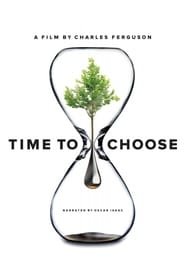
Time to Choose
English സബ്ടൈറ്റിൽ ഡൗൺലോഡ് ചെയ്യുക
റിലീസ് വിവരങ്ങൾ
ടാഗുകൾ
English സബ്ടൈറ്റിൽ പ്രിവ്യൂ
ആദ്യത്തെ 200 വരികൾ.
- We inherited an astonishingly beautiful home
and with it, we've accomplished extraordinary things.
But we are changing the Earth's climate
by releasing carbon dioxide and other greenhouse gases
into the atmosphere.
Over the last several decades,
we have raised the Earth's average temperature
by .7 degrees Celsius.
This seemingly small change is already causing
heat waves, droughts, wildfires,
and storms that have killed tens of thousands of people
and caused hundreds of billions of dollars in damage.
- We see things that the climate scientists
of 20 years ago were not predicting would occur so soon.
We're not looking at one or two bad events
or one or two bad years,
we're now looking at three and four decades.
Very small changes make huge differences
in what it's like to live in places on the Earth.
- Over a billion people in China,
India, Pakistan, and Bangladesh
depend on the Himalayan glaciers for water,
but global warming is endangering them
and all the Earth's freshwater supplies.
Coral reefs support the richest concentration
of life on Earth,
but greenhouse gases make our oceans warmer and more acidic.
If this continues,
the coral and much of the ocean's life will vanish.
We also face rising sea levels
caused by the melting of Greenland's ice sheet.
- If we look at the last period that was warmer
than the present one, about 130,00 years ago,
sea level then was at least six meters higher than it is now
and that was only about one degree Celsius warmer
than it is today.
- Global sea levels have already risen
by eight inches
and if Greenland's ice sheet melts completely,
sea levels will rise 23 feet.
- I don't think most citizen's in the world
have really grasped what is happening
and what these risks are.
Many of our major cities
will be submerged.
- Over 600 million people's homes will be destroyed
if the world's coastlines are flooded
and if we continue with business as usual,
warming the planet further,
by the middle of this century,
we could trigger runaway climate change,
a process beyond human control.
- What do you do if you have that information?
What do you do?
- Over the next six to ten years,
we have an urgent responsibility
to decide how this world is going to be in the future.
- But the climate crisis
is also a huge opportunity.
We already possess technologies
that can stop climate change
and adopting them will greatly improve our environment,
our economies, our health, and our security.
- The future has turned into the present.
We can create a society that is powered by clean energy.
The benefits will be enormous.
Once we get off fossil fuels, we're not going back.
- But we are in a race against time,
and some of the world's wealthiest and most powerful people
are opposing the progress.
- There are a lot of adversaries.
There are people who say
there's no such thing as climate change,
there are producers of carbon who say
this is where the world is.
- The fear factor that people wanna throw out there
and just say, "We just have to stop this,"
I do not accept.
- If you fast-forward 50 years from now,
our kids are looking at the problem that we leave them,
they're gonna go, "Okay, so let me get this straight.
"You had the technology to solve the problem
"and you decided it's too big a task.
"How dumb could you be?"
- It's too late to be a pessimist, not as simple as that.
This is a moment that we don't want to fail,
we don't want to fail humanity.
- It's the battle for defend nature,
for defend the defenseless and the voiceless.
It is a battle to prevent powerful people from
despoiling the environment.
- A old saying goes necessity is the mother of invention,
we got the mother of all necessities before us.
- This is a gigantic, scientific, technological,
and moral challenge.
There's a great struggle for the future of the world.
Boone County, in its day
and when I was younger,
it was just breathtaking.
As a kid growing up here,
you roam these mountains, that's what you do.
All my life it's been such a beautiful,
wonderful, peaceful place.
So, when the mountain started exploding,
of course I was outraged.
I heard blasting
and it was off in the distance.
And I came upon it and I was stunned.
I had heard of mountaintop removal,
but had no clue what it was.
I went up the mountain
and saw what was happening above my home.
And I took a flyover
on a small plane
and it changed my life.
- They take a mountaintop,
deforest the top of the mountain, clearcut it.
- They remove all of the vegetation,
they bring in ammonium nitrate and diesel fuel
and then they detonate that
and boom, there goes the mountain.
- Material that's being spewed into the air from blasting,
it's rock not dirt,
and so that's something that contains arsenic
or other different metals
and stuff that you don't want to breathe.
- And you also get coal
that's pulverized in fine particulates,
and that is raw coal which is containing arsenic
and lead and mercury, and a whole variety of elements.
The dust is horrible.
I had two children that had asthma
and I started complaining because we needed to breathe.
- When you compare before mountaintop removal mining
to after mountaintop removal mining,
there is a very substantial increase
in lung and bronchus cancer.
- They'll send in heavy machinery clear away that coal
and then everything that's left, all the coal mining waste,
gets swept off the top of the mountain
into the neighboring valley,
so where there was once a mountain and valley,
you just have flat lunar landscape.
- In the state of West Virginia alone,
there's nearly a million acres
of mountaintop removal coal mining,
more that five hundred mountains in Appalachia
that's been leveled.
- They're taking rocks
that should be inside a mountain
with very heavy metals, things like arsenic,
and putting that into the valley
which is the source of the watershed.
Communities that are living downstream
have heavy toxins going into their water supplies.
It has huge human health impacts and consequences.
- The Clean Water Act, it previously said you can't
dump waste in the waters of the United States of America.
Department of Interior edited it,
you can't dump waste, but you can dump fill material.
And then they reclassified mountaintop removal waste
as fill material.
The coal is shot down a conveyor system
and go to a processing plant,
it gets crushed.
And it goes through a diesel bath.
It goes through a chemical cleaning process,
removing arsenic, mercury, lead.
The cleaner the coal gets,
the more of the really nasty stuff that gets left here.
Everything gets pumped back up into coal slurry impoundments
is what they call 'em, we call 'em sludge dams.
It's real thick
like mud.
- Every one of them leaks.
- We would play in the stream as kids,
we would gather water from the stream.
This is now a pollution spillway.
- Everyone thought the water was safe,
you know, that's well water, it'll have a little color,
a little odor, but you know, will not harm you.
My brother, he was
probably 28 years old at the time
and he had noticed a knot
starting to appear on his forehead, it was on this side.
It was very aggressive in growth.
October 6, 2006 was a Friday, he worked all week,
the next day, mom woke up and the alarm was still going off,
and he just never woke up.
And we go to the church
and we start talking,
and at that moment in time,
I realized there was actually six neighbors,
who had brain tumors, that live in about a 10 house span.
There was a little girl
that was one of my brother's friend's daughters.
She was a toddler when they had found her brain tumor.
And she passed away.
The same contaminants that were in the sludge ponds
was what they found in our water.
Time to Choose subtitles in other languages
More English subtitles for Time to Choose
- Time to Choose 2015 1080p AMZN WEBRip DDP5 1 x264-monkee · 19 downloads · 2023-03-08
- Time to Choose 2015 WEBRip XviD MP3-XVID · 21 downloads · 2018-08-19
അഭിപ്രായങ്ങൾ
No comments yet. Be the first to leave one.