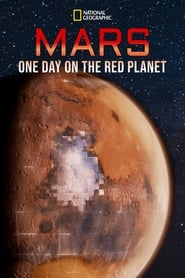
Mars: One Day on the Red Planet
English സബ്ടൈറ്റിൽ ഡൗൺലോഡ് ചെയ്യുക
റിലീസ് വിവരങ്ങൾ
ടാഗുകൾ
English സബ്ടൈറ്റിൽ പ്രിവ്യൂ
ആദ്യത്തെ 200 വരികൾ.
140 million miles from Earth.
Our planetary neighbor and our greatest mystery...
Mars.
For centuries we've gazed at it in wonder.
But it's always remained out of our reach...
until now.
Today a pioneering spacecraft
is bringing the planet dramatically closer.
Pixel by pixel, it's beaming Mars back to us...
as we've never seen it before.
Now using these images,
we can do something remarkable.
And take you on a journey no human being
has ever been on before.
A single circuit of this world
from dawn to dusk.
Exploring its most spectacular...
and surprising features.
On a mission to unlock its deepest secrets.
And we join the quest to answer the biggest question of all.
Is there life on Mars?
Our journey begins at a vast black spot,
one thousand miles wide.
This is where humanity's dream of Mars first began.
It's called Syrtis Major.
Hidden in this intriguing landscape is a mysterious feature,
that first made us hope that Mars could be Earth's sister.
Another planet teaming with life.
It's almost unthinkable that just 100 years ago,
people actually thought that there was civilizations on Mars
and if there was a civilization there,
what was the civilization like?
Did they have commerce? Did they have language?
Could we communicate with them?
Was there any chance for space travel so that we could connect with them?
Here in Flagstaff, Arizona, in 1894,
a Mars obsessed astronomer built a state of the art telescope,
to study the red planet in more detail than ever before.
What Percival Lowell saw would shock the world.
On the surface of the planet,
he made out patterns, structures, movement.
Mars appeared to be alive.
He looked at Mars every opportunity he had
and he kept records of what he saw.
Here are three of Percival Lowell's globes.
He's detailed out the regions of vegetation.
He also seemed to observe the change in the vegetation
over time and over seasons.
He's included vast networks of canals,
bringing water from the melting polar caps
down to the drier, dying regions of the planet,
providing water for the civilizations that he imagined that lived there.
In the years after Lowell's discovery,
Mars fever gripped our planet.
We imagined alien oceans,
exotic landscapes and bustling cities.
Even Martians staring back at us.
But we didn't get a chance to find out if we were right,
until 1964.
MAN (over radio): Three, two, one, zero.
All engines running, lift off.
Roger, one, three seconds.
MAN 2 (over radio): We're on our way.
Mariner 4 was NASA's first successful mission
to the red planet.
At last a chance to study Mars up close.
There was pressure. There was definite pressure.
We were inventing stuff every step of the way.
It was exciting.
But you're working hard, had guys working 50, 60 hours a week.
This was the 60's, the dawn of the space age.
And it just fired our imagination about you know, what could be there?
Who could be there?
Mariner 4 was a huge deal,
because we'd never really seen the surface of Mars,
all we had was people looking at Mars with a telescope
and drawing what they saw.
The public was expecting to see these
lush civilizations built by Martians.
I was 13 and I actually can remember
watching the 6:00 news and this was broadcast nationwide.
Nervously, the world waited to see
the first ever close-up image of Mars.
MAN (over PA): Picture number one is coming in.
We didn't know what it was gonna look like.
It took eight hours to get one picture back.
We had these little tape recorders that would just
print one line of numbers after another,
and each pixel was represented by one number
on this little strip chart.
So we got the idea of, why didn't we just take that
and color those numbers appropriately.
As the data came back, a picture emerged.
It did not show a tropical environment
with cities and gleaming skyscrapers.
No.
No canals, no oceans, no rivers.
No vegetation, no forests.
We didn't see any cities,
we didn't see any Martians walking around at all.
Mariner 4 was a historical bummer.
What amazed me was,
when the first pictures came back,
the first thing you noticed is that it's dominated with craters.
I never heard anybody predict that.
I did never hear anybody in the science community saying,
"Well, when we get there,
it's gonna look a lot like the moon.
There's gonna be craters."
No, there was never any of that.
For all our dreams of a living Mars,
we seem to have found a dead, deserted world.
How had we got it so wrong?
Today we can see the answer.
Circling above the planet's surface, a new electronic eye.
This is NASA's Mars Reconnaissance Orbiter.
On board, HiRISE--
the most powerful camera we have ever sent to another world.
It's capturing Mars in unprecedented spectacular detail.
The HiRISE camera is a game-changer.
It gives us the illusion,
the feeling of flying over Mars in a helicopter.
The way you look out and almost touch the landscape.
Think about it-- One pixel, one dot on the HiRISE photograph
is the size of a basketball.
HiRISE is showing us that Mars is much more than a barren desert.
It's revealing a world beyond our wildest imagination.
This is just not beautiful, it is magnificent.
They look like abstract paintings.
The planet comes alive
and you see this vibrancy and this-- this motion.
The beautiful color palette of this planet,
that we've always just thought of as this red rock.
But once you can see things in that detail,
it's like, whoa, I got a new prescription for my glasses
and all of a sudden I can see the world, only it's the world of Mars.
Using HiRISE data, we can now show you for the first time
what Syrtis Major really looks like.
This is a view no human has ever seen.
Over 100 foot tall,
stretching for 100 miles.
These are the Nili Patera sand dunes.
When Percival Lowell looked towards here,
he thought he saw life.
Today with HiRISE's powerful gaze,
we can see how he got Mars so wrong.
The dunes move in the Martian wind.
On a global scale,
sand can be seen being blown around Mars' surface.
The size of shape of regions like Syrtis Major
ebb and flow.
Percival Lowell could see these large shaded regions
that seemed to grow and change over time.
Maybe even seasonally, very much like we see vegetation
changing with seasons here on Earth.
He was actually observing dust storms and shifting sands
on the surface of Mars.
But was Lowell completely wrong?
For years, humanity thought so.
But now using HiRISE imagery,
we can glimpse something extraordinary.
A Mars that may once have been much more like his vision.
It's a story that begins at our next destination.
3,200 miles southwest of Syrtis Major,
is a window into Mars' deepest past...
Noachis Terra.
Noah's Land.
At first glance,
this looks like another dead landscape,
but it holds an astonishing clue to a very different world.
A world with a real chance of life.
This is one of the most ancient places on Mars.
Noachis Terra is absolutely filled with craters.
Some are huge, the size of a city or an entire state.
Some of them are five or ten meters across, very small.
We can also see that some craters have been
overprinted with other craters.
Simply by counting and analyzing these craters
on Noachis Terra,
we think it dates back almost four billion years.
Now we can build these craters from real data.
Each is formed by a single meteorite impact,
that punched through rocks, billions of years old.
They are holes punched through time.
These craters are like opening doors into the geology of Mars,
we can use it to dig down through the various layers
and we can see almost every kind of Mars there was.
These craters are 140 million miles away.
So their secrets might seem beyond our grasp,
but incredibly they can be unlocked.
By a rock found on Earth.
This is a rock worth 200 times more than gold.
A rare and revealing treasure.
There's so many objects in this world that you can have.
You can have diamonds, you could have gold,
you could have houses, cars
and they really don't do anything for me.
And this is NWA 8-4-5-5.
This is NWA 10-608.
This is NWA 8-6-8-7, it's called a troctolite.
Mars: One Day on the Red Planet subtitles in other languages
More English subtitles for Mars: One Day on the Red Planet
- Mars-One Day on the Red Planet 2020 1080p WEBRip x265-RARBG · 28 downloads · 2020-08-27
അഭിപ്രായങ്ങൾ
No comments yet. Be the first to leave one.