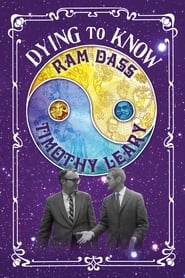
Dying to Know: Ram Dass & Timothy Leary
English സബ്ടൈറ്റിൽ ഡൗൺലോഡ് ചെയ്യുക
റിലീസ് വിവരങ്ങൾ
ടാഗുകൾ
English സബ്ടൈറ്റിൽ പ്രിവ്യൂ
ആദ്യത്തെ 200 വരികൾ.
It's the taboo.
It's the taboo, basically, of all time.
- Yeah, of all time. - Right now,
there are a few more taboos.
We knocked off the, uh, the taboo
against sex of all kinds-
You did personally.
Drugs, of course.
Remember how upset society got about drugs?
It still is. War on Drugs.
We certainly know about that taboo.
The next thing was death.
Everybody has deep thoughts about death,
the ultimate taboo.
They blew open this world,
this psychedelic world.
I mean, it ended the 1950s.
It was all up for grabs.
It's hard to describe what that felt like.
Leary and Alpert are what will be remembered as cultural icons
of the '60s, especially,
and very influential people
in not only American culture but world culture.
You know, they are iconic figures
who stepped off the map.
They really paid heavily.
The use of psychedelic drugs
such as marijuana, mescaline, LSD,
is out of control in the United States today.
I knew he was an outlaw.
You have to be quite a badass
to get locked up for your ideas.
We had a deep, deep friendship
but we also had a deep enmity.
We're all gonna die.
Why not learn how to do it with class
and style and friendship
as the climactic expression of a life?
What Ram Dass did for our culture
was to open up a door of spirituality
by having surrendered so completely to love.
When you walked in,
there was a flash of total joy.
- Yeah, yeah, me too. - And love.
I don't know what the words are but, uh--
See, in my mythology now,
I'd say you and I
are connected at a place
where we've both danced through this incarnation together.
but that we have a connection
that is timeless in another sense of that.
And like we're old beings that know each other well
through many forms.
I think one incarnation is wonderful.
I mean, I started out
a Jewish boy from Boston.
From psychology to psychedelics
to...Eastern mysticism.
And then ended up Ram Dass, uh...
just getting straight on 'til it was gone.
Who are you? Who am I?
It's a very difficult question.
Throughout my life, I've always been fascinated
by where the action was.
I'd never want to have power,
but I wanted to, uh--
I ran for governor once against Ronald Reagan.
Uh, I wanted to experience the different, uh,
theaters or stages or viewpoints of life.
I think I've lived one of the most interesting lives
of anyone in the 20th century.
In the summer of 1995,
Timothy Leary announced to the world media
that he had been diagnosed with inoperable prostate cancer.
He was dying.
It's shocking
that people are not expected to talk about their dying
or to plan it.
Certainly the greatest adventure,
celebration of your life,
should be the process of moving on.
He turned it into a theater piece,
he turned it into a poem,
he turned it into a dance,
which is just what he did with all the rest of his life.
It was a celebratory moment.
The thing's a team sport.
Dying's a team sport.
Be open to new ideas.
Remember when people used to say
that LSD is an escapist drug?
- Yeah, I just think-- - You know, one thing LSD
is native because you can't escape--
You got a hundred billion neurons--yeah.
My thing about death is not escaping it.
I'm running towards Miss Death.
You can't turn this over to the doctors.
You can't turn it over to the priests.
You can't turn it over to the medical profession.
Think for yourselves.
No government agency or no profession
can solve these problems for you.
I've got to do it for myself,
you've got to do it for yourself,
and all the viewers have got to do it for themselves.
Take charge of it!
Plan it, talk to your friends about it.
Timothy Leary,
born October 22, 1920,
in Springfield, Massachusetts.
An only child.
He took birth into such an interesting tension
in terms of, on his mother's side,
very conservative Irish Catholic,
very tight, held in tight, very judgmental.
His father was a dentist but from the Learys
who were kind of a wild, Irish, drinking, divorcing,
going off and running away type family.
I was a heavy reader as a child
and, uh, I spent hours and hours as a kid
studying the heroic and the interesting
and the adventures of people who were thinking.
Timothy had an extraordinarily complex mind,
subtle mind.
He liked the kind of multilevel nature of consciousness a lot.
I mean, the fact that James Joyce
was one of his favorite writers
is certainly a key, a clue.
And he was--he was the romantic Irish bard,
also the kind of, um, itinerant scholar,
the kind of rascally person at the bar.
And he seemed to play the role of a bad guy.
As Aldous Huxley said of him,
"The good Dr. Leary would serve our cause
and his own better if he could resist his impulse
to cock snooks at authority."
There was a thing in Tim that just liked to piss people off.
What he was, at heart,
was an Irish rebel.
But like a good Irishman,
um, he could just pull tricks out of the bag.
And he did it continually.
He had a twinkle in his eye
and seemed leprechaunish and mischievous.
Timothy's paternal grandfather
advised him to "find your own way, be one of a kind."
He acted on that guidance,
questioning authority every chance he got.
Following in his father's footsteps,
Leary was a genial hell raiser as a young man.
At West Point, he was court-martialed
for supplying liquor to other cadets.
Eventually, he was cleared of the charge
and left the academy.
Caught between the Catholic desire to please
and a rebellious nature that ran deep,
Tim spent his life walking the edge
between conformity...
...and chaos.
It's interesting, the things that happen.
He gets thrown out of college
for being found in a girls' dormitory,
he gets given jail sentence for originally 40 years
and it was then reduced to ten
for, um, what, a half an ounce of grass?
And there was a thing about Timothy,
about right and wrong,
that he was busy being a bad boy
but in the rascally sense, the playful sense.
Timothy was not mean-spirited.
He--he was absolutely quite the opposite.
Richard Alpert, born April 6th, 1931,
in Boston, Massachusetts.
His father, George Alpert,
was president of the New York, New Haven
and Hartford Railroad,
cofounder of Brandeis University,
and a trustee of the synagogue the family attended.
Studying psychology,
Dick earned his Master's from Wesleyan
and a PhD at Stanford.
He taught on the faculties of both Stanford and UC Berkeley.
Then, in 1958, he was appointed
assistant professor at Harvard.
A hometown success at the age of 27.
I kept up a front
because I'd be scorned.
You just didn't talk about homosexuality.
I mean, my prep school...
Oh boy.
I went through hell...
internally.
A part of it is the privilege
that he was brought into.
A part of it is the era.
It might be a key variant in his life
that made him really move into the position
of an outlier.
My homosexuality
set a stage
More English subtitles for Dying to Know: Ram Dass & Timothy Leary
- Dying to Know Ram Dass and Timothy Leary 2014 1080p WEBRip x265-RARBG · 47 downloads · 2021-03-24
അഭിപ്രായങ്ങൾ
No comments yet. Be the first to leave one.