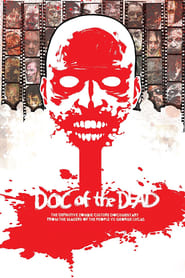
Doc of the Dead
English സബ്ടൈറ്റിൽ ഡൗൺലോഡ് ചെയ്യുക
റിലീസ് വിവരങ്ങൾ
ടാഗുകൾ
English സബ്ടൈറ്റിൽ പ്രിവ്യൂ
ആദ്യത്തെ 193 വരികൾ.
I don't need to tell you, Mr. Speaker,
that zombies don't recognize borders and that
a zombie invasion in the United States could easily turn into
a continent-wide pandemic so on behalf of
concerned Canadians everywhere, Mr. Speaker, I want to ask
the Minister of Foreign Affairs is he working with
his American counterparts to develop
an international zombie strategy so that a zombie invasion
does not turn into a zombie apocalypse?
Coming up next on Action News 7, a dog was found...
excuse me just one moment...
I see.
Ladies and gentlemen, I'm receiving a special broadcast
about something that's happening.
Van Dorn Street is blocked right now by overturned cars.
We are receiving news that the bodies of the recently deceased
are returning to life and attacking the living.
Officers are on their way right now to take you to safety.
...A live reporter out there on the scene.
There are millions, millions of zombies
roaming the earth chewing people up.
Is that crazy or what?
I suggest you find the tallest building
in your town and jump off.
The zombie outbreak is no longer an outbreak,
but a full-on pandemic.
Warning you to stay indoors, to lock your doors,
to arm yourself with any weapons that are available
and this is America so you should have plenty.
Grab something heavy, something that you could hit
very hard with, and let's party!
I'm Jonathan Leonard from Geekscape and we're going to
find out what the average person knows about zombies.
A zombie is someone who's dead and came out of the ground
and is bleeding and is gross looking and they'll kill you.
What do zombies want?
Brains.
What are the zombie rules?
Zombie rules is that you die, but you don't die.
If you want to be more like angsty and metaphorical,
a zombie could be someone trapped in a workday
who lives in a box and doesn't have fun.
In Chinese tradition a zombie just jumps.
It doesn't talk, it doesn't walk, it just jumps.
What?
Arms out and then it just hops like that.
The zombie is a relentlessly aggressive, reanimated
human corpse driven by a biological infection,
so there's kind of three aspects to that.
You don't negotiate with a zombie, right?
You can't talk a zombie out of wanting to eat you.
You can't say, "Hey, go around the corner,
there's a family of five getting in a Winnebago.
You can eat all five of them and leave me alone."
Secondly, it's a reanimated human corpse, limited in
its ability so it's actually a rotting corpse.
Thirdly, a biological infection which is,
I think, what makes zombies really, really scary.
They're us and they're us having succumbed to
our worst fear which is our own death.
You can't outstrip them even though they're slower than you.
Eventually you have to go to sleep.
They don't, so even if you're a mile ahead of them,
when you're snoring they'll catch up and meet you.
And that's like death itself.
You do everything you can to stave it off.
You do the steps at Santa Monica, you don't eat red meat.
They'll get you in the end.
Most famous monsters, the big-screen monsters
have some kind of long-standing tradition
where their stories have been developed previously --
the vampire, the werewolf, even the slasher,
the serial killer comes out of a crime novel tradition.
The zombie comes kind of directly out of folklore
and there really wasn't a literary narrative tradition.
When you take a look at zombies in cinema specifically,
you can technically go back into the silent era.
There are, of course, classics like "Cabinet of Dr. Caligari,"
where you have the sleepwalking character in there who is
very much zombie-like, and yet for all intents and purposes,
we all have kind of collectively agreed,
it all starts in 1932 with "White Zombie."
Zombies!
The filmmakers in the '30s and '40s were kind of
making up these stories out of nothing.
They weren't taking existing material and adapting it.
If anything, they were drawing on misconceptions
and misunderstandings of race relations in the colonies,
sensational ideas of what voodoo and folklore
really meant in Haiti.
They took that idea and they kind of merged it with
the visual style of Todd Browning
and the gothic tradition.
I thought that beauty alone would satisfy,
but the soul is gone.
I can't bear those empty, staring eyes.
So in "White Zombie," you get a narrative that takes place
in Haiti and it involves Haitian voodoo, but then there's
a gothic castle on the coast of Haiti for some reason.
So it's this weird fusion of a misunderstood,
sensationalized folklore with an established and successful
cinematic tradition for monsters.
The early films are always about
black people menacing white women.
It's really the enslavement by the former slaves
that makes that monster initially so terrifying.
The next major step in sort of the evolution of the zombies
of pop culture icon comes when science fiction briefly
takes the lead over horror in the 1950s
and then you get movies like "Invisible Invaders..."
People of Earth, this is your last warning.
...in which aliens resurrect human corpses and use them
like puppets to try to take over which is virtually the same plot
as "Plan 9 from Outer Space," one of the most infamous movies
of all time, and what's interesting about those movies
is there we have it, we have dead people coming back.
They're not demonically possessed.
They're not impelled by some desire to eat flesh
or something we don't know.
They're being puppeteered by aliens, but they're zombies
and they're more like the zombies we know today
than the ones that preceded them.
But then what happened was George Romero...
The dead who live on living flesh.
The dead whose haunted souls hunt the living.
The living whose bodies are the only food for these
ungodly creatures.
"Night of the Living Dead."
We were trying to create a new creature,
somebody that was dead but came back.
We didn't have a name for that creature.
We called them ghouls.
I said, "George, who are these characters chasing this girl?"
He said, "I don't know."
And I said, "Well, when I was reading it,
it seemed to me they could be dead people."
He said, "That's good."
I said, "But what do they do? You don't say that either."
He said, "I don't know."
I said, "Why don't we use my flesh-eating idea?"
There was an article in "Cahiers du Cinema"
that called them zombies for the first time.
I was clinging to the idea that we had created something new
and when I read that article, I said, this ain't new at all,
so that's when I started to accept them as zombies.
"Night of the Living Dead" did not create zombies
but it rewrote zombie lore.
I like to say that there were zombie movies
before George Romero, the same way there were
space movies before George Lucas.
It changed everything.
It scrapped the old voodoo zombie and gave us
the plague-driven flesh eater.
The idea of the end of the world and zombies are around
and the world's been overtaken by them
and it's people against zombies and our population is dwindling
was introduced in that movie and no one had ever really
taken zombies in that direction before.
It's almost as if the zombie as we know it was some sort of
like biblical figure that's been around forever
and we can all pick up and use it.
It's not, it was George's idea, the whole biting thing,
the passing on the disease, the waking up -- all George.
What's monumental to me about that film was the fact that
in 1968, this film was released with a black man
and a white woman, and throughout the entire movie,
nobody made a big deal out of the fact that
we had two different colors.
It was pure survival.
We thought we were pushing the envelope a little.
We thought that some of the scenes with the guts
and when the kids get roasted in the truck...
we had actually one shot of a naked zombie from behind.
Bold -- that's about as bold as we went.
There were extreme audience and media reactions.
Reviewers who thought that we were satanically inspired,
that we were scourges, that our film should be banned.
Horror movies were not raw like that back then.
George's was almost like a real thing, a documentary.
The reaction to that movie is what really got me going
because it said people were fainting in theatres
and I thought, I don't think I want to see this movie.
It made me not want to see it and then when I saw it,
I was like, yeah, that's why I didn't want to see it.
I remember the first time I saw it was at a midnight screening
and the audience was absolutely terrified.
The sequence that blew people away was the little girl
down in the basement who we discover
is chewing on her parents' intestines.
The entire audience flipped out.
People got up and left the theatre during that scene.
Midway through the movie I hear this "boom, boom, boom,"
and I'm wondering what's going on?
Doc of the Dead subtitles in other languages
More English subtitles for Doc of the Dead
- Doc of the Dead 2014 1080p BluRay x264-MELiTE · 33 downloads · 2019-08-25
അഭിപ്രായങ്ങൾ
No comments yet. Be the first to leave one.