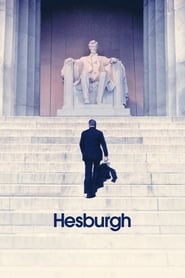
Hesburgh
English സബ്ടൈറ്റിൽ ഡൗൺലോഡ് ചെയ്യുക
റിലീസ് വിവരങ്ങൾ
ടാഗുകൾ
English സബ്ടൈറ്റിൽ പ്രിവ്യൂ
ആദ്യത്തെ 200 വരികൾ.
In any list of the most influential men in American life,
you'’ll find the predictable political leaders, commentators and tycoons.
But one name that keeps cropping up
is surprisingly none of those things.
He advises presidents...
He was a mythic figure.
...confers with the Pope.
We heard these stories, growing up, about this legend.
He is chairman of the Rockefeller Foundation
and a director of the Chase Manhattan Bank.
My God, how many lives did this man live?
He is Father Theodore Martin Hesburgh,
President of the University of Notre Dame.
We don'’t prove anything by burning something down,
we prove something by building it up.
He knew everyone.
I heard from some he was a very progressive liberal,
and from some he was a very conservative man of the cloth.
The University has to try to get people to be critical,
find values that make life worth living.
When you were dealing with a great difficulty,
he'’s the kind of guy you would pick.
He did too many things.
You couldn'’t count them all.
Everywhere you looked, there was Hesburgh.
Father Hesburgh recognized that we all had a duty to serve and to give back.
We all ought to be protesting against many of the things we see in modern life.
Father Ted should be a saint.
People have become concerned, people have begun to care.
He was one of the outstanding figures of the 20th century.
Since the age of six,
all I wanted to be is a priest.
Growing up in Syracuse, New York,
I was never the kid playing fireman in the backyard.
There wasn'’t a moment when I chose it.
The priesthood was my calling.
I think a lot of that came, maybe, from our family.
Our mother and father were very religious.
And I think that faith, once he decided to be a priest, just continued to grow.
Post-war period,
98% of the people said they believed in God.
The churches were full.
Priests were heroes in the movies.
Sorts of people that went into the ministry were young men
who would otherwise be doctors, lawyers,
living through the most religious period in American history.
A Holy Cross Priest encouraged me to study at Notre Dame,
and I jumped at the chance.
But priesthood wouldn'’t come without sacrifice.
I think the tough part about being a priest
is really leaving your family,
and becoming part of another family.
He was part of the CSC family.
I was homesick at first, but my older sister, Mary,
wrote me letters every week.
She was my best friend.
And no matter how tough my training became,
she was there for me.
I committed myself entirely to the priesthood,
taking the vows of poverty, chastity, and obedience.
He gave it up: being able to be married, have a family,
but he was so focused and so dedicated on being a priest.
You give up a life of wealth, marriage,
and most of all, your freedom of choice.
After my ordination, I desperately wanted to become a Navy Chaplain
to do my part during World War II.
But my superiors told me no,
I was to get a doctorate and return to Notre Dame to teach.
As time went on, I came to love teaching,
and I had the chance to minister to all the returning veterans living on campus.
It wasn'’t how I expected to serve my country,
but I was serving in my own way.
Then one day, a vow of obedience turned my world upside down.
The President of Notre Dame called me and told me,
"Ted, you'’re in charge."
Oh, boy. Here we go.
Father Hesburgh! Are you busy, Father?
The Notre Dame administration saw in Hesburgh leadership,
a very young man, and they groomed him.
Nothing can prepare you for all of a sudden being in charge.
I decided if I was going to be President,
I had to shake things up.
It was not that strong of a school. It needed a lot of push.
In those days, what most people knew about Notre Dame was football.
In a few years, they knew Notre Dame
because Father Hesburgh was President there.
He wanted to build a big university.
He wanted the best. He wanted the excellence.
No one wanted to talk academics.
When I brought it up, a reporter threw me a football
and told me to assume the hiking pose.
I won'’t repeat what I said to him, but something had to change.
To help me, I chose a talented priest
named Ned Joyce as my vice president,
and together, we pushed Notre Dame in a new direction.
I'’d like to present this gentleman to you.
His name is Father Edmund P. Joyce.
I'’m Chairman of the Faculty Board and Control of Athletics
at the University of Notre Dame.
Hesburgh removed deans,
he removed faculty members,
he made a change,
and he didn'’t accept less than excellence.
He did a lot of things people would have thought
as not particularly priestly.
He was entrepreneurial.
If you would look over here for a moment,
you will notice a plan of Notre Dame as it is today,
and Notre Dame as we hope it to become in the years immediately ahead.
One of the greatest of all universities of all times,
and I would like to tell you why.
If we wanted excellence for the University,
we needed money, and lots of it.
Notre Dame presidents have always been priests,
and as men under vows of poverty,
fund-raising was not their strong suit.
I had to do things differently,
and I started by making some powerful friends.
The remarkable thing that he did was,
he met captains of industry who had lots of money,
and in many cases, I think, were fascinated by the collar.
Priests, they were fascinating characters.
They took vows of celibacy. What'’s that all about?
One of the major foundations was looking around to give money,
and guess who popped up?
Notre Dame in the person of Ted Hesburgh.
To be his driver.
Oh, my goodness, we just had a ball.
He would share with me the letters that included checks.
He'’d say, "Have you ever held a check worth five million dollars?"
And he'’d pass the check up to the front seat.
He was a man'’s man,
would go back and have a drink and have cigars.
And the women loved him. He was handsome.
He won on both sides.
Father Ted was drop-dead gorgeous.
I mean, he could have gone in the movies.
He was caring, he had humor, he had humanity.
Mother met him at a YPO meeting.
Ann Landers had 90 million readers.
I remember when mother was named the most influential woman in America.
She and Father Ted bonded.
They both wanted to save the world.
A friendship was beginning.
I found myself rubbing shoulders with all sorts of people
I'’d never have dreamed of meeting in my previous life,
such as Cardinal Montini, the Vatican Secretary of State.
and even Richard Nixon, Eisenhower'’s vice president,
who came to Notre Dame to cheer on our rival, USC.
We hit it off and began a long correspondence.
Notre Dame was on the path to becoming
one of the nation'’s greatest schools,
until we came up against an obstacle
from the last place we ever expected.
As far as the Catholic Church goes,
he was a bit of a renegade with regards to rules.
He used common sense.
At the start of my presidency,
we invited a controversial priest named John Courtney Murray
to speak at a conference on campus.
Murray was upsetting the church
for supporting religious liberty.
He argued that disagreeing with the church
doesn'’t always make someone wrong.
People have differing opinions
and the church had to be open to ideas
instead of shutting them out.
He was ahead of his time.
We published Murray'’s lecture with all the others into a book,
and the Vatican was furious.
It was considered a heresy.
You could be condemned for believing in religious liberty.
John Courtney Murray,
who was the great theologian proposing religious liberty,
was silenced,
was forbidden to publish in the 1950s.
Cardinal Ottaviani, right-hand man to the Pope,
sent a letter to my superior, ordering me to stop the book.
He wrote, "Withdraw the book,
do not say why, and do not mention my name."
He ended with the words: "Roma locuta est, causa finita est,"
meaning, "Rome has spoken, the cause is finished."
It was censorship,
and I told them, "No."
I took a vow of obedience, but I had to draw a line.
At a university,
you can'’t censor ideas if they disagree with your own.
I told Ottaviani, "If you withdraw this book, I resign as president."
Well, the book sold out, and I kept my job.
Things returned to normal with the Vatican,
but I hoped they got the message.
Because he was who he was,
and had no ambition to someday be, you know,
a cardinal or something moving up in the hierarchy and so on,
he could speak his mind.
With all the connections and friends I was making,
they started reaching out to me for advice.
And as a priest, it was my job to give them advice.
So they kept calling.
Dwight Eisenhower is very important
അഭിപ്രായങ്ങൾ
No comments yet. Be the first to leave one.