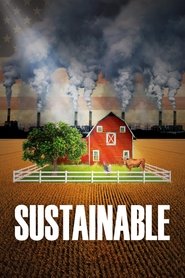
Sustainable
English സബ്ടൈറ്റിൽ ഡൗൺലോഡ് ചെയ്യുക
English സബ്ടൈറ്റിൽ പ്രിവ്യൂ
ആദ്യത്തെ 200 വരികൾ.
Having grown up in the '50s and '60s,
in a world that was really divorcing itself
from the source of all of its food.
I got to Mexico and I discovered
that there was still a really strong bond between people
and where their food came from,
the people that produced the food.
I got back to the United States and I was buying produce
that came from, who knows where.
I kept asking myself, how am I going to make great food,
if I don't have any connection to the people that are growing that food?
We have gotten so distant
from the food that we start thinking about it
as a commodity.
For goodness sakes, it's our nourishment as human beings.
And I can have an opportunity
to have give and take with the people that are actually keeping me alive.
I'm Marty Travis,
and I'm a farmer in Central Illinois.
Each Friday night, I send an email to close to 200 shops,
it lists the product that we have available from Spence Farm
and then we deliver every Wednesday
to the restaurants, what they've ordered.
And, we do all the deliveries ourselves.
I usually make our first delivery at 9.30 in the morning.
Hit as many as 30 plus restaurants during the day.
Cover a pretty good sloth of the city.
We worked it out so that we're hitting
each restaurant when somebody's there to receive it
and somebody there to write a check.
But, it's more about the relationship than it is the rutabagas.
It's an important intricate piece in the marketing that we do.
But it's much more than just selling things to them,
they've really become our friends.
It's so funny that people talk about...
"Oh, I'm a small farmer and I'm providing food for restaurants,
and I sell some of my stuff at a CSA and I have a truck stand
and then I go to the farmer's market once a week."
That's what a small farmer typically these days would say.
Well, that was what everybody did, 50 years ago.
There weren't as many restaurants but restaurants got their food locally
and people got their food locally
and most of everything was seasonal.
You look at frozen food, you look at microwaves,
You look at super-highly processed food
you look at the ease at which these things can be transported.
Each of these steps, made it more and more possible to say,
if we grow a lot of the same crop in one area,
then we have the ability to process food,
freeze it, ship it from a central location to the rest of the country.
And you're not saying, "How do we want to feed ourselves?"
You're saying, "How can we make agriculture
into the most efficient profit making system that we can?"
To start with, how do we make the most possible money?
Rather than, how do we produce the most appropriate food
is asking the wrong question first.
It is at a crisis point.
But it's not a crisis you wake up and see every morning.
It's at a crisis point where we have a health care crisis,
where our land and water is being badly used,
and climate change.
Agriculture is the number two culprit in climate change.
The way that we produce food and the way we eat
affects almost everything.
Each aspect of that has big problems.
It appears that we have a food system but what we have
is a system of using agriculture, food marketing, food production
to make money for a number of corporations.
We do get to eat, but we don't get to eat food
that's green and nutritious, and fair and affordable.
And if those are our goals, then we need a food system that says,
these are our goals, how do we get there?
The winter season here at the farm,
is much different than the other seasons.
It can be an incredibly beautiful time.
It's about keeping warm.
And also, keeping our livestock warm,
and well fed.
Winter is a season
that, I think, here in the Midwest,
we just wanna get through it quickly.
I work on the farm with my wife, Kris and our son, Will.
My son, Will
must be at least a foot taller than I am now.
I look up to Will in many ways.
There's been a couple of times where we've asked him,
"So, what are you gonna to do on the farm, what part of this do you want to do?"
And one of the things he came up with when he was still in high school
was that he wanted to resurrect the maple syrup business.
The native Kickapoo shared how to make syrup
with my fourth great grandfather in 1830.
And from that time on,
syrup has been made each generation.
I wanted to do the maple syrup because I really enjoy being in the timber
the sounds and the smells.
It's just a very calming, relaxing environment to be in.
It's connecting back to a time that was very important to this farm.
So it's a sense of pride
to see the next generation
re-capture some of that.
This farm was settled
by my fourth great grandfather in October of 1830.
In 1981,
the farm had been in our family for a 151 years at that point.
My grandmother decided that she couldn't take care of the farm
in the way that she had for years.
And decided to sell the house yard and the farm buildings
to a conventional farm family.
And then, for the next 18 years,
the farm really, was farmed conventionally
corn and soybeans, and during that period of time
was when the fellow that farmed the acreage was so excited
that it was Roundup Ready soybeans.
So then, my grandmother bought the farm back,
and I moved back here in...
the spring of '99.
It was a very surreal kind of experience in many ways.
The buildings were in tough shape,
so they needed repair.
The house needed repairs
and the land needed to be repaired.
The soil just didn't seem the same.
A lot of corn stalks
were still there, two and three years later,
just weren't breaking down,
and the soil was hard to walk on.
It just didn't feel right.
The soil is one of those things that most people take for granted.
And yet, if you think about it as a resource,
it's sort of the most undervalued yet invaluable resource humanity has.
It's the foundation for terrestrial life, it's a foundation for agriculture.
And yet, we pretty much, for the modern era,
have been treating soil like dirt.
If you look back at the history of past civilizations,
you keep running into different versions of a very similar story.
You look at Mesopotamia,
to Greece, to Rome
to the Southeastern United States,
to the American Midwest and the Dust Bowl.
It's a whole progression of societies
that have damaged and degraded their soil, and then moved on to the next place.
It would be profoundly unwise
to not look back and try and learn the lessons of those societies.
Given that now, we don't really have anywhere else to go.
I've actually been very impressed and amazed
by how simple changes in practices
can greatly reduce the need for agricultural inputs.
Like fertilizers and herbicides and pesticides in particular,
and buy us some time
to essentially think about how to generate a truly sustainable agriculture.
In a typical Iowa cropping system,
in which corn and soy are grown in alternate years on the same land,
farmers are looking to have a high yield of corn,
by applying a sufficient amount of nitrogen
to the soil in the form of mineral fertilizer.
Weeds are everywhere in these fields
and farmers have relied more and more on chemicals
that are very effective in suppressing weeds.
If we wanted an agricultural system that was minimally dependent
on non renewable resources
and that was...
careful in its impacts on the environment.
What would that system look like?
We started working on this land in 2001
and what we found out is that we could reduce
our use of mineral nitrogen fertilizer
by 90 percent and reduce our use of herbicides by more than 95 percent
if we add oats with red clover, or oats with alfalfa
to that corn and soy rotation.
This oat crop has this companion of clover
which is taking nitrogen out of the atmosphere
and putting it into its roots, which allows us to back way off
on the amount of mineral fertilizer we use.
We've seen less erosion potential in the longer rotations.
So we've seen these indicators of improved environmental performers
and we've also been able to maintain profitability
because of lower input costs in the longer rotations.
The basic fact that impedes the adoption
of more diverse, less chemically dependent systems
is that we don't put a price tag on environmental damage.
Impairments of water quality or loss of soil due to erosion,
or drift of herbicides onto non-target crops.
The so called externalities,
are not factored into the production equation.
If the external cost were added, back into the cost of industrial farming,
then it would seem much more expensive.
It would seem as expensive as it really is.
The argument that sustainable foods are more expensive,
goes out the window, when you recognize that sustainable food
has far fewer externalities than industrially produced food.
Scientists who work for the Federal Government
have discovered a huge dead zone in the Gulf of Mexico
where fish cannot survive.
It is about the size of Connecticut covering nearly 6000 miles.
Surface runoff is a very serious problem.
The primary cause of the dead zone
is nitrogen-based fertilizers that are washed down the Mississippi River
by spring rains and into the Gulf.
Suppose that you're a farmer from Illinois,
and you get a letter from the governor or from Louisiana
Sustainable subtitles in other languages
More English subtitles for Sustainable
- Sustainable 2016 1080p WEBRip x264 AAC5 1-[YTS MX] · 17 downloads · 2021-04-06
അഭിപ്രായങ്ങൾ
No comments yet. Be the first to leave one.