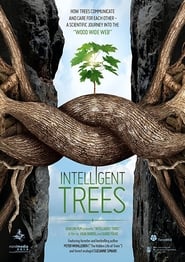
Intelligent Trees (Intelligente Bäume)
English സബ്ടൈറ്റിൽ ഡൗൺലോഡ് ചെയ്യുക
റിലീസ് വിവരങ്ങൾ
ടാഗുകൾ
English സബ്ടൈറ്റിൽ പ്രിവ്യൂ
ആദ്യത്തെ 200 വരികൾ.
- -
We are a connected society.
We are connected to our families and friends,
but also to our jobs and duties.
We are connected over computer networks,
phone lines and traffic junctions.
The world surrounding us is in constant movement and growth.
We left our houses made of wood to plant an artificial forest
from concrete, glass and metal.
It's not easy escaping a world where everything is connected,
to spend some time in the forest where we seek quiet and rest
from our unsteady lives.
We expect to find some kind of wisdom in the forest,
but we don't understand the voice of nature.
If those trees could only talk!
Little do we know,
that in between this world of stillness,
words are rushing back and forth.
We only have to tilt our heads down and listen...
to our roots.
The Coastal Pacific Rain forest of North America.
These forests are special
and known all over the world.
Here in British Columbia,
one can find trees of heights around 100 meters
and over 1 000 years of age.
People walk amongst these ancient giants
in a sense of spiritual wonder and respect.
But not anymore are these places only described
by mythological metaphors.
Scientists begin to understand the importance of these forests
as they discover more details about the relationships
between trees on a microscopic scale.
Here in Canada,
at the University of British Columbia in Vancouver,
Dr. Suzanne Simard, Professor of Forest Ecology,
conducts ground-breaking research.
Together with a team of passionate forest scientists,
she tries to find out more about the methods
of communication amongst trees.
Before I became a professor
I was actually a forester.
And before that I grew up
in the Inland Rain forest of British Columbia.
As a forester I really was
moving into an area that I loved dear to my heart.
I knew forests.
As I started working for the forest industry,
I started to realize that what was happening
didn't really mesh very well
with what I understood forests to work like.
My job was to go into old clear cuts
or new clear cuts and prescribe trees to be planted.
What the forest industry was doing then
was planting one or two species in clear cuts.
This was very different
than what I understood forests to grow like,
where there's mixes of species.
When we go walking in the woods
we expect to find nature untouched and pure,
but in fact we wander through an environment
that has been largely shaped by men.
Pristine forests are rather unique in the world.
In a small country like Germany
forests have been intensively managed
by people for centuries,
almost everywhere you go.
In an old, close to natural Beech-forest in The Eifel,
a low mountain range in the West of Germany,
forest ranger Peter Wohlleben
is well aware of the value of the trees in his district.
For more than two decades he made his observations.
In his bestselling book "The hidden life of trees"
he describes the most curious and unexpected things
that are going on in his forest.
He knows that this place is a rare treasure
that needs to be protected.
Originally all of Germany would have looked
like this old Beech-forest.
80% of the area was covered with natural Beech-forest.
mixed with other tree species.
But today there's only a fraction left
and we have plantation-forests everywhere.
These consists mostly of plantations
with even edged conifers
that have been planted and are managed
with heavy machinery.
What happened was that they ended up using
the same species everywhere.
The standard practice was to clear-cut and then plant
either Pine or Fir or Spruce.
One species.
And I thought, what was going on here.
The community was not intact any more.
It was much different
than what I grew knowing about these forests.
I studied forestry.
and started my career the classical way.
I prescribed small clear cuts.
Cut down such beautiful old Beech trees like these.
and used insecticides.
As a teenager I wanted to become a conservationist
but I started to realize,
that I was in fact destroying everything.
And that wasn't what I wanted.
When I looked at those trees I found that they didn't
perform that well. They didn't grow very well.
They were sickly. They weren't that healthy.
As I became a scientist
after a few years as a forester,
I started to examine why these trees didn't seem
to grow well when they were by themselves.
I found that when we remove certain species
of their neighbors that trees actually became ill.
They became diseased and more at risk of insect attack.
I wanted to understand why that was the case.
I thought some of the story might be going on below ground.
What we call a tree
is only what is visible above ground.
We consider a tree to consist only of trunk and crown.
However, the major part of its life takes place underground.
What happens in the forest
is actually more than what meets the eye.
The root system of a tree
can spread as far as two to four times
the diameter of its crown.
Only scientists
with state of the art research techniques
are able to dig deep enough into this matter
to uncover that these roots are more than only water pipes.
I started looking at the root systems
and I found that the roots of these different species
when they grew together,
Birch and Fir and Cedar and Hemlock,
were all intertwined and linked together.
I learned later on through more research
as I went into my PhD
that these root systems actually formed what is called
a Mycorrhizal Fungal Association.
Mycorrhizal fungi are certain species of fungi
which associate with all of the tree species worldwide.
They form a mutualistic relationship
where the fungus grows into the root
and provides the root
with nutrients and water
that the fungus gathers from the soil.
Mushrooms are only the fruiting bodies of fungi.
Just like apples are the fruit of apple trees.
Fungi are very underestimated organisms
because so far most of us appreciate only the fruit.
Fungi can spread over several square kilo meters.
One teaspoon of soil may contain
several kilo meters of string like hyphae
that form the internet of the forest.
For their services,
they charge sugar and other products
of tree photosynthesis.
The tree shares up to a third
of its total production with the fungi.
We found, when we mapped these forests,
that all of the trees were
all linked together in a single massive network.
So then I thought OK, if their linked below ground
then what are these linkages about.
How does this actually affect how trees are growing.
We did some more sophisticated experiments,
once we knew that those links were there.
We labeled one tree with an isotope
and traced it from that tree to its neighbor.
We found that carbon molecules
were moving from one tree to another tree
through these mycorrhizal networks.
Then we thought
if carbon is involved,
maybe there's other molecules involved as well.
We started labeling trees
with Nitrogen and Phosphorus and deuterated water.
We found that all of these elements
move back and forth between the trees.
That was the rudimentary
understanding of the language of trees.
So these Birch trees here
will be linked to other Birch trees,
but also to the Douglas Fir
and the Hemlock behind it.
You can see their root-systems coming down there.
They straight into the ground.
The mycorrhizal network
is just below the surface of the forest floor.
As you walk, you are only centimeters
or millimeters away, walking on top of this network.
The network below ground can easily be imagined
as a market place,
where the food is either offered or received
by all the trees that are linked together.
But what about competition?
If all are eating at the same table,
then why don't they steal from each other
and suck each other dry,
in a struggle for the survival of the fittest?
അഭിപ്രായങ്ങൾ
No comments yet. Be the first to leave one.