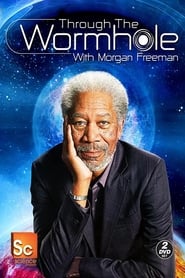
Through the Wormhole
Farsi Persian സബ്ടൈറ്റിൽ ഡൗൺലോഡ് ചെയ്യുക
റിലീസ് വിവരങ്ങൾ
ടാഗുകൾ
Download Farsi Persian Subtitle Files for Mobile (2)
Farsi Persian സബ്ടൈറ്റിൽ പ്രിവ്യൂ
ആദ്യത്തെ 200 വരികൾ.
Space.
It seems like it must go on forever.
But does it?
Out there in the farthest depths of the Universe,
might there be someplace
where something turns into absolutely nothing?
Scientists are probing the far-flung reaches of the cosmos,
trying to detect that outer limit,
to find the shape of space.
Now surprising evidence suggests
that not only is there a place where the Universe ends,
but that there might be something lurking beyond it --
something unimaginably alien.
Space, time, life itself.
The secrets of the cosmos lie through the wormhole.
== sync, corrected by elderman ==
Once in a while, a really big idea comes along --
one that completely changes our concept of who we are.
In 1543, Nicolas Copernicus proved that the Earth
was not at the center of the cosmos.
In the 1920s, Edwin Hubble saw
that all the galaxies in the Universe
were rushing away from one another,
sparking the idea
that the Universe had not been here forever
but was created in one explosive moment --
the Big Bang.
Now another monumental change is upon us.
We've long imagined the Universe to be infinite in size,
but many cosmologists now think the Universe...
is finite.
Some believe they even know its shape.
If we do discover an edge to the Universe,
we'll have to grapple
with another very challenging and unsettling question.
What lies beyond the edge?
Every day on my way home from school,
I used to pass a long wall.
It was at least twice my height.
I had no change of seeing over it,
but I could hear strange sounds coming from behind it.
My mind ran wild
imagining what might be back there.
Wild animals? Outlaws?
Or some fearsome monster?
I would press my ear up against it
to try and decipher what it could be.
I never did find out, but I never stopped wondering.
Neil Cornish is a cosmologist
who lives and works in the big sky country of Montana.
The only walls out here
are fences to keep his horses from roaming off.
Neil is the latest in a long line of thinkers
to contemplate the size of the Universe.
The first we know of was a Greek philosopher king
called Architus.
The Greek philosopher Architus
offered an argument for why the Universe must be infinite.
He said, "if I was to go out to the edge of the Universe
"and then extend my staff to here,
"that would now be the edge of the Universe.
"And then, if I was to extend my staff to here,
"that would now be the new edge of the Universe.
"And if I was to extend my staff out to here,
"that would now be the edge of the Universe.
So the Universe must be infinite."
Architus's mental game set the tone
for over 2,000 years of scientific dogma --
our Universe must be infinitely large
and has existed forever.
But that dogma is now being challenged.
So, one problem with an infinite universe
that's not just infinite in space
but also infinite in time -- has no beginning --
you have an infinite number of stars.
So the sky would be just completely covered in white,
bright, bright -- so bright that it would fry you.
So, when we look out at night, that's not what we see.
We see a star here or there
and then, essentially, darkness all around.
So this tells us something.
It tells us we don't live in an infinite Universe
that's infinitely old.
It was our dark sky
that inspired a revolutionary idea about the cosmos --
that it cannot have been here forever.
The Big Bang --
a moment where all the space and matter we can see
burst into existence,
expanding out from a single point.
But the Big Bang creates a problem
for astronomers searching for the edge of the Universe.
Because it takes light time
to travel across the vastness of space,
astronomers were always looking back in time,
and, eventually, they run out of time.
So, when we look out at the stars at night,
we're seeing those stars as they were years ago.
The nearby stars, maybe a few years ago.
Looking out across the galaxy, thousands of years ago.
And going back and back,
we see galaxies back billions of years ago.
And then, beyond that, where we see no more galaxies.
13 billion years ago
is the next thing that we've managed to image,
and it is the after-glow of the Big Bang.
It's called the cosmic microwave background,
and it's a picture of the way the Universe looked
about 400,000 years after the Big Bang.
The Universe is filled with this hot gas, this hot plasma.
Light really can't go anywhere.
So we can't see any further back,
just as we can't see into the Sun.
The cosmic microwave background
is a barrier that blocks our vision.
Behind it, there could be an edge.
Or perhaps the Universe does extend on forever.
But no matter how powerful our telescopes become,
that domain will never be visible.
But there might be another way to discover
if the Universe has an edge.
Janna Levin is a theoretician
who uses complex numerical simulations
to solve some of science's most challenging problems.
It might surprise you that a game as old as "Asteroids"
can teach us something about the Universe,
but there's a rule in the game
to make a world out of the game that makes sense,
where, if you exit the top, you re-enter the bottom,
or if you exit the left, you re-enter from the right.
And that rule makes this world
in which you're playing the game,
this space in which you're playing the game,
a finite space.
And that's kind of like
the rules we're imagining for the Universe.
If our Universe is finite,
scientists believe its edges must also be linked,
that the entire cosmos
must act like a giant game of "Asteroids."
If we could bend this space,
we would see that it looks like something more intuitive.
Like, for example, if I were to take this menu
and apply that rule from the "Asteroid" game.
You know, I exit the top, I enter the bottom.
That's exactly the same as taking the menu
and rolling it up and gluing the sides together.
It gives the same effect.
And if I could bend this rather too stiff menu,
I would try to bend it
so that the two edges came together and were glued.
And then I'd be making something kind of like,
you know, a bagel -- a classic, New York bagel.
And the bagel is glued together not just like a cylinder
but also around the other side.
Even though the surface of this bagel is clearly finite,
no one living in this space would ever run into an edge,
so it feels boundless and infinite.
When we live inside the Universe,
we can't step outside of it.
There's no other dimension to look down from,
onto our 3-dimensional Universe, so it's harder to visualize.
But we can use the rules
like the rules that are used in the "Asteroids" game.
And then we add one more rule
for three rules for three dimensions.
Go out the back face, come in the front.
If we do live in a cosmic asteroid cube,
there is a way we could discover the edges --
not by flying a spaceship across them,
but by standing still
and watching light as it wraps around the Universe.
If the Universe were the size of a room
and you stood in the middle of it holding up a lantern,
light beaming out from your back
would zip out one wall
and re-enter the room from the other side
so you'd see an image of your back
on the wall in front of you.
Looking out to the right,
you'd see light coming from your left side.
The room would appear to be covered in mirrors.
Whichever wall you looked at, you'd see an image of yourself.
When we look at the night sky,
we don't see this hall of mirrors.
But space is so vast,
light could take billions of years
to loop around the Universe.
Space and time on this epic scale
mean that mirror images would look nothing like one another.
So, imagine this corral is our Universe.
There will be repeats of this corral ad infinitum,
giving an illusion that we live in an infinite space.
But if this corral were just 30 light-years across,
when I look out there,
I wouldn't see myself as I am now.
I'd see myself as a 10-year-old boy
'cause I'd be looking 30 years back in time.
Our Milky Way is around 13 billion years old.
It's been around almost as long as the Universe itself.
Through the Wormhole subtitles in other languages
More Farsi Persian subtitles for Through the Wormhole
- through the wormhole S8 E01 Is the force with us ? · 25 downloads · 2018-04-02
- Through The Wormhole S07E04 Can We All Become Geniuses · 35 downloads · 2017-10-17
- Through the Wormhole s07e03 Are There More Than Two Sexes · 30 downloads · 2017-08-29
- Through the Wormhole s07e02 Is Privacy Dead · 28 downloads · 2017-08-16
- Through the Wormhole S07E01 What Makes a Terrorist · 34 downloads · 2017-08-05
- Through the Wormhole S03E01 720p WEB-DL · 37 downloads · 2017-01-17
- Through The Wormhole - S05 E04 - How to Collapse a Superpower · 37 downloads · 2016-11-14
- Through The Wormhole - S05 E03 - Is Poverty Genetic · 35 downloads · 2016-11-14
അഭിപ്രായങ്ങൾ
No comments yet. Be the first to leave one.