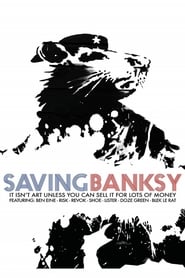
Saving Banksy
English സബ്ടൈറ്റിൽ ഡൗൺലോഡ് ചെയ്യുക
റിലീസ് വിവരങ്ങൾ
ടാഗുകൾ
English സബ്ടൈറ്റിൽ പ്രിവ്യൂ
ആദ്യത്തെ 184 വരികൾ.
Of course they were all wrong. Why?
The reason why we do what we do,
you know, breaking the law,
is it's an adrenaline rush.
You know, we paint stuff on the street.
That's where it belongs.
You know, it's for the people. It's for fun. It's for adventure.
It's not to turn up in auction.
Be careful whose artwork you steal
because you're subject to getting your ass beat.
For decades, their work was dismissed as simply vandalism.
Now, it's the target of a multimillion- dollar international art grab,
paintings removed from public spaces without the artist's permission
and sold at high-end art fairs, galleries, and auction houses.
You know, at least give me the right to say
what's gonna be in the gallery, be at an auction.
You can hate my stuff, you can love my stuff, you can steal my stuff.
Give me the right to say what I want to sell or not sell.
The most valuable?
Works by British artist Banksy.
His work is selling very well at auctions for millions.
There is, yeah, insane value in the stuff that he paints.
It's like fucking buying elephant tusks or something. It's like,
here's this beautiful, incredible animal,
and you're just killing it just so you could own a part of it?
That is fucking foul.
This was supposed to be the story of what happened
when Banksy came to San Francisco.
Well, it's a Banksy.
Instead, it became the story of art dealers...
If they would have balls, they would say,
"It's a real Banksy, so we show it."
...museums...
So, he's the Socialist rat.
...and money.
Last offer I had from a collector was for $700,000.
What would you do if you were offered a small fortune
for a painting the artist didn't want sold?
I got people that want to buy it for $700,000,
but I can't give it away for free.
My name is Ben Eine, and I was a graffiti artist.
And now I'm a street artist for...
yeah, want of a better phrase.
My style is a form of typography,
exploring words, their meanings, taking things out of context.
We rock hardest!
It's a fucking cool name!
A lot of the work I do on the street is huge, great big words,
or sentences or messages,
or random, individual letters.
Yeah, pretty much words and letters.
Not pretty pictures and blue skylines.
Our roots are in graffiti.
Our interest was, you know, the letter form,
you know, exploring words, exploring letters,
changing the shapes of things.
["Strudel Strut" by Romanowski feat. Jacko Peak playing]
It's a global art movement.
You know, you got people like Roa, for example, from Belgium.
What he does is just incredibly different
from somebody like Os Gemeos from Brazil
or Herakut from Germany.
Someone came and invited me to paint in New York.
From there, I went to paint in Philadelphia.
Last year, we painted a really beautiful wall in Rome.
Each city crafts and creates its own artists with its own styles.
Retna, he's developed a art form based on text,
kind of leans towards, like, gang graffiti, gang tagging.
He's made it a beautiful art form.
Risk, original writer,
one of the first people to paint up all the freeway signs in LA.
I'm a pretty mellow dude, you know, and I've been shot once,
stabbed twice, shot at multiple times,
um, all for the love of graffiti, you know?
Revok, yeah, again, original style,
hardcore writer, hardcore bummer.
Killed stuff.
They send kids here in LA to prison for eight, nine years,
for doing graffiti.
This kid Sight went to prison
for eight years for painting graffiti, nothing else.
Hello. I am Anthony Lister.
Anthony Lister, crazy Australian.
That one looked great from the roof,
but it wasn't right from the street.
He just embraces everything that his art is.
I don't care anymore.
He is his art.
The street is about me controlling space.
It's a fever, you know, it's a disease, actually.
Mayhem. Craziness. The end of the world.
The beginning of the world.
The remembrance of this world.
Doze Green, uh, definitely not boring.
He was there at the very beginning
of the movement that created this form of art.
Paris in the early '70s, it was a movement based around protest,
and Blek le Rat was one of the people that was doing that,
and, you know, he's continued doing it to this day.
If you count the number of artists
who are involved in this movement
all over the world, it's absolutely huge number.
It's really huge, and I guess people won't know how huge
until it goes in the history books.
Shoe, he stopped doing graffiti
and he took his art form in a different direction,
and it's calligraphy, it's spray paint,
and, again, he works with the letter form.
["Taliban Rockers" by Romanowski playing]
The most famous street artist is definitely Banksy.
I think Banksy great. We needed a Banksy.
He's got something up here, and he's saying something always.
His creativity, just being totally clever,
having something important to say.
I think that Banksy has become some a cultural happening
that there's been, like, the Banksy effect.
I think Banksy'd been in London about a year,
and I'd seen these strange stencils, these strange messages,
these monkeys proclaiming that one day they'll rule the world,
these little rats with paintbrushes that had written messages around,
and it was like, "This is interesting.
This is funnier than graffiti."
One of the things that adds to Banksy's fame,
you know, it's a curse,
is how secretive of his identity he is.
No one knows who he is, who he is,
what he looks like,
what she looks like, so...
Ben Eine is one of a handful of artists
who know Banksy's true identity.
I first met Banksy many years ago.
Originally he didn't want people to know who he was
because what he was doing was, you know, 99% illegal.
Yeah, the police would've loved to have captured him.
You know, newspapers in England
would actively seek him out.
They all tried to find out who his parents are,
try to find out who his friends are,
try to find out what school he went to.
They want to expose him.
Banksy did what we all want to do, man.
You know, he made it, he did it,
and, uh, he's doing it, and...
You know, I think it's funny, a lot of people are like,
"Oh, man, he's not real. He's not real."
He's more real than all the people saying he's not real.
I know that for sure, you know?
Everybody's aware that Banksy is, you know, the biggest thing in street art.
In April of 2010, Banksy came to San Francisco.
There were thousands of people that came to San Francisco
from LA, Nevada, Utah, Washington State.
People came here just to kind of do the Banksy tour.
I'd get a text message at 12 midnight the next night,
"Hey, another piece just popped up."
People saw what happened to Andy Warhol.
Banksy's compared, you know, the next Andy Warhol.
This is the Chinatown piece,
and this is, I believe, the first piece that was put up.
The funny thing about this piece is they actually went into the bakery
a couple days before, and they actually handed the bakery owners 50 bucks
and said, "Do you mind if, you know, we paint on your wall?"
And they were, you know, said, "Sure. What do we care?"
I like that it has a message to it.
There's a lot of graffiti that has beautiful pictures,
but his artwork is the kind that makes you think about things,
and it's usually promoting peace and nonviolence.
It's been funny to watch it transition
from a community that had no idea who Banksy was
to one that just, you know, loves this piece.
It's now a piece of the history of Chinatown.
I think, at the time, he was on a tour of America.
But, yeah, he came to San Francisco and painted a lot of stuff.
It's a beautiful wall.
I've actually hoped somebody
was gonna do something here for a long time,
and hoped that it wasn't gonna suck.
And, uh, it doesn't, so we kind of lucked out.
This is the Indian that was done on Sycamore in the Mission.
They actually backed up with a moving truck,
and they had two mattresses.
And they put two mattresses on either side of the-- this-- the wall.
And then they stationed two guys on each side,
like, talking on their cell phones,
just like, you know, someone's moving stuff.
Saving Banksy subtitles in other languages
അഭിപ്രായങ്ങൾ
No comments yet. Be the first to leave one.