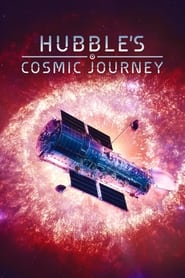
Hubble's Cosmic Journey
English സബ്ടൈറ്റിൽ ഡൗൺലോഡ് ചെയ്യുക
റിലീസ് വിവരങ്ങൾ
ടാഗുകൾ
English സബ്ടൈറ്റിൽ പ്രിവ്യൂ
ആദ്യത്തെ 186 വരികൾ.
Not since Galileo invented the telescope, over 400 years ago, has our view of the universe
been so transformed.
In April 1990, astronauts stationed the Hubble Space Telescope in orbit… above the blurring
effects of Earth’s atmosphere.
It returned scenes of unprecedented beauty.
As well as clear, sharp images of a dynamic, changing universe.
Stars…
Planets…
Galaxies… each evolving in time, from birth… to dissipation… and death.
This portrait of a Universe in Motion… is Hubble’s enduring legacy.
The Hubble Space Telescope is now regarded as one of most revolutionary scientific instruments
ever built.
While not the only telescope launched into orbit, it has surely been the most versatile.
Spacewalking astronauts returned four times to upgrade its instruments to newer and more
powerful technologies.
As a result, Hubble has been able to probe the life cycle of stars, from their birth
in nurseries of dust-laden clouds of gas...
All the way to their final farewell: as delicate nebulae, slowly blown into space… or as
titanic supernova explosions that outshine their host galaxies.
Hubble has peered into the breeding grounds of new solar systems: dusty discs around newborn
stars that may condense into planets.
And it has transported us into the billions of galaxies that spread out across the depths
of time and space.
One of the most photogenic galaxies is a grand spiral called M74, located about 32 million
light years from Earth.
Amateur astronomers have long known it as the “phantom galaxy,” because of its low
surface brightness.
Hubble astronomers, on the other hand, saw spiral arms laced with delicate tendrils of
dust silhouetted against bright ribbons of stars.
These spiral arms are not like spokes on a wheel.
They are density waves that move around the galaxy compressing gas… and stimulating
the birth of vast waves of new stars.
Using Hubble, astronomers are uncovering fascinating details within galaxies they once considered
featureless and bland.
NGC 1132 is an immense ball of stars some 320 million light years away.
Astronomers have concluded that this giant is the product of a gravitational feeding
frenzy.
Hubble showed that its surroundings are dotted with dense clusters of stars.
They are what’s left of galaxies that were swallowed by 1132.
How galaxies grow and evolve over time is an enduring mystery that Hubble astronomers
have sought to unravel.
The first galaxies are thought to have formed out of clumps of gas in the early Universe.
These proto-galaxies came together to form larger and larger galaxies.
Such galactic mergers may play out over hundreds of millions of years.
Hubble has shown that it is an elegant waltz of stars and gas… choreographed by gravity
on a grand cosmic stage.
As the galaxies pass each other, their gravity pulls stars and gas into the space between
them, building vast luminous bridges stretching tens of thousands of light years.
As the galaxies fall together again, long streams of gas and dust, known as tidal tails,
wrap around their disrupted shapes.
As the galaxy cores approach each other, the gas and dust clouds that envelop them can
be dramatically accelerated.
This results in shockwaves that ripple through interstellar clouds….
Setting off bursts of star formation that appear as brilliant blue knots.
Gravity is not the only force that can tear a galaxy apart.
Hubble spotted a spiral galaxy plowing through a cluster of galaxies.
There, it is has encountered a vast cloud of superheated gas.
Drag from this cloud is stripping away gas from the galaxy, creating tattered threads
and blue tendrils.
It’s also pulling away streams of murky dust, as shown by the dark brown tangled region
around the galaxy’s center.
When Hubble observations are combined with X-ray images, a bright, extended fog can be
seen enveloping the galaxy and streaming off into space.
In the end, this encounter will leave the galaxy with very little gas, and almost no
chance of forming any new stars.
Galaxy collisions are not always destructive.
Take the case of Centaurus A, 32 million light years from Earth.
Shockwaves produced by a collision have sparked an intense round of star formation, as seen
in the red patches visible here.
There is something else about Centaurus A that stands out.
Using radio and x-ray telescopes, astronomers have spotted powerful jets blasting out of
its center… and broad plumes of matter racing far beyond the galaxy.
Where is all that energy coming from?
Answering that question has become a major focus of Hubble observations since the day
it was launched.
Astronomers had long noticed that the centers of large galaxies are unusually bright.
They speculated that there must be some kind of massive object lurking there.
Could these objects be dense collections of stars?
Or are they a breed of supermassive black holes, millions or even billions of times
the mass of our sun?
Hubble’s search for the answer began in the center of a giant nearby galaxy, M87.
Astronomers saw that its color was not quite the same on both sides.
One side was shifted towards blue and the other towards red, a hint that it must be
rotating very quickly.
This is because the wavelength of light is changed by the motion of whatever is emitting
it.
This is also known as the Doppler effect.
Think about how the pitch of a train whistle drops as it races past.
Similarly, if something in space is moving towards you, the wavelength of its light gets
squashed, making it appear bluer.
If the object is moving away, its light gets stretched, making it redder.
By measuring how much the colors had shifted from one side of the disk to the other, astronomers
were able to determine its speed of rotation.
It turned out that this disk was spinning at a rate of hundreds of kilometers per second.
Astronomers concluded that an object must be lurking in its center that’s at least
4 billion times the mass of our Sun – a supermassive black hole.
This was a key piece of evidence in the discovery that supermassive black holes occupy the centers
of most, if not all, large galaxies, including our own Milky Way.
Back in the early 20th century, the young astronomer Edwin Hubble joined a larger quest
to understand the scales of time and distance that define our universe.
To make his measurements, he observed stars in the nearby Andromeda galaxy, just 2.5 million
light years away.
His namesake, the Hubble Space Telescope, has extended those measurements to the far
limits of time and space.
In its legendary Deep Field images, Hubble stared into seemingly blank regions of sky,
revealing thousands of faint galaxies from the early days of the universe.
These blotchy collections of stars are infant galaxies.
Over the 10 billion years their light has traveled to reach us, some may have evolved
into galaxies that resemble our own…
With a supermassive black hole in its center… spiral arms… exploding stars… solar systems…
planets… and perhaps even life.
Hubble has shown that our Milky Way galaxy is a dynamic cosmic laboratory.
Some of its most striking and beautiful images are giant structures known as nebulae.
This one is nicknamed Horsehead, after its clear and curiously familiar shape.
Rising from a sea of gas and dust, this so-called dark nebula is a cold, dark, dusty cloud set
against a background of glowing gas.
Then there’s the famed Eagle Nebula, nicknamed the Pillars of Creation.
A group of hot young stars is scouring these luminous towers with fierce winds of energetic
particles.
Dense pockets of gas resist these winds.
Within them, are cocoons of gas and dust, where new stars are being born.
You can see the same process underway in the Monkeyhead Nebula, about 6400 light-years
away in the constellation of Orion.
The Monkeyhead is a stellar nursery with all the ingredients needed for star formation.
Its peaceful beauty masks the violent events within it.
In places where stars are able to form at high rates, Hubble astronomers have zeroed
in on the moment of birth.
One team has been collecting high-resolution Hubble images of energetic jets of matter
being shot from newborn stars.
Unlike most astronomical phenomena, which can appear motionless over centuries of time,
these jets visibly change on human timescales.
Using Hubble, astronomers can see knots of gas brightening and dimming.
This shows that these jets are not being launched in a steady stream.
Rather, they are racing out sporadically in clumps.
The irregular structure of these jets is likely caused by material that periodically falls
onto an infant star.
This image shows how violent the end stages of star formation can be.
In the constellation of Cygnus, a few thousand light-years away, lies a compact star-forming
The beautiful colors of this nebula mask the violent events taking place within.
A young star, named S106 IR, is being born at the heart of the nebula.
In the final stages of its formation, the star is ejecting material at high speed, disrupting
surrounding clouds of gas and dust.
3D visualizations show the extent to which the star has carved its surroundings into
a complex shape, including hollow cavities.
At the outer edges of these cavities, the gas has been compressed into shock fronts.
The material spewing off the star not only gives the cloud its hourglass shape, it is
heating it up to temperatures of 10,000 degrees Celsius.
The star’s radiation excites the gas, making it glow like a fluorescent light bulb.
A star is born when pressure and heat in its core causes hydrogen gas to undergo nuclear
fusion.
The heat generated by this process pushes outward… countering the inward pull of gravity.
From the violence of their birth, most stars spend their lives shining in relative peace,
gradually using up the hydrogen fuel that makes up their cores.
Smaller, cooler stars are incredibly efficient.
A red dwarf, with 10% the mass of our sun, can burn for ten trillion years… almost
a thousand times the current age of the universe.
By comparison, larger, hotter stars like our sun burn more quickly.
At about 5 billion years old, our own sun has gone through half its expected lifespan.
By observing stars similar to the Sun, scientists now have a good idea of what will happen to
our Solar System in the distant future.
The sun will grow steadily hotter… causing it to swell into a so-called red giant.
When the Sun does this, it will destroy the inner planets of the Solar System.
Next, the outer layers will puff out, forming a dense cloud of gas and dust that will obscure
the visible light from the star.
In this stage, it forms a proto-planetary nebula.
Only dim infrared emissions from the dust cloud and reflected starlight let astronomers
see anything at all.
Hubble images of this stage show a wide variety of shapes, hinting at the complex dynamics
at work inside.
The spiral structure of this nebula is particularly unusual, and is likely due to a second orbiting
star that is producing swirling patterns in the gas and dust.
Over a period of a few thousand years, radiation from the hot remains of the star excites the
gas in the nebula, causing it to glow.
The once faint nebula now becomes a bright and mysterious cloud called a planetary nebula.
This type of nebula populates our galaxy… with luminous shapes that draw the gaze of
many a sky watcher.
Eventually, planetary nebulae fade to nothing as their gas and dust diffuse into space.
All that remains is the tiny white dwarf — a form that our Sun will take billions of years
from now.
Planetary nebulae are more than just beautiful shapes that grace our galactic skies.
They show important stages in the life cycle of stars… and how they interact with and
even shape their surroundings.
Hubble has given astronomers the sharpest views yet of these ghostly, dynamic structures.
Take the Ring Nebula, just over 2,000 light years away from Earth.
From Earth’s perspective, it looks like a simple elliptical body with a fuzzy boundary.
But Hubble observations show that the nebula is shaped more like a distorted doughnut.
Hubble's Cosmic Journey subtitles in other languages
അഭിപ്രായങ്ങൾ
No comments yet. Be the first to leave one.