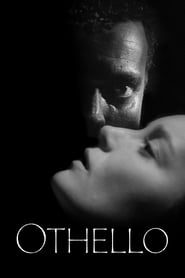
Othello
Download English Subtitle
English subtitle preview
The first 200 lines.
There was once in venice a moor Othello who for
his merits in the affairs of war was held in great esteem.
It happened that he fell in love with a young and noble lady
called desdemona,
who drawn by his virtue, became equally enamoured of him.
So it was that since her father was much opposed to the union
of desdemona with a moor, she fled her house at night.
In secret haste they were married.
Now there was in Othello's company, an ensign named lago,
a very amiable outward appearance
but his character was extremely treacherous.
I have told often and I retell it again and again.
I hate the moore.
I'll poison his delight.
How? How, lago?
Proclaim him in the streets, incense her kinsmen,
and though he in fertile climate dwell, plague him with flies.
No, they come.
What will I do?
Why, go to bed and sleep.
- I'll incontinently drown myself. Oh, bitterness.
What should I do?
Put money in thy purse.
Ere I would say I would drown myself for love of a guinea
hen, I would change my humanity with a baboon!
Come, be a man.
Drown thyself?
Drown cats and blind puppies.
It cannot be that desdemona should long continue her love
to the moor or he his to her.
It was a violent commencement.
And thou shalt see an answerable sequestration,
put buy money in thy purse.
When she is sated with his body
she'll fine the error of her choice.
She must change, she must, for youth.
Your daughter!
- Look, your house! - Your house!
- Your daughter! - Your daughter!
Senior, is all your family within?
Why, wherefore ask you this?
Lf't be your pleasure for your dull watch o' th' night,
transported, with no worse nor better guard but with a knave
of common hire, a gondolier, to the gross clasps of a
lascivious moor.
This thou shalt answer!
Straight satisfy yourself, if she be in your chamber or your house,
lago, can I depend on the issue?
Thou are sure of me. Go, make money.
It is too true an evil. Gone she is.
Is there not charms by which the property of youth
and maidhood may be abused?
Call up all my people!
Raise my kindred!
Where is the moor?
Keep up your bright swords for the dew'll rust them.
Oh, thou foul thief!
Where hast thou stowed my daughter?
Hold your hands! Good signor,
where will you that I go to answer this your charge?
To prison till fit time of law
and course of direct session call thee to answer.
Now at the same hour, there came messengers in haste
to the senate for there was news that the turkish armies
were moving against the venetian garrison in cyprus.
The senators, already raised
the net, elected the moor to the commander of their troops.
And officers were searching
the town to apprise Othello of this honor
when lo, desdemona's old father himself brings the moor
at sword's point to the council chamber upon a charge of
working from desdemona with unlawful enchant.
She was abused,
stolen from me and, ay, corrupted by magic spells.
I'm very sorry for't.
If she in chains of magic were not bound, whether a maid so tender,
fair and happy would ever have to incur her general mock,
run from her father
to the sooty bosom of such a fierce bat!
Damned as thou art, thou hast enchanted her!
Othello, what in your own part can you say to this?
Nothing but this is so!
Did you by indirect and forced
courses subdue and poison this young maid of affection?
Most potent grave and reverend signors,
my very noble and approved good masters,
that I've taken away this old man's daughter it's most true.
True I have married her.
The very head and front of my offending has this extent,
no more.
Rude in my speech,
and little blessed with the soft phrase of peace,
since these arms of mine had seven years' pith till now some
nine moon wasted they have used their dearest action
in the tented field and little little of this great world can i
speak more than pertains to feats of broil and battle.
And therefore little shall I grace my cause in speaking of myself.
Yet by your gracious patience
i will round unvarnished tale deliver of my whole course of love,
what drugs, what charms,
what conjuration and what
mighty magic, for such proceedings am I charged withal
that I won his daughter.
Her father loved me, oft
invited me, still questioned me the story of my life.
I ran it through even from my
boyish days wherein I speak of the most disastrous chances
of moving accidents by flood and fields of hair-breadth
scapes for the imminent deadly breach.
Of being taken by insolent foe, and sold to slavery,
of my redemption thence and potency my travels history
wherein a venturous vast and desert idle, rough quarries,
rocks and tills whose heads touch heaven.
It was my head to speak.
Rest to hear, but desdemona seriously inclined.
But still the house affairs would draw her thence, which ever as
she could with haste dispatch,
come again and with a greedy ear devour up my discourse.
I found good means to draw
from her a prayer of earnest heart that I would all my
pilgrimage dilate, and often did beguile her of her tears
when I did speak of some distressed stroke of my use of it.
She gave me for my pains, a world of sighs.
She swore, in faith: 'twas strange, 'twas passing strange.
Twas pitiful, 'twas wondrous pitiful.
She wished she had not heard
it, yet she wished that heaven made her such a man.
She thanked me, and bade me if I had a friend that loved her
i should but teach him how to tell my story
and that would woo her.
Upon this hint I spake,
she loved my for the dangers I had passed,
and I loved her that she did pity them.
This only is the witchcraft I have used.
I think this tale would win my daughter, too.
Come hither, desdemona.
Do you perceive in all this noble company
where most owe you obedience?
My noble father, I do perceive here a divided duty.
To you I am bound for life and education.
My life and education both do learn me how to respect you.
You are the lord of duty.
I am hitherto your daughter. But here's my husband.
And so much duty as my mother showed to you
preferring you before her father
so much I challenge that I may profess,
due to the moor, my lord. God be with you. I have done.
When remedies are past the griefs are ended.
Please it your grace on to the state affairs.
The turk with a most mighty preparation makes for cyprus.
Othello, the fortitude of the place is vast known to you.
You must away this morning.
With all my heart.
When we consider the importance of cyprus to the turk, we must
not think the turk is so unskillful to leave that latest
which concerns them first,
neglecting an attempt of ease and gain to wake and wage a danger.
Look to her, moor if thou hast eyes to see.
She has deceived her father and may thee.
My life upon her faith!
Mark me with what violence she first loved the moor
but for bragging and dealing a fantastical lie.
Will she love him still for prating?
Ah, let not thy discreet heart think it.
- Lieutenant cassio. - Largo
what a cannon.
I know my price.
I'm worth no worse a place.
But he, sir, had the election.
And what's he? This michael cassio, this florentine,
that never set a squadron in the field nor the division of a battle
knows more than a spinster. Yet cassio must his lieutenant
be, by god bless the mark of the fellow's ancient!
Well, I would not follow him that.
Oh, sir, content you.
I follow him to serve my turn upon him.
Lago? Lago!
Honest lago!
I wake up on your lordship.
My desdemona must I leave with thee.
I pray bring her after good time to cyprus.
Well, me good lord, I'll do it.
The moor's of a free and open nature, that thinks men
honest that seem to be so, and will as tenderly be led by
th' nose as asses are.
We cannot all be masters.
Nor all masters cannot by truly followed.
You shall mark many a duteous and knee-crooking knave who
doting on his own obsequious bondage wears out his time,
much like his master's ass, for naught but provender; and when,
he's old, cashiered.
Whip me such honest knaves!
Others there are who, trimmed
in forms and visages of duty, keep yet their hearts attending
on themselves, and throwing but shows of
services on their lords, do well thrive by them, and when
they have lined their coats do themselves homage.
These fellows have some soul,
and such a one do I profess myself for, sir, it is as sure
as you're roderigo, were I the moor, I would not be lago.
Othello subtitles in other languages
More English subtitles for Othello
- Othello 1951 REMASTERED 1080p BluRay x265-RARBG en · 87 downloads · 2025-10-19
- Othello 1951 EU Criterion (1080p Bluray x265 HEVC 10bit AAC 1 0 Tigole) · 178 downloads · 2018-01-18
- Othello 1951 REMASTERED 1080p BluRay x264-USURY · 138 downloads · 2017-10-15
- Othello (The Tragedy of Othello: The Moor of Venice) 24 000 FPS Blu-ray · 127 downloads · 2014-11-05
- The Tragedy of Othello The Moor of Venice 1952 · 97 downloads · 2009-06-24
- The Tragedy of Othello The Moor of Venice 1952 · 101 downloads · 2009-06-24
Comments
No comments yet. Be the first to leave one.