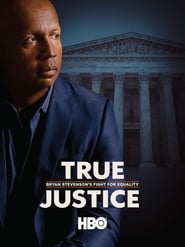
True Justice: Bryan Stevenson's Fight for Equality
Download English Subtitle
Release info
Tags
English subtitle preview
The first 200 lines.
Chief Justice John Roberts: We'll hear argument next today:
Case 17-75-05, Madison vs. Alabama.
Mr. Stevenson.
Bryan Stevenson: Mr. Chief Justice,
may it please the court,
it's undisputed that Vernon Madison
now sits on Alabama's death row,
unable to fully orient to time and place.
The authority to execute someone
who is not an immediate threat is an awesome power.
And that power has to be utilized fairly,
reliably, and humanely.
Bryan Stevenson ( voiceover ): For most of my career,
I've provided legal representation
to people on death row.
I've argued a bunch of cases before the United States Supreme Court,
and each time I go, I stand there in front of the court...
I read what it says about equal justice under law.
- All right, thank you all very much. - Reporter: Thank you.
Stevenson: I have to believe that
to make sense out of what I do.
I've been thinking a lot recently about an incident
that took place when I was a little boy.
My mom saved up enough money for my sister and I
to get on a church bus trip
to the new Disney World that had just opened up.
I remember being so excited about it,
because not only were we going to go to Disney World,
we would be staying in a hotel,
and the hotel would have a swimming pool.
And my sister and I had never been in a real swimming pool.
As we pulled into the hotel, my sister started squealing.
As soon as the bus stopped she grabbed me,
and we went streaking over to this pool.
I grabbed her hand and we jumped high in the air
and we landed in that pool,
and it was as glorious as I had imagined it would be.
It was just unbelievable.
And we were having such fun,
and then I realized that chaos had broken out around us.
White parents were frantically running into the water,
snatching their children violently out of the pool, and I was looking at my sister,
I was looking, trying to figure out, what is going on?
Finally, there was one little boy left in the pool,
and this big guy came and he snatched him by the arm
and lifted him out of the water
and the little boy started crying hysterically.
I turned to that white man and I said, "What's wrong?"
And he gave me this look, and he said,
"You're wrong, nigger."
We got out of the pool and I ran to my mom.
And when I told her what the man said,
she looked at me and she said, "You get back in that pool."
She said, "Don't you let those people run you from that pool."
What I remember most vividly from that trip
is getting back in the pool
and standing in the corner of the pool
holding my sister's hand and desperately trying not to cry.
What do you do with a memory like that?
I still remember that,
and the question becomes:
Do the white kids remember the day
they were forced out of the pool by their parents
because two black kids got into the water?
Memory is powerful,
it is a powerful force in the way a society evolves.
We have a constitution that talks about equality, liberty, and justice for all,
and for decades, for centuries,
we tolerated enslavement of other human beings.
We tolerated abuse and violence against people.
We tolerated bigotry and discrimination.
And in thinking about what it would take
to move this court and this country
to a place of greater resolve when it comes to eliminating bias and discrimination,
it became clear to me that we haven't really talked much
about the legacy of racial bias.
I think there's a kind of smog in the air
that's created by the history of slavery and lynching and segregation,
and I don't think we're going to get healthy,
I don't think we can be free... until we address this problem.
But to get there,
we're going to have to be willing to tell the truth.
Bryan Stevenson: You know, I was just going through my files
a couple of days ago,
and I actually had this pad that had notes
of an interview I did with Rosa Parks.
I had the great privilege of knowing Rosa Parks when I was--
when I moved to Montgomery in the 1980s,
as a young lawyer I met an extraordinary woman who was the architect,
really, of the Montgomery bus boycott,
she was an amazing person, her name was Johnnie Carr.
And Johnnie Carr was a force to be reckoned with.
And when I moved to Montgomery, Ms. Carr called me up and she said, "Bryan,
I understand you're a young lawyer
and you've just moved to town." I said, "Yes, I am."
She said, "When I call you up and ask you to do something, what you're going to do
- is you're going to say, "Yes, ma'am.'" - ( laughter )
One day she called me up and said,
"Bryan, I want to tell you, Ms. Parks is coming back to town,
so we're going to get together and we're going to talk.
Do you want to come over and listen?"
I said, "Oh, yes, ma'am."
And I listened to these women talk for two hours.
They weren't talking about the things they had done,
they were talking about the things they were still going to do.
And finally, after two hours, Ms. Parks turned to me, she said, "Now, Bryan,
tell me about the Equal Justice Initiative.
Tell me what you're trying to do."
And I looked at Ms. Carr to see if I had permission to speak,
and she nodded, and so I gave her my whole rap.
I said, "Ms. Parks, we're trying to end the death penalty,
we're trying to do something about racial bias, we're trying to do something about the poor,
we're trying to do something about conditions of confinement."
When I finished, she looked at me
and she said, "Mm-mm-mm."
She said, "That's going to make you tired, tired, tired."
And Ms. Carr leaned forward
and she put her finger in my face and she said,
"That's why you've got to be brave, brave, brave."
Stevenson: In 1989, we set up this project
here in Montgomery, Alabama,
to provide legal services to poor people,
incarcerated people, condemned people on death row.
Alabama doesn't have a public defender system,
and there were just a lot of people desperate for help.
Randy Susskind: Alabama has the highest death sentencing rate
in the country, per capita.
And I think, you know, from the very beginning,
Bryan's sense was, we should do as many cases as possible.
Stevenson: I think of a wrongful conviction
as any conviction where the law has not been followed,
where there have been
illegal practices or policies.
It doesn't mean that the person is innocent.
We represent a lot of people
who did the things they were accused of,
but I think you can be properly convicted
and unfairly sentenced.
We're gonna start moving because of limited time...
Sia Sanneh: I think in law school I conceived of myself as
becoming a great lawyer
and winning cases that get people out of prison,
and that is a huge part of what we do.
Stevenson: So I just wanted to get some reaction
to that idea, make sure we were comfortable with that.
Sanneh: But I think you have to be more than a lawyer
in the sort of technical sense.
Stevenson: I'd never met a lawyer-- ever--
until I got to law school,
and my time in law school was frustrating
because I didn't meet lawyers
who seemed to represent something I wanted to do.
And I tried to rationalize accepting a career as a lawyer
that I knew was not going to be fulfilling.
It was frankly in the midst of that
that I went to Atlanta, Georgia, and spent a month
with the Southern Prisoners Defense Committee,
and for the first time I met a lawyer
who seemed to represent something that excited me.
I do think that the issue before us
is how the death penalty works in practice.
And the fact of the matter is, the death penalty--
and I practice in the Death Belt states of the South--
and the evidence is undeniable
that the death penalty is a result of race,
poverty, politics, and the passions of the moment.
One thing that's immediately apparent
with the death penalty in the South
is that it's about race and place.
You see lots of changes in the deep South,
but when you go to the courthouse,
nothing has changed--
it's like we're back in 1940 or 1950.
The judge is white, the prosecutors are white,
the court appointed lawyers are white.
And even in communities that have
fairly substantial African American populations,
the jury will be all white.
So the only person of color in the front of the courtroom
is the person on trial.
Anthony Ray Hinton: You see that smoke comin' outta there, boy?
- Man: Yeah. - Whoo!
Woman: How's it lookin', Ray?
Hinton: Oh, lookin' purty.
The secret to a cookout...
always have you a taste-master.
That's my taste-master right there.
He gonna let me know if it's right.
Oh, wait till you taste it!
It's good, Mr. Hinton, right on time.
Hinton: To me, life was good.
Not a care in the world,
just trying to get up every morning
and put one foot forward
and do the best you can and just enjoy life.
It was just good to be who I was at that particular time,
at least that's what I thought.
I found myself in a situation
that I never should have been in.
I was 29 years old.
Comments
No comments yet. Be the first to leave one.